
Introduction
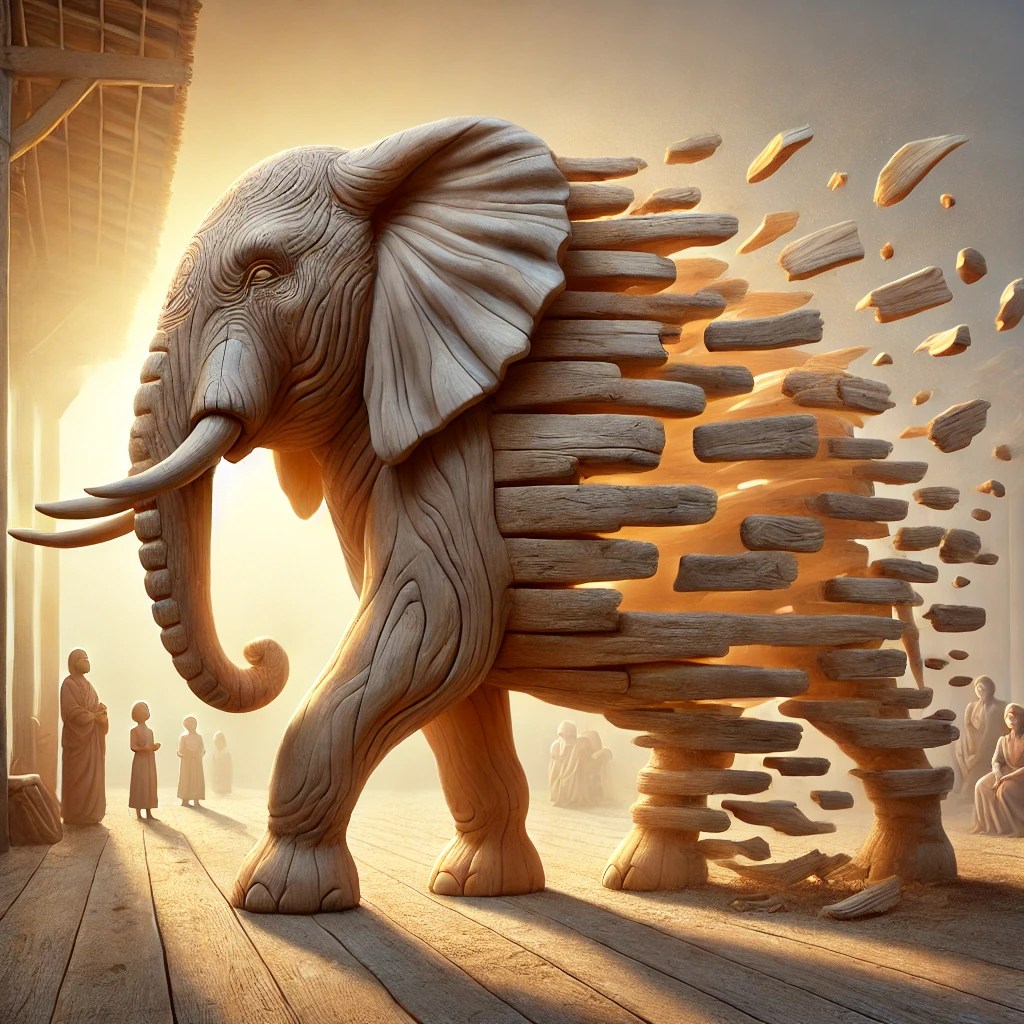
In the timeless tradition of Advaita Vedanta, the pursuit of truth begins with a radical inquiry: Is what I perceive truly what is? This blog, based on an insightful article by Vivek, a member of the NEEV Community for Self-Inquiry and Sustainability, explores this very question through a powerful allegory—the story of a wooden elephant mistaken for the real.
At the heart of this reflection lies the fundamental Advaitic principle of adhyāsa, or superimposition. As Śaṅkarācārya states at the very beginning of his commentary on the Brahmasūtras, the root problem of human suffering is the superimposition (adhyāsa) of the non-Self (body, mind, world) upon the Self (pure consciousness), and vice versa. Just as one mistakes a rope for a snake or a wooden elephant for a real one, so does the ignorant mind mistake the transient world/non-Self for ultimate reality/Self.
The story presented here serves not merely as a parable but as a gateway to understanding the deeper layers of illusion (Māyā) that cloud our vision. Drawing upon the profound insights of the Mandukya Upanishad, it reminds us that what appears real in the states of waking and dreaming is, upon inquiry, revealed to be as insubstantial as the carved figure standing still in the carpenter’s yard. Only the unchanging substratum—Turiya, pure awareness—remains ever real.
While, this blog is based on a parable, a more philosophical description of Turiya can be found in my article …………………………. I urge the reader to read that article in order to get a better grasp of the philosophical inquiry related to Turiya.
This blog is an invitation to pause, reflect, and begin seeing not just the form of the elephant, but the wood from which it is made—and to extend that vision inward, toward the Self.
Parable of the Elephant
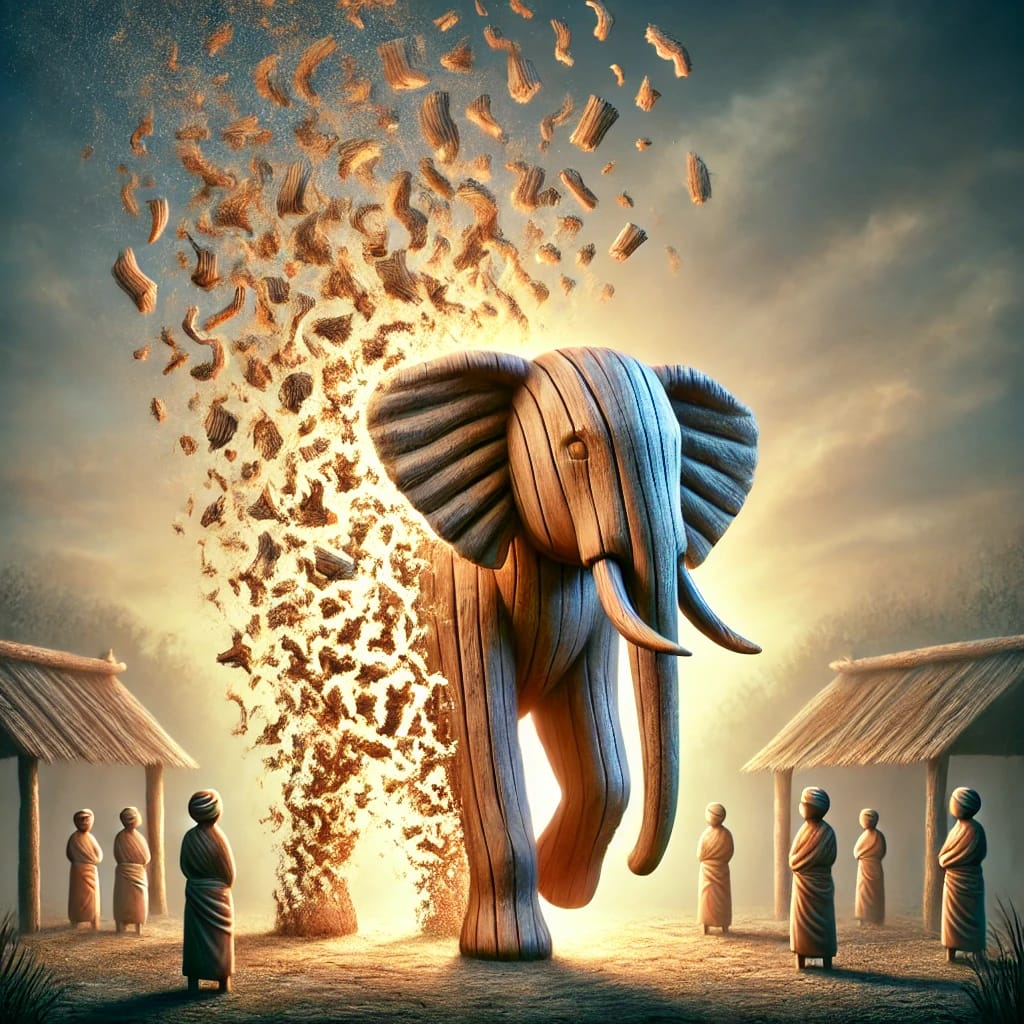
Once upon a time, there was a skilled carpenter named Atmaram in a village who could carve anything out of wood. One day, the king of the land challenged him to create something so lifelike that people would mistake it for real.
Atmaram worked day and night and finally crafted a magnificent wooden elephant.
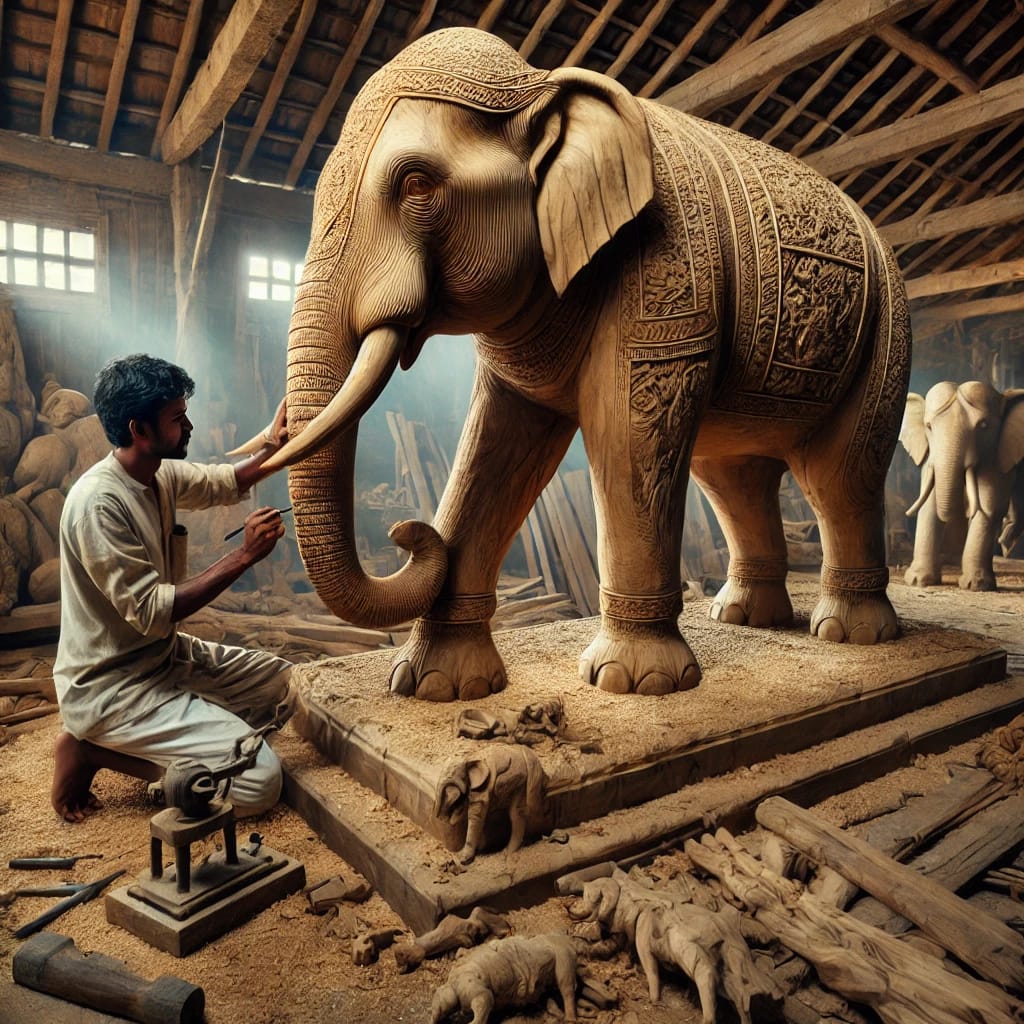
That night, he placed it outside his house. It was so realistic that, from a distance, people got scared. Children who had never seen an elephant ran away in fear, and even real elephants were fooled into thinking it was one of them.
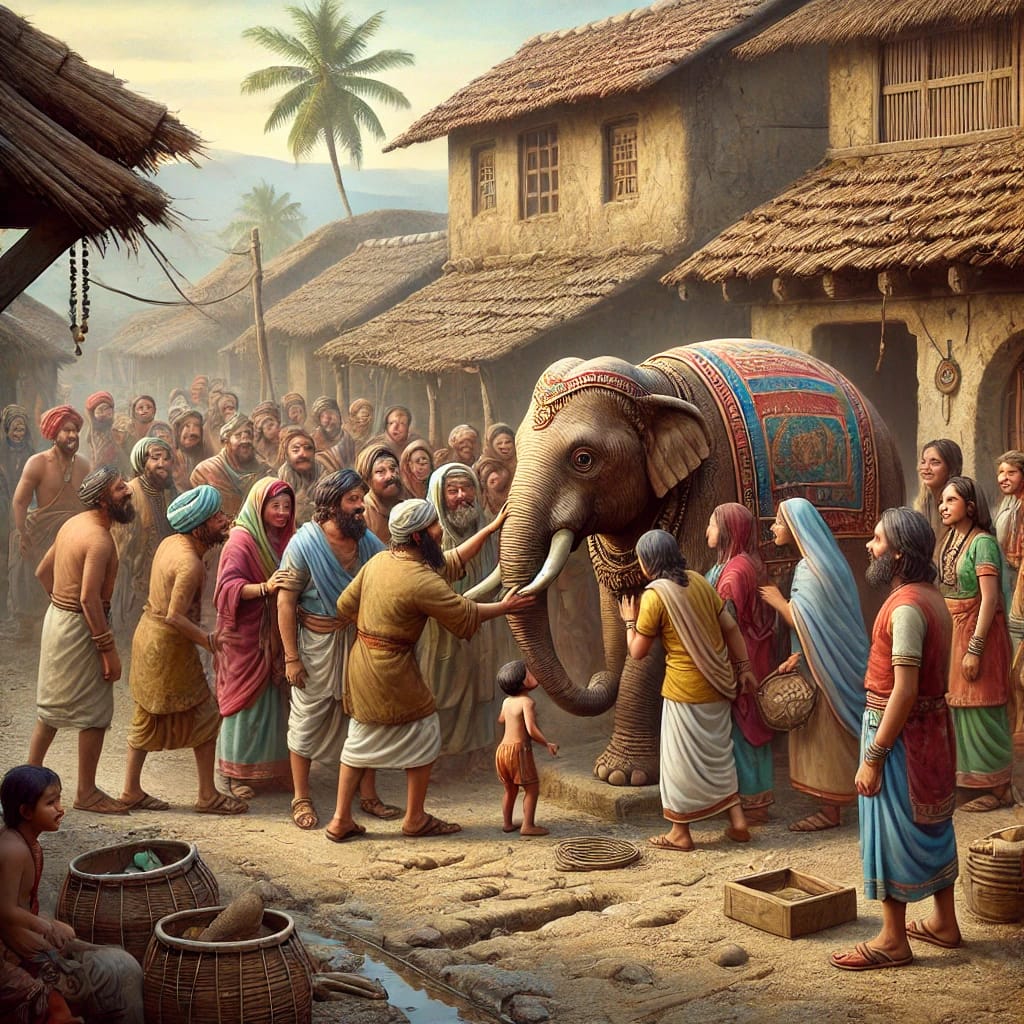
Seeing this, Atmaram called everyone closer and asked them to take a closer look without fear. Slowly, people gathered courage and approached the wooden elephant. Soon, news of this extraordinary creation reached the king.
The king was highly impressed and placed the wooden elephant at the entrance of his palace.
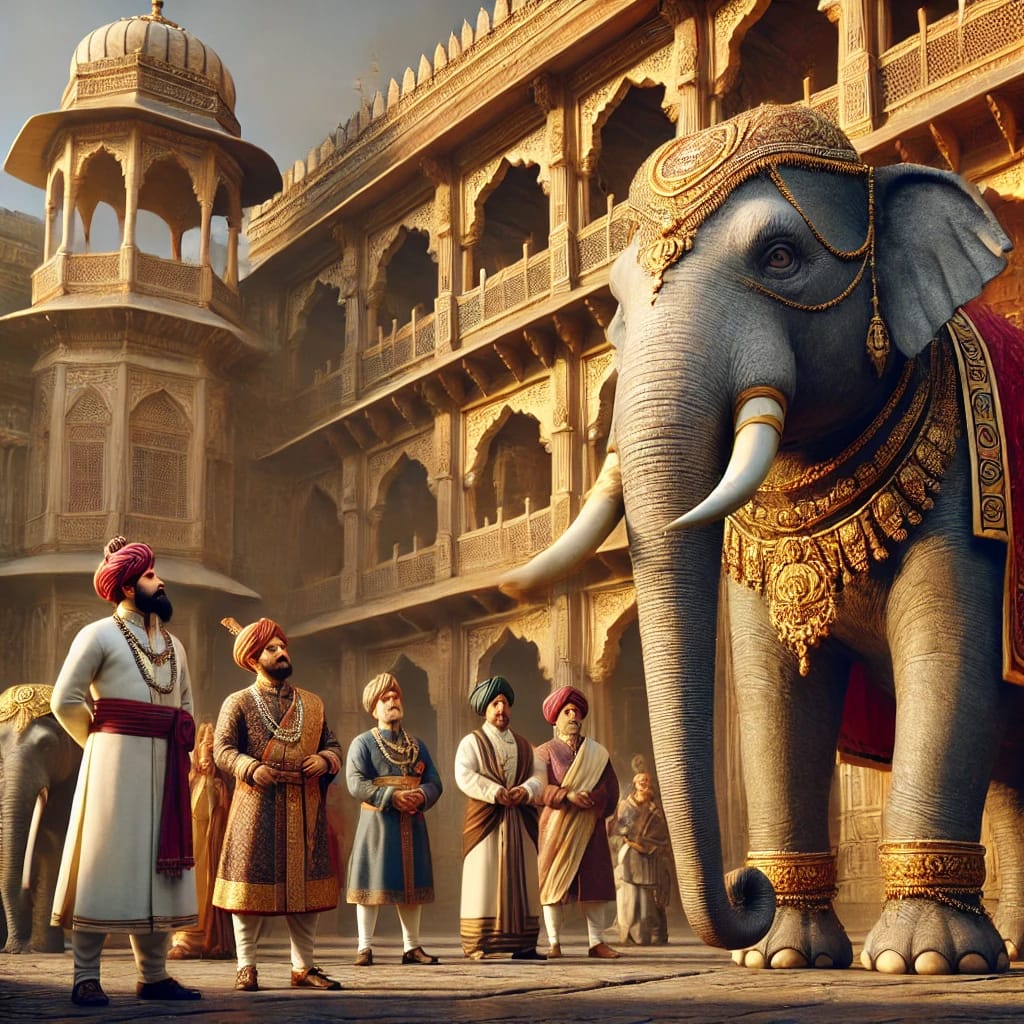
However, over time, people realized that no matter how realistic it looked, it was still just a piece of wood. It could not move, eat, or live like a real elephant.
It was not the piece of wood that had scared them—it was their own illusion.
Connection to Maya (Illusion)
In Advaita Vedanta, Maya is the power that makes the unreal appear real. The wooden elephant is an example of this illusion. From a distance, it appears to be a real elephant, but on closer inspection, it is just wood. Similarly, the waking world seems real, but when examined through wisdom, it is seen as an illusion.
The Mandukya Upanishad describes three states of experience—waking (Jagrat), dreaming (Swapna), and deep sleep (Sushupti)—all of which are part of Maya.
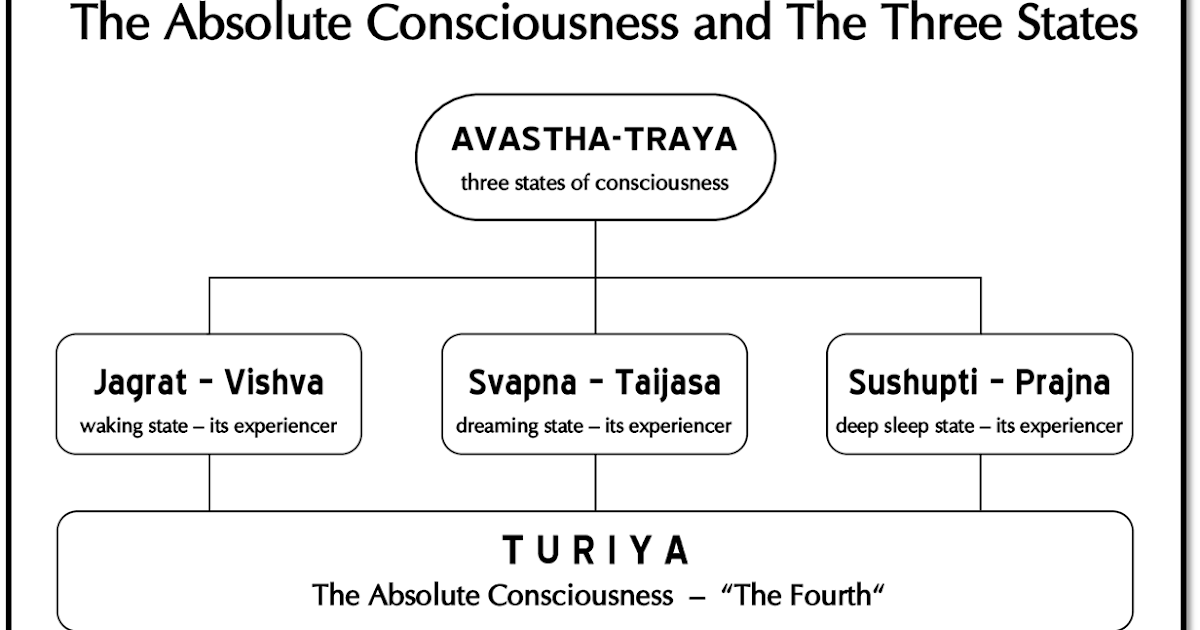
Just as the wooden elephant appears real but lacks life, the waking world (and the other two states) appears real but lacks independent existence. It depends on pure consciousness (Turiya), just as the wooden elephant depends on wood.
Appearance vs. Reality (Adhyasa – Superimposition)
A child who has never seen a real elephant might be completely convinced that the wooden one is real.
Similarly, an ignorant person believes the world, body, and mind are real, when in fact, they are just names and forms on the underlying reality (Brahman).
The waking world is like the wooden elephant—it appears real but is ultimately just a manifestation of consciousness.
Only through deep inquiry (Jnana) does one realize that everything is just Brahman, appearing in different forms.
Turiya – The Wood Behind the Elephant
In the story, if someone were to focus only on the wood rather than the elephant’s form, they would see the truth. In Advaita, this represents Turiya, the fourth state of consciousness, which is pure awareness.
The wooden elephant (Jagrat & Swapna) → Temporary, changing forms.
The wood (Turiya – Pure Consciousness) → Unchanging, eternal, the only real existence.
As is told in Mandukya:
“That which is neither waking, nor dreaming, nor deep sleep, but the witness of all three, is Turiya. It is beyond words and thoughts. It is the Self.”
The wood is always wood, regardless of whether it is shaped into an elephant, a horse, or a table. The elephant is just a name-form superimposed on wood. One may superimpose any other name-forms on wood like horse, table, chair.
The appearances change but their essence, wood remains the same. So for one who has the vision of the essence, for him gold has the same essence as dust. The entire universe of name-forms to which one had superimposed a reality vanishes.
Similarly, Brahman (pure consciousness) remains unchanged, even though it appears as the world

 Neev Community for Self Inquiry & Sustainability