Categories
Advaitic Inquiries

Samsara is Nirvana – The Perfection of the Imperfection

Social media feeds feel like storm warnings—flashing red, relentless. In every scroll, 2025 is cast as a cursed year. It’s easy to feel buried under the nonstop flood of headlines and social media updates. The news can stir up strong emotions—worry, anger, frustration, dread—and it’s easy to get caught in thoughts about how wrong things are or how they should be different. The world can seem more terrifying than ever. However, the view of the world is different for those who have non-dual vision.

Using very simple analysis, in this article, I want to explore this paradoxical clarity of enlightenment—a state of mind that perceives perfection and wholeness even in the apparent imperfection and chaos of the world with the hope that such an exploration can inspire people to seek the same vision and ultimately free themselves from suffering.

Categories
History of Advaita

The Upanishads and the Axial Age: Rigvedic People – Invaders, Immigrants or Indigenous? – Part 3

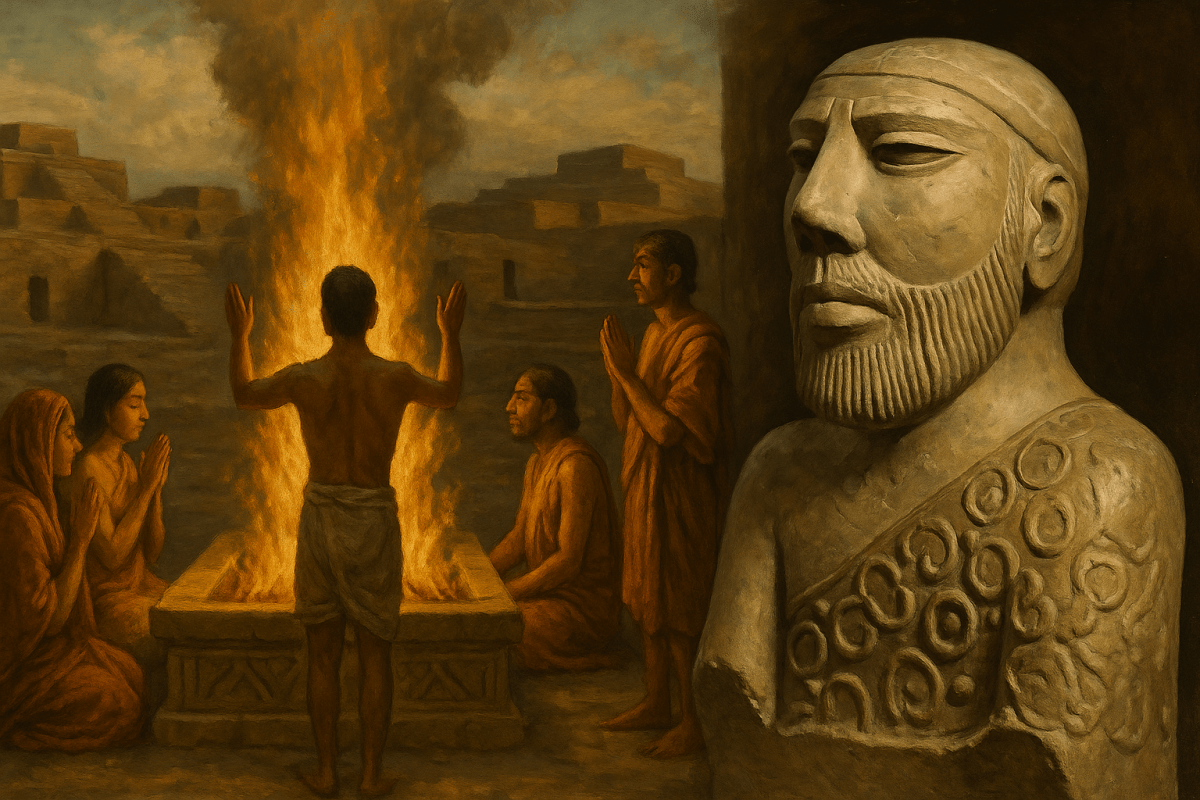
For generations, ancient India’s narrative was dominated by the Aryan Invasion Theory (AIT), later refined as Aryan Migration Theory (AMT). These 19th-century theories depicted external “Aryans” arriving around 1500 BCE, bringing Vedic traditions and Sanskrit, supposedly subjugating the indigenous Harappans. This framework, the article argues, became a potent political tool, fostering a divisive “Aryan-Dravidian” split and undermining Indian heritage.

However, the Out of India Theory (OIT) offers a compelling counter-narrative: the Indo-Aryan people and their Vedic culture originated within India, with the Indus Valley Civilization (IVC) being the Vedic Civilization. OIT proponents cite the absence of invasion evidence at Harappan sites, highlighting profound cultural continuity. New archaeological and genetic findings increasingly support indigenous origins, even suggesting westward migrations from India.

This isn’t just an academic debate; it’s a vital quest to “reclaim India’s national identity.” By challenging ingrained historical distortions, OIT aims to re-establish India’s place as a “Cradle of Civilization,” predating Mesopotamia and Egypt, affirming a deep, unbroken cultural lineage.

Categories
Advaitic Inquiries

What Does It Mean To Be Enlightened?

This post is a response to a question from a friend who’s seriously exploring what enlightenment actually is. It’s a good question — and a rare one — because most people, like I did for fifteen years, chase enlightenment as if it’s some mystical high, a state of bliss, or a mind-blowing shift in consciousness.

But here, I’m cutting through all that.

No poetry. No metaphors. No smoke and mirrors.

I’m answering the question head-on — in plain, precise language that doesn’t flinch and doesn’t hide behind spiritual jargon. And what I offer here stands up to every form of rational scrutiny.

If you’re looking for clarity, not fantasy, this is for you.

Categories
History of Advaita

The Upanishads and the Axial Age: Religion in Pre-Historic India – Part 2

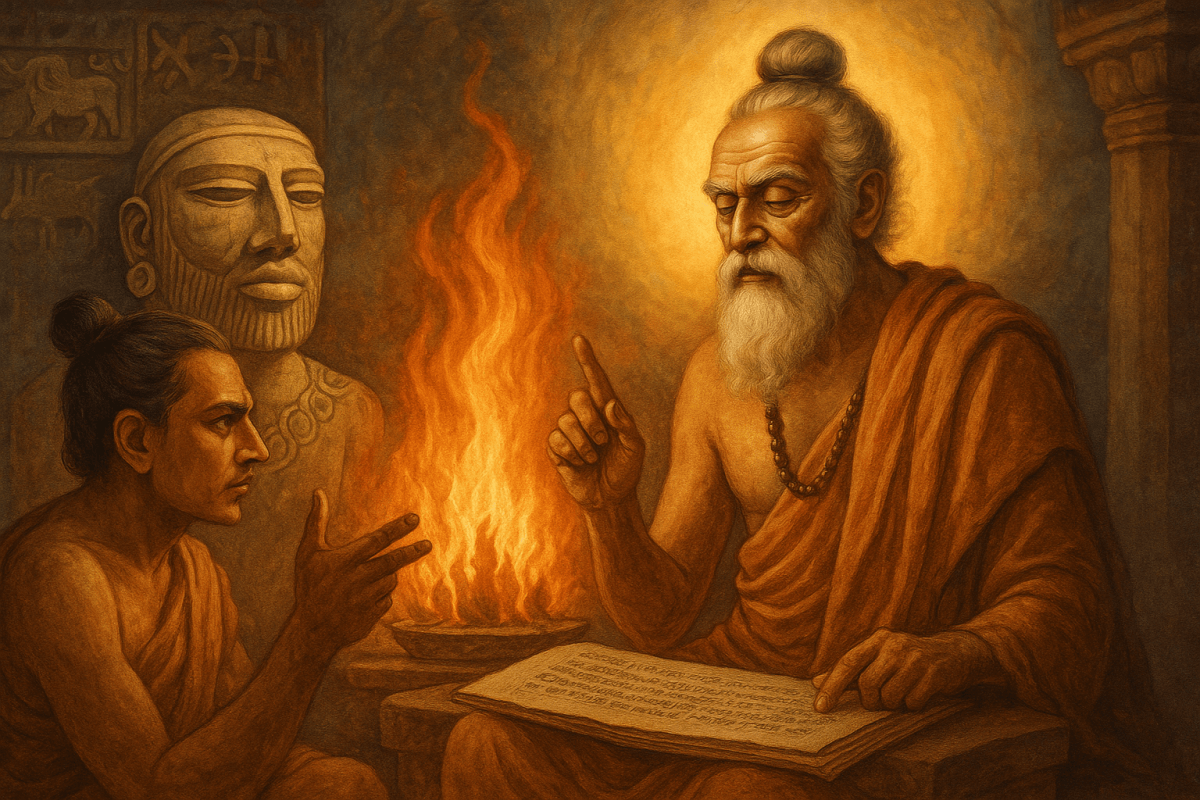
In Part 1 of this series, I traced the quiet birth of the Upanishadic vision against the backdrop of one of humanity’s great turning points—the Axial Age. In Part 2, the focus turns to the Indian subcontinent itself—not yet Vedic, but already in motion. I will trace the social, political, and religious changes unfolding in pre-historic and proto-historic India, which together form the cultural soil from which later Vedic and eventually Upanishadic thought would emerge. I also show that evidence increasingly points to a profound continuity between the Harappan (Indus-Sarasvati) civilisation and later Indian culture, suggesting the Harappans themselves may have been the authors of the Rigvedic tradition that gave rise to the Upanishads.