
Teaching and Writing about Non-Dual Self Inquiry/ Jnana Yoga
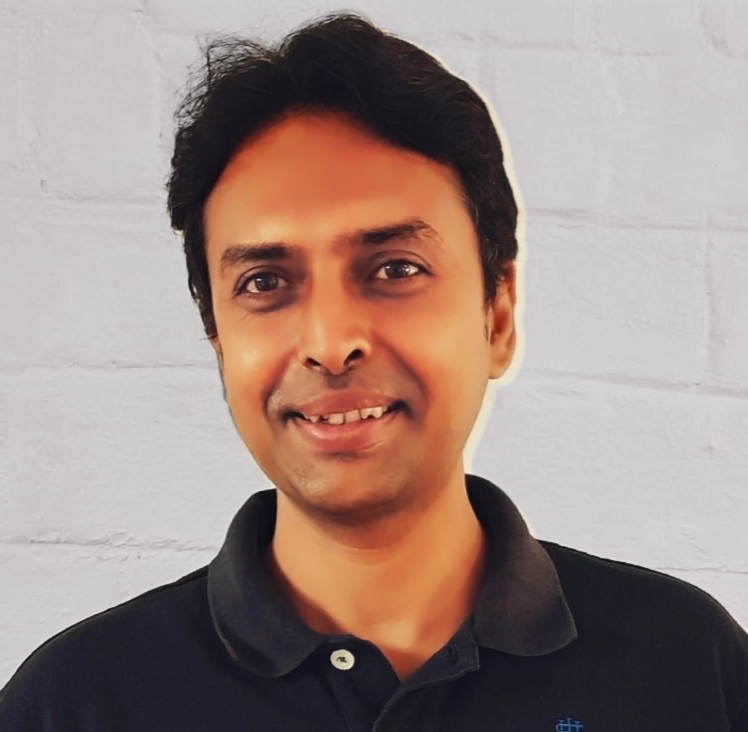
My name is Anurag Jain (born 1975). I live in Jamshedpur, India with my wife Anjali. I graduated as a Civil Engineer in 1997. After that, I took to teaching at J. Krishnamurti School, Chennai because of my interest in his teachings. I started NEEV Trust in 2006, working in the areas of social work, social entrepreneurship and education for the underprivileged. Finally, when I understood without doubt that the root of all problems of man lies in his ignorance of the ultimate reality of life, I closed down all social work and educational activities and started the NEEV Centre for Self Inquiry. In its present form, it is this website in which I am writing and teaching self-inquiry. We are also developing our NEEV Centre for Self Inquiry, as a place of retreat in Hurlung Village, Jamshedpur. Although I followed certain schools of non-dual inquiry (Krishnamurti, Advaita and Direct Path), I am non-sectarian as far as path affiliations are concerned, because, at the highest level, all completely non-dual paths deconstruct themselves. I take various methods of different non-dual paths as different tools/vocabularies/skilful means to deconstruct subject-object duality at every single level, for living and experiencing the Unborn Wholeness – called Brahman, Tao, Awareness, Radiant Mind or Emptiness in different non-dual traditions – which is the true, inconceivable nature of the world. However, as my personal path to liberation has been Advaita, I teach the traditional method of self-inquiry as taught by the Advaita Gurus – Shankaracharya and Gauadapada.
About NEEV

I started NEEV Trust, a social work organization in 2006; the Centre for Self Inquiry came into existence only in 2017, after about a decade of work done in the areas of social work and education through NEEV Trust, and my self-inquiry. My aim throughout these years was to create a transformation in the world. However, through all my experiences and reflections I found that the cause of all suffering is not outside but in ourselves. I realized that no amount of changes in the systems and structures of the outer world can end suffering at the root level. So in 2017, I closed down all my educational and social activities to focus on self-inquiry (which had already started since my college days but now decided to make it my full-time work) and help others in the same journey through NEEV Centre for Self Inquiry.
My Journey of Self-Inquiry

Self-inquiry is about understanding the nature of suffering within oneself, and the ending of it, without resorting to any belief/authority. It seeks to understand what is world, mind, body, thought, action, experience and death. While most people do not find the need for this, some people do: at some point in their lives. Depending upon the intensity of this need, self-inquiry becomes, the one and the only, important thing in the world to uncover the truth: the Unborn Wholeness called Self, Brahman, Tao, Awareness or Emptiness in different traditions
Sooner or later, the amount of time one devotes to it becomes substantial. Moreover, as self-inquiry keeps exposing the falsities in which the mind is embroiled, one sees the utter futility of all organizations and institutions to solve anything psychologically. In my case, when I was 20 years old, my head went into the tiger’s mouth of self-inquiry. I worked for about 22 years to create a decent saving while pursuing my self-inquiry. Because of this, I could take early retirement at the age of 42; in 2017 I decided to devote all my time and energy to further self-inquiry through this website and NEEV Centre for Self Inquiry.
My Teachers
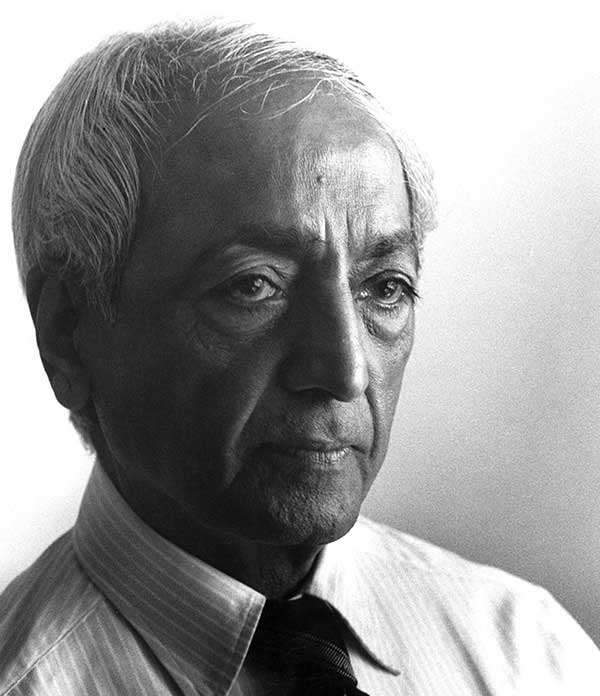

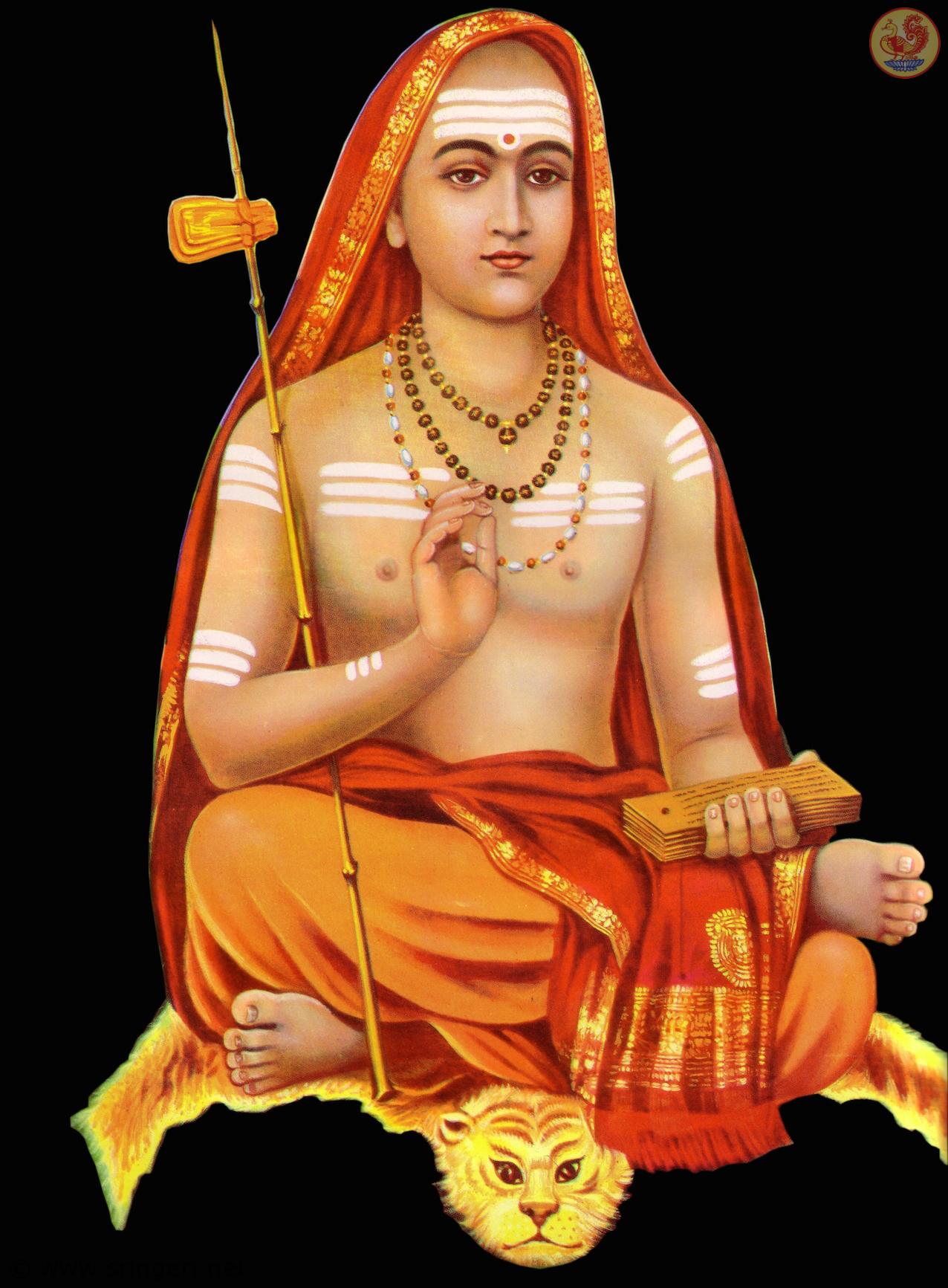

I have been very interested in the teachings of J Krishnamurti for the last 25 years because he has gone deeply into the questions of everyday life and suffering without resorting to any belief or authority. I also read very widely in other fields of religion, philosophy, psychology, science, economics, sociology, history, literature and politics to gain an understanding of myself and the world. Ken Wilber was another big influence. His Integral Theory helped me create a useful map of developmental stages of consciousness that was sorely lacking in the teachings of Krishnamurti and for which I felt a great need at that particular stage of my inquiry. All this eventually brought me to Advaita Vedanta – a Non-Dual school of Self-inquiry and Self Realization – attributed to Shankaracharya (though this is a widely held erroneous view; Shankara was a link – albeit a prominent one – in a vast tradition of Advaita that was present much before him). The technical term used by Advaita Vedanta for Self Inquiry is called Jnana Yoga, but I generically use this term to indicate all non-dual inquiries of different schools that help one in understanding the ultimate reality free from all subject-object duality and get released from all suffering, without resorting to any belief.
I gained direct knowledge of my true Self/Witness/Awareness through Advaita in 2012. I have written about it in my article “Self-inquiry and insight into one’s true nature in Advaita“. I am indebted to Advaita teacher James Swartz, whose writings on the internet helped me get Self-knowledge. Before this, I had read the basics of Advaita Vedanta for merely a month. All my previous work with J Krishnamurti’s teachings had helped me negate most of the falsity. The final nudge required by Advaita was – Tat Tvam Asi : Thou Art That. It meant I had to stop seeking truth as an object and understand the subject: my true Self/Witness/Awareness as the ultimate reality. This happens through an insight called the akhandakara vritti.
However, it took some time (7 years) to clear mostly philosophical doubts relating to Self/Awareness/Witness which arose from my readings of different schools, both within and outside Vedanta, that speak of Truth in different and contradictory ways. I was immensely helped in all this by my online friend, Direct Path teacher and philosopher, Greg Goode, who patiently dialogued with me through all my mind-boggling questions, changes and reversals. Not only did he help me resolve the incredibly complex issue of multiple paths (I understood that different non-dual paths are merely different vocabularies to deconstruct all perceived subject-object duality. One chooses paths according to the vocabulary one is drawn to), but also showed me the way to Ajativada beyond Vivartavada of Shankara which most Advaitins are familiar with.
In early 2020, I stabilized in the Self-knowledge/Witness stage, completely beyond all doubts. My mind, body and the universe appeared and disappeared as phenomena to the eternal Witness/Self/Awareness. Beyond this is the stage when all objects too stop appearing as entities/objects and are seen to be Awareness itself. This is when the superimposition of the Witness function on Awareness collapses and subject-object duality ends. Everything is realized as empty Awareness. I was initiated into this stage after a series of dialogues with Greg Goode and my readings in Ajativada of Gaudpada as well as my readings in Direct Path (chiefly books written by Greg Goode). In Dec 2020, I realized “Everything is Awareness”. After this, an individual getting enlightened does not make any sense because the very idea of an individual gets obliterated. Enlightenment is seen to be the very nature of the world, which has always been so. Individual-Creator-Creation are seen to be dream-like appearances, which have never existed objectively. Even then, society from its conventional view would call such an appearance/person a Jivanmukta.
Therefore, the path of self-inquiry/Jnana Yoga I pursued, is a combination of J Krishnamurti, the traditional paths of Advaita called Vivartavada of Shankaracharya followed by Ajativada of Gaudapada/Direct Path by Sri Atmananda Krishna Menon as unfolded by Greg Goode in his books.
In non-duality, paths are only spoken from a relative standpoint. Since non-duality means acknowledgement of the fact that ultimate reality is always non-dual, a “path”, in non-dual inquiry implies only negating dualistic conceptual errors of the mind that prevent one from resting in the always available, ever-present true nature of reality as Non-Dual Awareness.
A Short Note on My Path of Self-Inquiry
Self-inquiry is a path requiring a highly philosophical bent of mind. Those interested in learning self-inquiry through this website should definitely go through my page “Stages of Self Inquiry” before they begin exploring the site. For me, the guiding light for self-inquiry was the total deconstruction of subject-object duality at every level.
Talking about my journey in Advaita, in the traditional Advaita path, if one is a householder, a seeker first enters the path of Karma Yoga; after attaining sufficient mental purity he becomes qualified to enter the path of Self Inquiry/ Jnana Yoga.
However, my path has been a departure from traditional Advaita because I did not do any Karma Yoga. Instead, I entered Jnana Yoga through the unique teachings of J Krishnamurti. In my mind, this is a phenomenal and novel contribution of J Krishnamurti to the world of spirituality. I left his teachings at a certain stage to enter Advaita. Why I did so, is a topic for a very advanced practitioner of Jnana Yoga. Suffice it to say that a seeker can realize the potential of his teachings by entering Jnana Yoga of Advaita directly, while being a householder and, without entering the traditional teachings of Karma Yoga, which rely on the concept of God. (Later the concept of God is negated in Jnana Yoga of Advaita). With Krishnamurti, one can enter deconstructive Jnana Yoga, right from the word go! There are books in Advaita too, with which one can start off Jnana Yoga/self-inquiry directly if one has the purity of mind. One such book, which I use as my course book is the Drig-Drishya Viveka.
As far as Krishnamurti’s teachings are concerned, there are points of divergence and contention, along with several similarities, between the Jnana Yoga of Advaita and Krishnamurti’s teachings. So it is unwise to conflate both the teachings and assume that they are saying one and the same thing in terms of methodology. One can read about this here: Differences Between Advaita and J Krishnamurti : A Dialogue. One who has deconstructed the subject-object duality completely can see how all non-dual paths operate, and can easily sift through the various languages of these paths. But the different languages of different paths are bound to confound entry-level, middle-level and even highly advanced seekers. So it is best to have a very good teacher to guide one through these paths.
No seeker needs to follow the same trajectory I did in my journey of self-inquiry but those who wish to learn self-inquiry from me would pass through various stages. These stages of Self-Inquiry can be found here: “Stages of Self-Inquiry”.
Those interested in learning Advaita can contact me through the form provided on the ‘Learn Self-Inquiry‘ page on this website.
 Neev Community for Self Inquiry & Sustainability