

For those who wish to pursue self inquiry personally, and for those who wish to learn self inquiry under my guidance, this page details all the aspects of the path of self inquiry along with the various stages of self inquiry I pursued and which I teach.
Contents:
- The Purpose of Self Inquiry
- My Path of Self Inquiry
- Does One Need a Teacher for Self Inquiry?
- Choosing One’s Path
- The Beginning of Self Inquiry
- Stages in My Self Inquiry
- Stage 1 – Sattvic Lifestyle Inquiry/ Developing qualifications for self-inquiry/Shifting from a life of becoming to being
- Stage 2 – Meditative Inquiry/ Understanding Mind/Observer Stage
- Stage 3 – Advaitic Inquiry – Witness/Jnani Stage: “I am Awareness”
- Stage 4- Advaitic and Direct Path Inquiry – Collapse of Witness/Jivanmukta Stage: “Everything is Awareness”
- After Non-Dual Realization
- No One Gets Enlightened
- Emptiness of Awareness: Awareness is a Non-Affirming Conceptual Designation for the Nature of Reality/Phenomena
- A Note on the Path of Advaita Jnana Yoga Followed by Me
- Learn Self Inquiry from Me
The Purpose of Self Inquiry
Self inquiry is about understanding the nature of suffering within oneself, and the ending of it, without resorting to any belief. It seeks to understand what is world, mind, body, thought, action, experience and death to alleviate suffering. While most people do not find the need for this, some people do: at some point in their life. Depending upon the intensity of this need, self inquiry becomes one and only important thing in the world. Self inquiry is also called Jnana Yoga: the path of non-dual realization, in which one sees through the illusion of subject-object duality at every single level. This removes all sense of separation one feels between oneself and the world, the root cause of all suffering. It is because of this basic duality that one sees difference, giving rise to fear and desire, the twin movements which originate karma and the endless cycle of transmigration. I use Jnana Yoga as a generic term for all kinds of non-dual inquiries which have the aim of liberation from suffering created by duality/sense of separation without resorting to any belief.
“Non-dual” means “not-two,” which implies there is no true multiplicity of phenomena. While non-dual self inquiry eradicates suffering admirably, the focus is not on how to have a comfortable life or desirable experiences, but rather to understand the nature of all phenomena. Are they really what they appear to be? Non-dual inquiry keeps penetrating all levels of subject-object duality, starting from gross to the subtlest level, to finally reveal that reality is non-dual without any inherent subject or object. All phenomena are empty awareness even in their multiplicity. There are no substantial, solid, independent, and autonomous phenomena. Even the “person” whom we take ourselves to be – a distinct subject – is found to be empty: a mere conceptual entity or a name-form. Reality is always non-dual, but its true nature is screened from us due to the errors of dualistic thought patterns that condition us, which is otherwise called avidya or ignorance.
My Path of Self-Inquiry
My path of self-inquiry did not follow one particular school, though it always veered around non-dual approaches. The only constant thing in my journey was the desire to end suffering without belief or authority. As I proceeded on this journey, I got exposed to various paths and schools. In my engagements with them, I realised the root problem was the subject-object duality. Moreover, my predilection was towards those paths and methods that employed more self-inquiry rather than meditation (though which is useful as a tool to stabilize the mind), so I gravitated towards them as a solution to deconstruct the subject-object duality.
In traditional Advaita, the non-dual path I followed, if one is a householder as a seeker, then he/she first enters into the preparatory path of Karma Yoga. After attaining sufficient mental purity – called sattva in Advaita, he becomes qualified to enter the direct path of liberation called self-inquiry/ Jnana Yoga. If a seeker directly wishes to enter Jnana Yoga, he/she has to renounce the world and take sannyasa in most cases, technically called vividisha sannyasa in Vedanta. However, there are several examples of householder Advaitins in the Upanishads like Uddalaka, Janaka etc.
Neither did I renounce the world, nor did I enter Karma Yoga. Instead, I entered Jnana Yoga directly through the unique teachings of J Krishnamurti. In my mind, his teachings are a phenomenal and novel contribution to the world of spirituality. I left his teachings at an advanced stage to enter Advaita because I felt the need for a more metaphysical structure for further inquiry. Suffice it to say here that a seeker can realize the potential of his teachings to enter Jnana Yoga of Advaita directly, while being a householder and, without entering the traditional teachings of Karma Yoga, which rely on the concept of God. (Later the concept of God is negated in Jnana Yoga). See my article “The Place of Devotion/Bhakti in Shankara Advaita”. With Krishnamurti, one can enter deconstructive Jnana Yoga, right from the word go! One has to see for oneself if one can take this path as it requires extreme dedication and intellect. For most, it is advised that they go through the preparatory path of Karma Yoga before coming to Jnana Yoga if they take up Advaita. (Much later, I realized that one can enter Jnana Yoga directly even through the Advaita textbook Drig-Drishya Viveka. So in my teachings now, I use this as a text-book rather than Krishnamurti’s teachings. However I still retain a reading list of Krishnamurt books for students of Stage 1, who study with me)
Having said this, there are many points of divergence and contention, along with innumerable similarities, between the Jnana Yoga of Advaita and Krishnamurti’s teachings. So it is unwise to conflate both the teachings and assume that they are saying one and the same thing in terms of methodology.
Does One Need a Teacher for Self-Inquiry?
Theoretically speaking, if one has the prerequisites in terms of enormous zeal for self-inquiry, and enormous dedication to make it the only important thing in one’s life, one does not need a teacher in person. The books and writings should do. I did not have any appointed teacher throughout my own journey. I had several philosophical dialogues with some teachers online to discuss certain very subtle issues. For my post-Witness stage, I had a lot of online dialogues with Greg Goode – Teacher of Direct Path. Nonetheless, I can say that a large part of my journey was almost without a teacher in person: just the books and the teachings. But this scenario is extremely rare.
The majority of people, I have seen benefit and require active support and guidance of a teacher. I have written an article on Self-inquiry and Issues Related to Teachers to help seekers find a true teacher. The rule of thumb is that if you are very serious in your self-inquiry, the teacher shall appear at the right time. It may not be one single individual, and it may not be a teacher who hands the truth to you. I encountered several people on my journey, who taught me a step or two in the direction of the final destination. They all came to answer, it seems to me in retrospect, questions I was holding most intensely at that time. So one definitely needs to have a lot of dialogues with like-minded people in one’s journey of self-inquiry, apart from one’s personal readings. Having said this, there are also the rare and genuine teachers who can ferry you across the ocean of samsara – right from one shore to the other.
Choosing One’s Path
Inexperienced seekers labour under the illusion that all paths lead to the same truth. However, non-dual paths are completely different from dualistic paths in terms of the ultimate reality. Even amongst non-dual paths, the practices of different paths may be diametrically opposed to each other. For example, almost every seeker believes that spirituality has to do with meditation. This is the case mostly for Yoga-based schools and devotion-based schools. In many non-dual inquiry-based schools, the emphasis is more on transformative knowledge; meditation is an invaluable aid (for mental stabilization) but not the direct means to liberation. (For further understanding, one may read my article “Shabda Pramana: Enlightenment through Words in Advaita Vedanta: Presenting a Dialogue) Nowadays, the teachings of Yoga schools are mixed with the teachings of Shankara-Gaudpada Advaita Vedanta. I have touched on this issue in my article Difficulties in Finding the True Method of Advaita Vedanta of Shankaracharya – Part 1. It talks about numerous sub-schools even within Vedanta. So any inquirer should be sure of two things
- Every path is different depending on whether it is dual or non-dual.
- Every path has a different methodology for reaching its goal. At times these methodologies or practices conflict with each other.
One must study the path carefully and see if it suits his/her purpose. For instance, those inclined to bhakti very strongly may not be inclined to Advaita Vedanta of Shankara/Gaudapada, unless they are willing to consider God as a helpful illusion at the initial stage of their journey to arrive at non-dual Awareness.
The Beginning of Self-Inquiry
Self-inquiry begins when one has an inexplicable and inextinguishable desire to gain freedom from all suffering. Vedanta shows that human life has four main aims: Dharma (Duties), Artha (Wealth), Kama (Pleasure) and Moksha (Freedom). The first three aims are actions which result in impermanent results. Being impermanent and transitory in nature, we are unwittingly tied to this ‘wheel of activity/samsara‘: both in this life and in the next, through the cycle of karma/action, death and rebirth.
Once an individual comes to understand vaguely the futility of the first three aims of Dharma, Artha, and Kama and begins questioning them to find if there is something beyond this mechanical process of desire and suffering we call life, the fourth aim of Moksha appears on the horizon. Self-inquiry, thus, kicks in when one is discontented with all the goods that life has to offer. If the self-inquiry is really genuine one shall leave no stone unturned to completely end the teeming discontent of life.
Stages in My Self-Inquiry
Basically, my journey of self-inquiry could be divided into four phases, therefore the reader finds my writings divided under four headings of self-inquiry on this website. These inquiries are arranged in a hierarchical order as –
- Sattvic Lifestyle Inquiries – Developing qualifications for self-inquiry. Shifting from a life of becoming to being.
- Meditative Inquiries – Understanding Mind/Observer Stage
- Advaitic Inquiries – Witness Stage – I am Brahman/Awareness – Vivartavada Stage
- Advaitic/Direct Path Inquiries – Collapse of Witness Stage – Everything is Brahman/Awareness – Ajativada Stage
Common to all these inquiries are the three processes of Jnana Yoga/Knowledge Yoga, called:
- Sravana/Reading of Scriptures/spiritual literature
- Manana/Reflecting on them so that no doubts remain
- Nidhidhyasana/Contemplating on the truths ascertained through reflection
These processes remain the same, but they become deeper, as self-inquiry progresses.
Stage 1 – Sattvic Lifestyle Inquiry (Lasted twenty years for me)
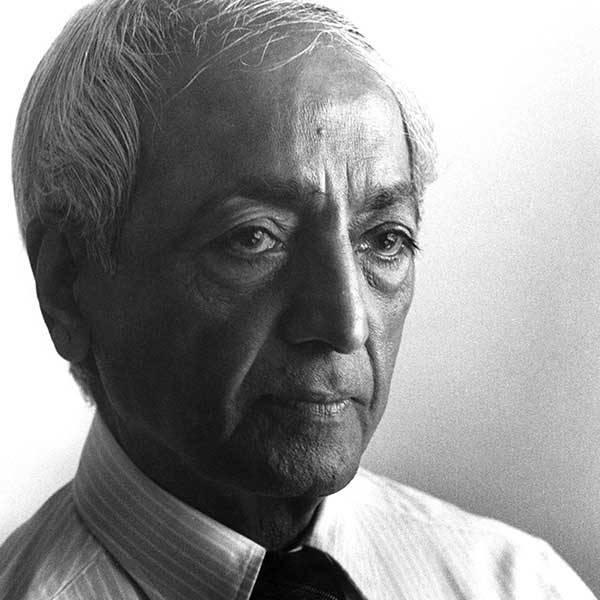
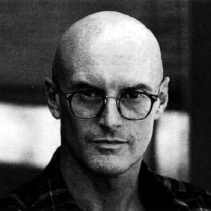
| J. Krishnamurti | Ken Wilber |
This stage is about the psychological preparation of the mind: freeing itself from all worldly engagements of Dharma (Duties), Artha (Wealth), and Kama (Pleasure) and orienting it towards Moksha (Enlightenment). During this process, the seeker shifts from being a tamasic or a rajasic personality to becoming a sattvic personality, developing a lifestyle based on the wisdom of being, rather than pursuing a stressful lifestyle of constant becoming. Traditionally, in Advaita, this is done through the teachings of Karma Yoga. However, since these rely on the provisional concept of God, I primarily benefited from the teachings of J Krishnamurti and Ken Wilber.

This initial stage of inquiry is characterized by a sense of unease and dissatisfaction with the world as it is. The seeker harbours a lingering suspicion that something is amiss in their life, yet they are unable to pinpoint the exact nature of the problem. This leads the seeker to learn about the nature of the conflict he/she is facing. Since the senses are drawn outwards naturally, the focus of the seeker is to understand the world in which he/she finds themself and has come to willy-nilly accept as the reality. I have explored this topic in my articles such as
Have We Got A Complete Map Of Life?, How Maps Of Mind Condition Us to Live and Act, The Flatland Map of Scientific Materialism: The Dubious Legacy of Rene Descartes (Part 1) The crux of these articles is that since our childhood we find ourselves immersed in a primarily materialistic and capitalistic worldview that unconsciously conditions us and dictates every thought, feeling, and action we undertake in our life without us coming to know about it.
Krishnamurti and Ken Wilber helped me understand and deconstruct the conditioning created by different worldviews. While Krishnamurti did it in the framework of a conversational dialogue, drawing on his acute observation of multitudinous experiences of daily life, Ken Wilber did it through a systematic philosophical model, drawing on the scholarly work of numerous authors. I required the help of both, and I am sure that other seekers too would require the help of both approaches: the deconstructive style of J. Krishnamurti and the constructive framework of Ken Wilber.
Krishnamurti’s inquiries are quite demanding, unsettling, and penetrating. They are meant to question the ego and free it from all its commitments and attachments to all worldly projects, going deeper into the mind, ultimately leading to questioning the very nature of thought. In my case, it took me about twenty years to get completely finished with all the psychological bindings to the world. Krishnamurti helps us understand that the root reason for all conflicts one faces in the world is due to the gap between ‘what is’ and ‘what should be’. Our society has conditioned us since childhood to the path of psychological becoming. One is trained to become rich, famous, powerful, knowledgeable, or erudite. This constant becoming is fueled by the gap one perceives between ‘what one is’ and ‘what one should be’ as conditioned by society. Once one understands that all these aims of life not only create a conflict of constant becoming but grant only temporary happiness, one shifts his journey from becoming to being: from the socially conditioned compulsion of becoming to the silence of unruffled being. This is also the stage where the duality between the thinker and the thought comes to an end because the thought is ‘what is’ and the thinker is ‘what should be’. With the end of becoming, the thinker ends. What exists is only the movement of thought. This movement in Advaita is termed as a transformation from being a rajasic personality to becoming a sattvic personality.

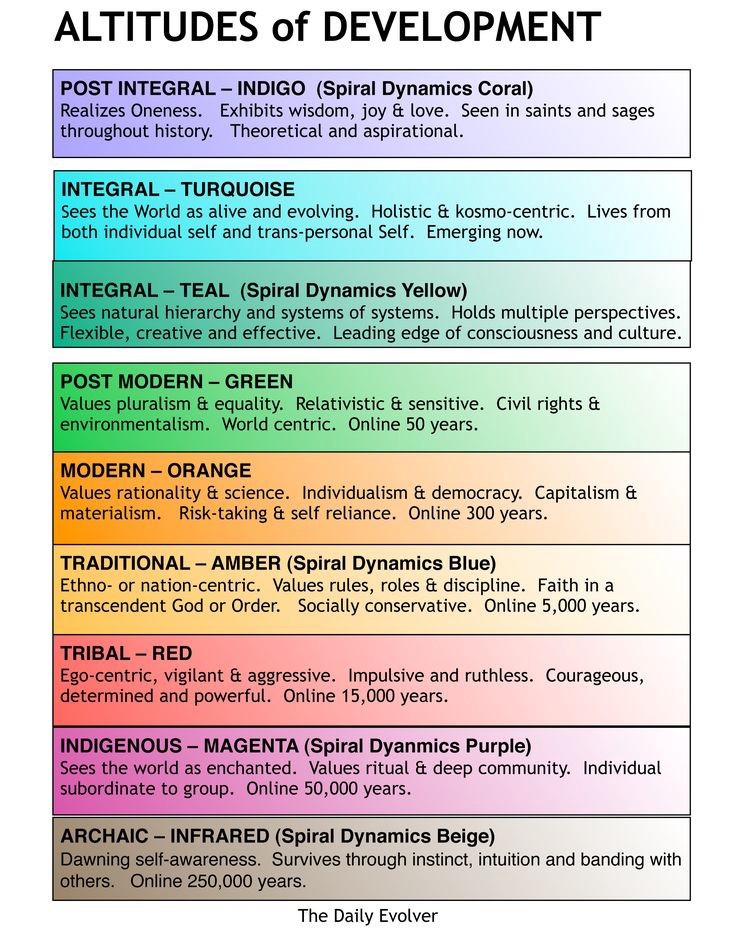
All these psycho-philosophical inquiries result in steering our minds and senses away from their perpetual engagement in the outer world of becoming and fixing them on the ultimate aim of Moksha/Liberation. This steering away from the phenomenal world by mind and senses is respectively called sama/withdrawal of mind and dama/withdrawal of senses in Advaita. The first four stages of yama, niyama, asana, and pranayama of the Yoga school of Patanjali correspond to this stage. It’s worthwhile to mention here that I also practised Hatha Yoga (asana and pranayama) quite intensely for a few years to root out all tamas from my body.
The mindset and lifestyle of sattva that one develops in this phase continues throughout one’s life. In fact, the movement towards a sattvic lifestyle becomes more and more pronounced as one moves from stage 1 to stage 4. Initially, the development of a sattvic lifestyle forms the base for a seeker to move further in the journey of self-inquiry and later on, after stage 4 enlightenment, sattva becomes an expression of liberation extending to the world at large. Thus a sattvic lifestyle forms the base and fruition of a life of self-inquiry. Talking about the fruition, Krishna tells in the Bhagavad Gita:
“As the ignorant perform their duties with attachment to results, the learned (enlightened) may similarly act, but without attachment, for the sake of leading people on the right path.”
~ Verse 3.25
Stage 2 – Meditative Inquiry – Understanding Mind – Observer Stage

Once a seeker has become significantly sattvic and has ended with the delusion that any outer object or project can give him permanent happiness, they have become ready for the most formidable challenge of facing their mind. So far, they were helplessly and unknowingly being driven by their mind, based on their fears and desires. With the preparation and understanding gained about the world in the first stage, the seeker has come to appreciate that conflict is not created by outer people and events but by how one’s mind interprets them based on its complex network of unconscious fears and desires and which is the impetus behind psychological becoming. To lay bare this complex network is the task that lies in front of them. This is accomplished by meditation, which is very different from what people commonly associate it with.
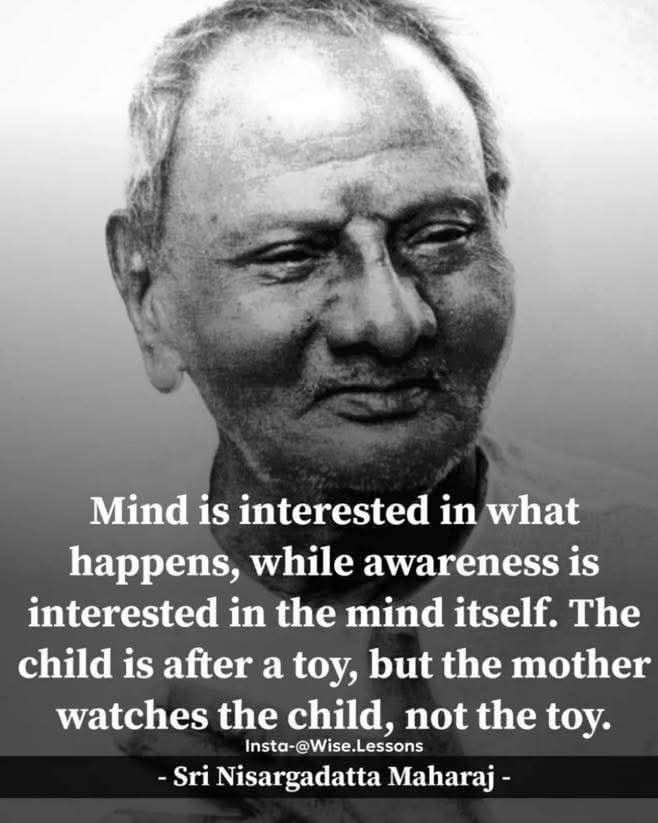
Many people associate meditation with some form of control or practice delimited by time and space. However, my meditative inquiry was based on Krishnamurti’s teachings of “Choiceless Awareness of What Is,” which does not depend on posture or control. Rather, it can be done at all waking hours, amid all daily activities. As mentioned earlier, the same state can be reached by doing shravana and manana on the reputed Advaita book Drig-Drishya Viveka, which, after describing the theory, ends with a practice of a set of six meditations. In Advaita, this form of meditation is called contemplation or nidhidhyasana. This is a mode of non-judgmental observation of thought, which one comes to when one has understood the falsity of understanding and solving the problems of one’s life through analysis and actions. Thus, as a choiceless observer, the seeker begins deconstructing his identity as a thinker/doer with which they were initially identified, leading to constant manipulation of objects – thoughts, feelings and actions – to make oneself a “better person”. One may read my articles The Difference Between Thinker and Observer in Advaita: A Dialogue and The Network of Thought and the Mind’s Need for Answers: A Dialogue in this respect. At this stage, gradually, samadhana/one-pointed focus in self-inquiry is achieved; what happens automatically is, instead of using our mind as an instrument for acquiring objects and experiences, meditative inquiry trains awareness on the activities of the mind itself. The mind turns back to look at itself, instead of looking out at objects.
Thus, meditative inquiry is basically the process of learning about the fears and desires of the mind while it is acting in its daily life of work and relationships, without making any choice – “Choiceless Awareness of What Is”, because making a choice is an act of thinker/doer trying to manipulate and control impermanent objects. No amount of manipulating or controlling objects (the gross physical ones or the subtle ones like thoughts and feelings) can make their appearance constant and permanent. Therefore choiceless awareness implies, allowing the unmediated rising and falling of all objects, facing all the dualities of life – pleasure and pain, praise and insult, good and bad, right and wrong, happiness and sorrow – without modifying or escaping any of them, with total equanimity. This phase requires titiksha/ endurance of opposites, as outlined in Advaita. Titiksha neutralizes all likes and dislikes, thereby silencing most of the movements of the mind. With this, one develops uparati/ dispassion towards most actions of outer life to gain wealth, success, pleasure or to fulfil social duties because they are seen as impermanent and illusory. Inquiry becomes the only theme in one’s life, even physically. The kind of insights one develops in this stage can be read in my article “Choiceless Awareness: Seeing Things As They Are.” The moment the mind enters the zone of thought, which is free from all outer objects, it has come to the deepest form of inquiry – Philosophical Inquiry/Advaitic Inquiry. Here, the higher mind or buddhi/ starts playing the predominant role.
This stage roughly corresponds to the pratyahara stage of the Yoga school of Patanjali.
Stage 3 – Advaitic Inquiry – Witness Stage: “I am Brahman/Awareness” Stage and Vivartavada

Once the mind has become psychologically mature – or in the words of the Advaita school – an adhikari (qualified seeker), it becomes fit for an intense philosophical inquiry into the nature of truth and non-duality. At this stage come the teachings of Advaita Vedanta – a traditional Indian school of Non-Duality. If the seeker has come to this stage through sharvana and manana of Advaita books like Drig-Drishya-Viveka, as mentioned in the previous stage, the seeker becomes firmly established as the observer and dwells in constant viveka – discrimination between the observer and the observed or the seer and the seen or the subject and the object. This activity, called nidhidhyasna, which started in the previous stage has now become relatively effortless because most emotions which extrovert the mind have been neutralized. However, if one comes to this stage through the teachings of Krishnamurti, as I did, the seeker has to catch up with the theory of Advaita before he glides into the practice of viveka based nidhidhyasna.
Advaita is a non-dual school based on Vedanta. Its central teaching is that the root of all suffering is our ignorance about the ultimate nature of our reality. Relying on the revealed knowledge of Srutis/scriptures called Upanishads, Vivartavada of Shankara shows that due to metaphysical Ignorance/Maya, we take ourselves to be this limited mind/body/intellect. But with the help of the teachings in the scriptures, along with a qualified teacher who knows the traditional way of teaching, a seeker is systematically led to the Knowledge that he is not actually the limited mind/body/intellect which takes birth, dies, subject to suffering and endless cycles of birth and rebirth. In actuality, we are Self/Brahman/Sat-Chit-Ananda or Eternal Existence–Consciousness-Bliss. We are actually immortal, unborn and undying.
The traditional method of teaching Advaita starts by accepting the falsities that are superimposed on a seeker’s mind; then gradually, one by one, peeling these layers through a process of negation, till all layers of falsity superimposed on one’s true nature are discriminated, Self-Knowledge being self-luminous reveals itself, and the seeker gains direct Knowledge of his true nature as Self/Brahman/Awareness/Witness. The main tool used for this operation, as noted earlier, is the seeker’s higher mind or intellect (called Buddhi in Advaita). Thus, this path requires a very sharp intellect. Only through such a sharp Buddhi/intellect, does one, possess the Viveka/discriminatory power to isolate Self/Awareness/Witness from all false layers of identification. A mind which has passed all the previous stages I have outlined is at last engaged in the subtlest contemplation/Nidhidhyasana to discriminate between Awareness and all the objects that appear to Awareness. The most subtle object to be discriminated from Awareness is the thinker-doer-experiencer, the individual subject, which we take ourselves to be. While the thinker/doer has been negated in the previous stage, in this stage the last vestige of individuality, the experiencer/observer, is negated
As one continues in this contemplation/Nidhidhyasana, at some point – a thought, called the Akhandakara Vritti flashes in the mind. At that very instant, Self/Awareness/Witness/Brahman, on which the thinker-doer-experiencer that had been superimposed like a film on a screen, is revealed, and one’s identity shifts from being the mortal thinker-doer-experiencer to being eternal Self/Awareness/Witness/Brahman. I have written about this in greater detail in my article – Self inquiry and insight into one’s true nature/Self in Advaita. This is called the “I am Brahman/Awareness” or Witness stage. In this stage, ALL thoughts, feelings, sensations, body and mind appear to Witness. So Witness is not a personal seer. It is that to which the entire universe appears and disappears, including one’s own body and mind.
In Vivartavada, Awareness is the eternal Witness. There is still a duality between the Witness and the world, which Shankara shows to be Maya. While at some places Shankara shows that this duality between the Witness and Maya ends only on death with the exhaustion of all Prarabdha Karma – a concept called Videhamukti. [Chandogya Upanishad (6.14.2) and in Brahmasutra Bhashya (4.1.15)] However, in his commentaries, like in Brhadaranyaka Upanishad (3.5.1 & 4.3.20) and Bhagavad Gita Bhashya (6.27) Shankara talks about Jivanmukti or complete liberation while living. Several other Advaita books like Vivekachudamani, Aparoksha Anubhuti and Atma Bodha too, talk of Jivanmukti or the end of prarabdha karma while living. I also got very intrigued when I came across the Direct Path book of Greg Goode and noticed that he talks of the dissolution of the Witness, and the complete ending of duality between Awareness and the world (of objects) while alive, through the continuation of further inquiry. This curiosity made me go to Ajativada of Gaudapada and the Direct Path. Before moving to Ajativada however, a seeker has to spend a considerable time in the Witness stage for its stabilization. Only when one has become very stable in the Witness, will the Witness be ready for deconstruction. In the Witness stabilization phase, I have demarcated two stages
- Titiksha/Endurance – How Does A Jnani Person Deal With the Negative Impacts of the World: Part 1/3 – Titiksha/Endurance
- Udasinata/High Indifference – How Does A Jnani Person Deal With the Negative Impacts of the World: Part 2/3 – Udasinata/High Indifference
*Note – While in this section I have associated Shankara with Vivartavada in which one comes to the realization – “I am Awareness/Self/Witness”, it does not mean that Shankara’s teachings or commentaries were restricted to Vivartavada. It is just that a bulk of his teachings focus on Vivartavada and the Witness. However, in his commentaries to several verses of the Upanishads and Bhagavad Gita, Shankara also touches Ajativada or the highest truth in Advaita – “Everything is Brahman” and Jivanmukti, as also mentioned above. Shankara explained his philosophy at an empirical level from the perspective of Vivartavada and from an absolute level in terms of Ajativada, though Gaudpada’s focus was entirely on Ajativada which I have discussed below.
4.) Advaitic and Direct Path Inquiry – Collapse of Witness Stage: “Everything is Brahman/Awareness” and Ajativada


| Atmananda | Greg Goode |
Had I come to this stage after reading Drig-Drishya Viveka, a textbook of Advaita, which deconstructs both the subject and object as Awareness, I might not have needed the help of Direct Path teachers and Mandukya Karika. I have used the word “might” because, even though Drig-Drishya Viveka does a good job of showing how both the subject and the object or the seer and the seen are Awareness, thereby putting an end to all duality, there are several fine deconstructions required which, no doubt, Drig-Drishya covers in its broad scope but does not deal with them in a detailed and exhaustive way. Whatever may have been the case, I had not read Drig-Drishya Viveka and so I took the help of Greg Goode as he very clearly talked of the deconstruction of the Witness.
I had several online conversations with my friend and guide Greg Goode who finally led me to Ajativada of Gaudapada found in his Mandukya Karika. He also opened my way to the Direct Path teachings of Sri Atmananda Krishna Menon which are a modern unfolding of Ajativada. In all of these, I found what I was looking for, a self-inquiry approach to deconstruct the subject-object duality completely. Greg Goode has authored some excellent books on Direct Path, with even more incisive and detailed deconstruction of subject-object duality than one comes across in the original teachings of Atmananda. Of course, Greg directly derives the main principles from Atmananda.
In Ajativada one realizes that Brahman/Awareness never gives birth to, or even “appears” as the plural world, the latter being the case in Vivartavada. Ajativada means that the creation of the world never happened even in an illusory way, so even Maya of Vivartavada is rejected; it is seen that this very world is Brahman/Awareness itself, unlike the case in Vivartavada where the word is seen or caused as an unreal appearance of Awareness. All causality is deconstructed in Ajativada. Thus, we have the following verses
All this before is immortal Brahman; certainly all behind is Brahman; all to the south and to the north; all below and all alone stretched out, i.e., extended, all this is certainly Brahman, the highest.
~ Mundaka Upanishad, Verse 2.2.11
And Shankara (ascribed to him) in his commentary on this verse says:
That which is before us and which, in the eyes of the ignorant, appears to be not Brahman is certainly Brahman. Similarly, what is behind us; so, that to the south; so, that to the north; so, that below, and that above and all that is extended everywhere in the form of effect, appearing otherwise than Brahman and possessed of name and form. Why say much? All this vast universe is Brahman, certainly. All perception otherwise than as Brahman is mere ignorance, just as the perception of a serpent in a rope. The declaration of the Vedas is that the one Brahman alone is really true.
Thus, the Witness is seen through, as the most subtle superimposition on Awareness in the teachings of Direct Path. Once a seeker, who has stabilized in the Witness stage, enters Ajativada and Direct Path, further inquiry into the seeming duality between the Witness and objects dissolves the last standing subject-object duality. The construct of Witness collapses and everything is then seen as Awareness without any subject and object duality. All phenomena that were taken as objects appearing to a Witness are seen to be insubstantial Awareness itself without any seer. In Ajativada one realizes the following statements of Gaudapada from Mandukya Karika.
Verse 3.48: No Jiva is ever born. There does not exist any cause which can produce it. This is the highest truth that nothing is born.
Verse 4.91: All Dharmās (phenomena) by their nature are well determined as enlightened from the very beginning (adibuddha). One who has such self-sufficiency is fit for the deathless state.
Verse 4.92: All Dharmās indeed are quiescent from the very beginning, unoriginated, and happy by nature itself, homogeneous, and non-separate, [reality is] fearless and unoriginated sameness.
These statements show that “Sat/deathless – Chit/consciousness – Ananda/bliss” is the very nature of everything in the world, right from the beginning of self-inquiry, which was only obscured from one’s view due to ignorance. Our previously existent and deluded view that the world consists of substantial, self-existent subjects and objects/phenomena is sublated.
Greg Goode clarifies this stage in terms of the collapse of the Witness aspect of Awareness:
“When your experience isn’t characterized by comings and goings, awareness has no witnessing aspect. This is referred to as ‘pure consciousness,’ or ‘consciousness without objects.’ Through deep, experiential inquiry, the witnessing aspect becomes more and more salient and then becomes more and more subtle. Finally, the witnessing aspect collapses or fades away. This point is sometimes referred to as ‘non-dual realization’ or ‘self-realization.'”
~ After Awareness – The End of the Path
Speaking about this stage in a similar vein, Gaudapada says in Mandukya Karika:
Verse 3.32: When the mind does not imagine on account of the knowledge of the Truth which is Ātman, then it ceases to be mind and becomes free from all idea of cognition, for want of objects to be cognised.
Commentary by Shankara (ascribed to him) :
How does the mind become naught? It is thus replied:—The Ātman alone is the Reality like the clay; as in the Śruti passage, “All modifications are mere names arising from efforts of speech. The clay alone is real.” That knowledge of the reality of Ātman comes through the Scripture and the teacher. The mind having attained to that knowledge does not imagine, as there remains nothing to be imagined. The mind then is like fire when there is no fuel to burn. When the mind thus does no longer imagine, it ceases to be mind, that is, the mind, for want of any object to be cognised, becomes free from all cognition.
The above actually corresponds to the stage of amanastam – No Mind. Both the quotes of Greg Goode and Gaudapada combined show that the Witness collapse occurs when one reaches the state of no-mind due to discrimination possessed by a seeker of Self-Knowledge, which ends the perception of inherently existing objects. In the system of Vivartavada, total ignorance is destroyed only on death, but Ajativada shows the possibility of total ending of ignorance, thus the total ending of all duality, while living.
Thus, this stage brings to an end the seer-seen duality.
After Non-Dual Realization
As mentioned in Gaudapada’s Mandukya Karika, the state of no-mind brings about the total end of suffering. Nothing needs to be done after this. We have the following verses:
Verse 3.36: (This Brahman is) birthless, free from sleep and dream, without name and form, ever-effulgent and omniscient. Nothing has to be done in any way (with respect to Brahman). [after knowing it]
Verse 3.38: In that Brahman which is free from all acts of the mind, there is neither any idea of acceptance nor any idea of giving up (of anything). Established in the Atman (Self), knowledge attains to the state of birthlessness and sameness, that is to say changelessness.
Shankara in his commentary to Brhadaranyaka Upanishad says the same: once all object perception has ended due to Self Knowledge, and the insight “All is Brahman/Awareness” arises, it marks the end of all self inquiry and actions.
Verse 3.5.1: “Therefore, having risen above desires, he should strive to stand based on the strength of direct knowledge of the Self …. ‘Strength’ here refers to the total elimination of vision of objects, an elimination which is achieved through knowledge of the Self. The phrase ‘He should strive to stand based on the strength of the Self’ means that he should strive to remain in the state where the vision of objects is eliminated… Then he becomes a silent contemplative sage (muni), that is to say, a yogi, through pondering (mañana)… The phrase ‘the preparations for contemplative sagehood means the perfection of wisdom and strength, understood respectively as knowledge of the Self and elimination of all notion of the not-self. Sagehood is the culminating point and final result of the elimination of all notion of the not-self. When this has been achieved, the Brahmin has done all that needs to be done. The idea ‘All is the Absolute’ arises.“
No One Gets Enlightened
What needs to be understood is that no individual gained enlightenment, even though from an empirical perspective people would call him a Jivanmukta – an enlightened one. But from the ultimate viewpoint, since everything was always Brahman or nature of Awareness, the whole journey of an individual progressing from Ignorance to Enlightenment was just a dream, an illusory appearance [Individual-Creator-Creation never existed in reality]. Thus, Gaudapada says in Mandukya Karika:
Verse 2.32: There is neither dissolution, nor birth: neither anyone in bondage, nor any aspirant for wisdom; neither can there be anyone who hankers after liberation, nor any liberated as such. This alone is the Supreme Truth
Shankara explains this verse:
This verse sums up the meaning of the chapter. When duality is perceived to be illusory and Ātman alone is known as the sole Reality, then it is clearly established that all our experiences, ordinary or religious (Vedic), verily pertain to the domain of ignorance. Then one perceives that there is no dissolution, i.e., destruction (from the standpoint of Reality); no birth or creation, i.e., coming into existence; no one in bondage, i.e., no worldly being; no pupilage, i.e., no one adopting means for the attainment of liberation; no seeker after liberation, and no one free from bondage (as bondage does not exist). The Ultimate Truth is that the stage of bondage, etc., cannot exist in the absence of creation and destruction. How can it be said that there is neither creation nor destruction? It is thus replied:—There is no duality (at any time). The absence of duality is indicated by such Scriptural passages as, “When duality appears to exist….” “One who appears to see multiplicity….” “All this is verily Ātman.” “Ātman is one and without a second.” “All that exists is verily the Ātman,” etc. Birth or death can be predicated only of that which exists and never of what does not exist, such as the horns of a hare, etc. That which is non-dual (Advaita) can never be said to be born or destroyed.
Emptiness of Awareness: Awareness is a Non-Affirming Conceptual Designation for the Nature of Reality/Phenomena
When the Witness collapses, signalling the end of all subject-object duality, we understand that Awareness is not some “substance”, “thing”, “attribute”, “process” or “relation”. While all this was clear in the Witness stage itself, Awareness was conceptualized as “Eternal Subject”, “Witness” etc. as opposed to changing forms/objects of the world, in Vivartavada of Shankara, which is an “essence” view of Awareness. (Though, most commonly Shankara translates Awareness as non-dual Knowledge, which is its deepest meaning and which remains unchanged even after the Witness collapses). Vivartavada was a provisional teaching created by Shankara to first know Brahman/Awareness as existent. Later on, he says, this teaching is retracted, to know Brahman/Awareness in its true nature beyond all causality, and beyond existence and non-existence, in Ajativada. This process of superimposing an attribute to Brahman/Awareness and then later retracting it is the traditional way of teaching in Advaita called adhyaropa-apavada. In his commentary to Katha Upanishad, Shankara says:
He should be known to exist and also as he really is . Of these two, to him who knows him to exist [first], his real nature becomes revealed. [later]
~ Katha Upanishad, Verse 2.3.14
Shankara’s Commentary:
Therefore, having abandoned the theory of those who argue for non-existence, the atman should be known as existing, as productive of effects and conditioned by intelligence. But when the atman is devoid of that and subject to no modification (an effect has no existence independent of the cause); as the sruti says ‘a modification is a mere matter of speech and name; that it is mud is alone true,’ then, is the true nature of the atman [known] – unconditioned, devoid of indicative marks, and incapable of being thought of, as existent or non-existent. In that nature also, ‘the atman should be known’ follows. Of these two of the conditioned and the unconditioned, i.e., known as existence and its true nature; the genitive case has the force of Nirdharana, i.e., determining; of the atman previously known as merely existent i.e., of the atman known by the belief in its existence produced by its limitations, i.e., its perceived effects. Afterwards, the real nature of the atman subject to no condition, different from both the known and the unknown, i.e., the manifested universe and the Prakriti, one without a second, and indicated by the srutis ‘ not this, not that, etc.,’ ‘not gross, not subtle, not short ‘in the invisible, bodiless, supportless, etc.,’ faces him who had previously realized it as existent.
The above commentary by Shankara clearly shows that first Atman/Awareness is realized to be existent (as productive of effects and conditioned by intelligence) as in the Witness stage of Vivartavada. This is the essence view of Atman, conditioned by causality. Then, later on, this very knower of Atman realizes it as beyond known and unknown, beyond existence and non-existence when unconditioned by causality. This is realizing the true nature of Atman/Awareness.
Thus, with the collapse of Witness, the essence view of Awareness also drops. The Witness realization is seen through the illusion of a personal self as a subject, whereas the collapse of Witness realization is seen through the illusion of an impersonal Self as a Subject. In the Direct Path, Witnessing Awareness is taken as a tool to examine all objects that appear to it. These were helpful conceptions to negate all other forms of duality before finally obliterating the subject-object duality completely. It’s like you first sweep all the dirt of a room into a neat pile, and then you sweep out the pile away itself. So in the end, one is not left with any Awareness as an essence, substance or view. You sweep the room/view clean of all dirt of duality without any pile of dirt/duality remaining in the end.
Everything is Brahman/Awareness means that all phenomena are Brahman/Awareness. It means that there are no foreground phenomena separate from a background of unchanging Brahman/Awareness as a subject or essence. Nor does it mean that Awareness is some kind of substance that is moulding phenomena the way gold is moulded into different ornaments. Awareness is a “non-affirming” description of the nature of phenomena/appearances. It is a non-affirming empty designation that negates all four extreme views of the existence of phenomena. Thus, talking about Awareness, Gaudapada says in Mandukya Karika:
“Verse 4.83. Childish persons verily cover It (fail to know It) by predicating of It such attributes as existence, nonexistence, existence and non-existence and absolute nonexistence, derived respectively from their notion of change, immovability, combination of both and absolute negation.”
A Note on the Path of Jnana Yoga Followed by Me
In my path of Jnana Yoga, I have followed various paths which have been closely aligned with each other. I started with J Krishnamurti, moved to Advaita and then finally to a variant of Advaita called Direct Path. I jumped the raft of a path whenever I did not find a teaching serving my purpose and predilection which leans heavily towards deconstructive philosophical inquiry and contemplation rather than Yoga-based approaches which demand any form of repetitive activity.
“That path alone, by following which a man becomes grounded in the knowledge of the reality, is the right path for him. There is no one single path which suits all alike.”
This is what Sureshwaracharya, the great disciple of Shankara says. No attempt needs to be made to reconcile the different methods followed in the paths I have listed. There may be no difficulty if one can carefully discern the point of view underlying each prakriya/method listed in the different paths. If this is not possible, one need only hold fast to the method which appeals to one. This is a very subtle point that can be understood by a student who is very far advanced in the journey of non-duality.
Learn Self-Inquiry from Me
In case anyone is interested in learning self-inquiry from me, please visit the Learn Self-Inquiry page of this website.
 Neev Community for Self Inquiry & Sustainability