Categories
Advaitic Inquiries

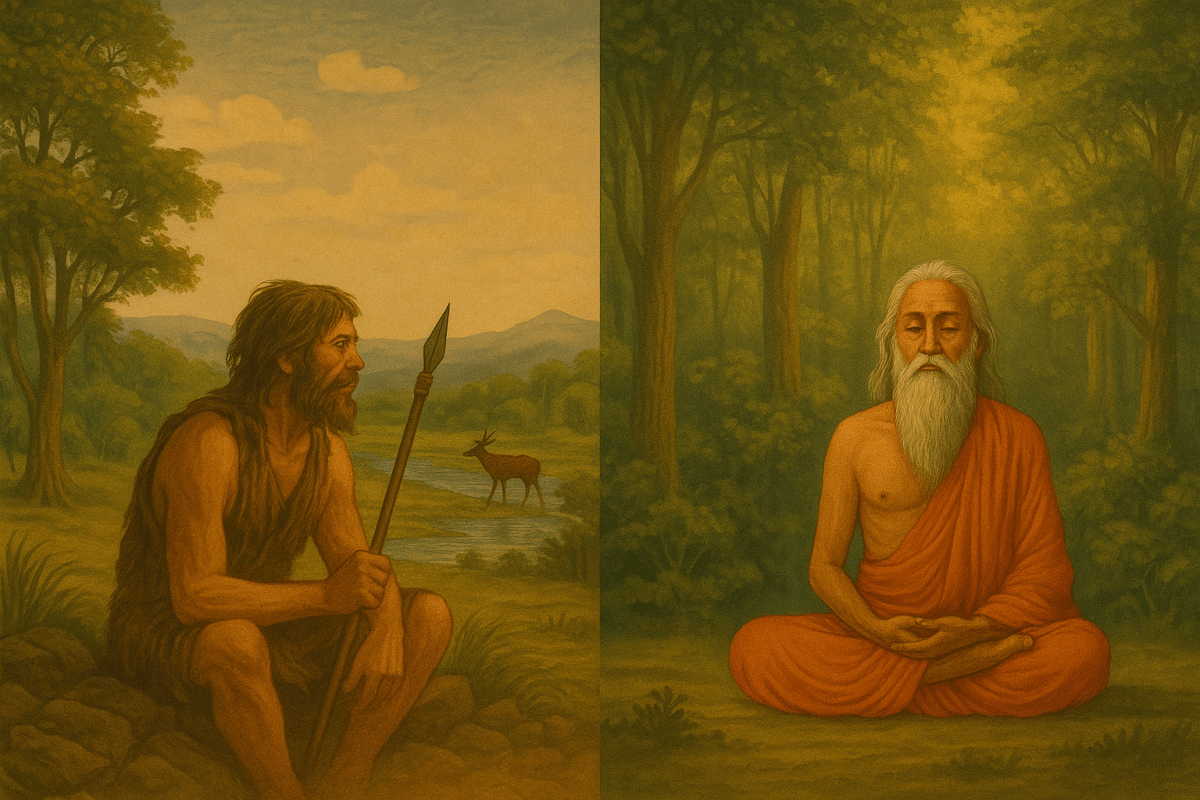
The Wild and the Wise: Finding a Path for Our Anxious World

Despite inhabiting the most technologically advanced age in human history, we are more restless, lonely, and anxious than ever before.

This article traces the deep resonance between the hunter-gatherer’s way of living lightly upon the earth and the Upanishadic seer’s awakening to the boundless Self. Early humans moved with reverence through forests, rivers, and skies, while the Vedic sages themselves withdrew into the forests to seek the eternal truth beyond birth and death. But with the rise of industrial civilization, humanity drifted from both — trading simplicity for consumption, and inner freedom for restless striving.

The way forward is to weave these two great streams together: the outer simplicity of the forager and the inner realization of the sage. In their fusion lies a path toward wholeness, sustainability, and true freedom.

Categories
History of Advaita

The Value of Shankara in the Tradition of Advaita – As a Philosopher or Commentator?

The tradition of Advaita Vedanta as a means of liberation is synonymous with the name of Shankara, not because, as many people erroneously believe, he was it’s founder, instead, Shankara’s fame and his legendary status in the annals of Advaita Vedanta are for reasons more complex, which I shall be exploring in this article. I am going to examine whether the main contribution of Shankara was really as an original philosopher who propounded new ideas, or, was his essential contribution more as an Upanishadic theologian, scholar, commentator and interpreter? I shall also examine other historical factors that led to the legendary status reserved for Shankara today, which may not have all to do with his scholarly skills.

Categories
History of Advaita

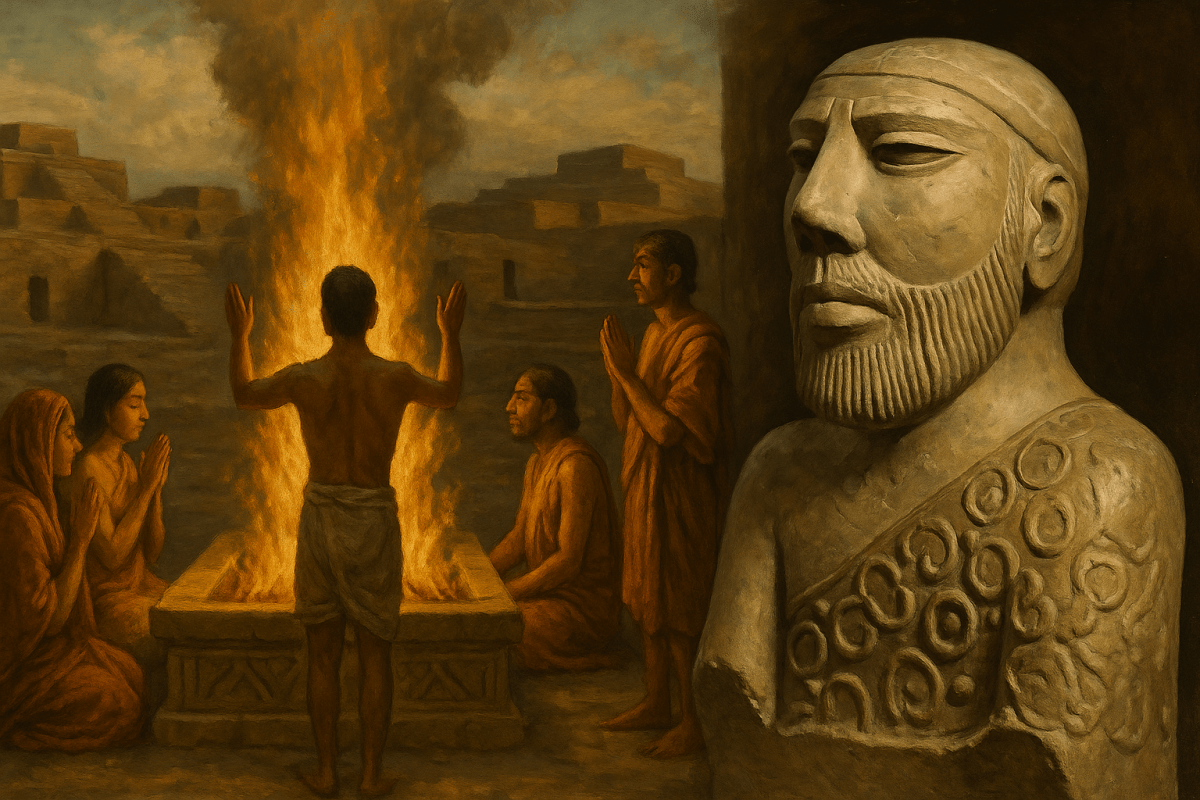
The Upanishads and the Axial Age: Religion in Pre-Historic India – Part 2

In Part 1 of this series, I traced the quiet birth of the Upanishadic vision against the backdrop of one of humanity’s great turning points—the Axial Age. In Part 2, the focus turns to the Indian subcontinent itself—not yet Vedic, but already in motion. I will trace the social, political, and religious changes unfolding in pre-historic and proto-historic India, which together form the cultural soil from which later Vedic and eventually Upanishadic thought would emerge. I also show that evidence increasingly points to a profound continuity between the Harappan (Indus-Sarasvati) civilisation and later Indian culture, suggesting the Harappans themselves may have been the authors of the Rigvedic tradition that gave rise to the Upanishads.