
Introduction
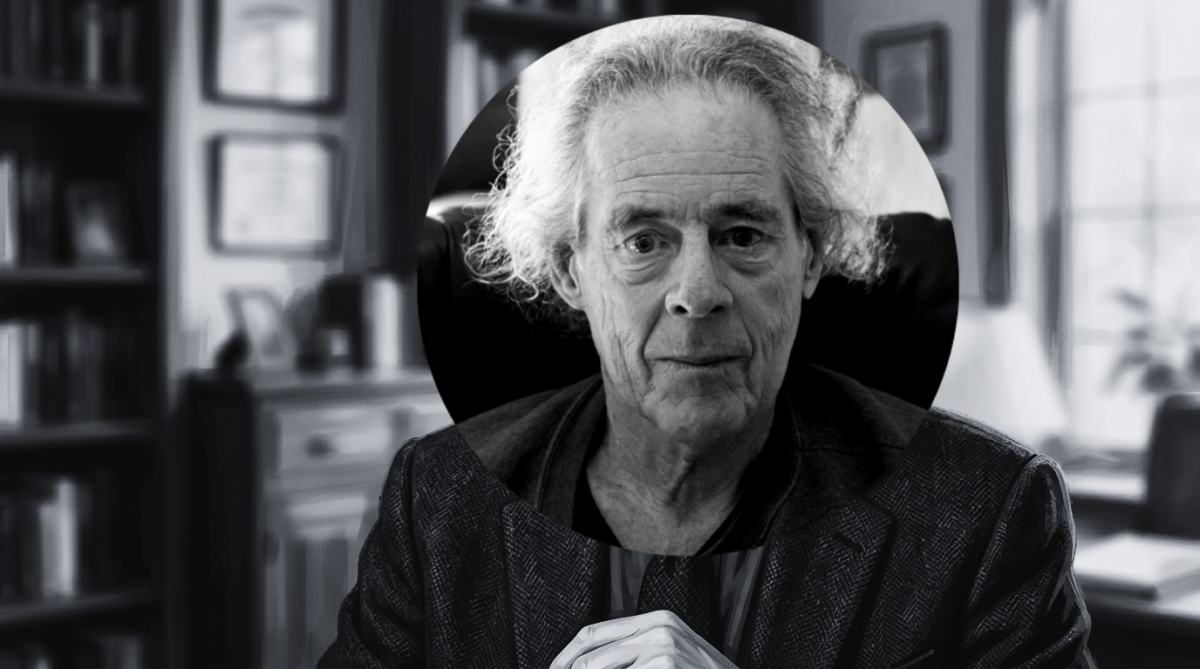
I recently came across this Facebook post by someone— a lengthy statement by Robert Saltzman on the subject of nonduality.
A Great Analysis of Non-Duality by Robert Saltzman:
The initial insight is not what’s wrong. Things are interdependent. Nothing arises in isolation. The boundaries we draw between objects, between self and world, between observer and observed are often more transient, more conditional, and more ephemeral than they appear. This has been understood in various forms for at least twenty-five hundred years, and it is worth taking seriously.
The problem is not the insight. The problem is what happens to that insight in the hands of the contemporary nonduality scene.
In most presentations of nonduality, the insight is not offered as a possibly useful way of looking at things. It is offered as a brute fact, capital F, about the ultimate nature of reality. In that view, the self does not merely appear to be less persistent than we imagine. It does not exist. Objects do not merely arise in relationship to other objects. They have no independent reality whatsoever. Consciousness is not simply one feature of biological existence. It is the ground of all being, the only thing that truly exists, the ocean of which individual awareness is a wave.
These are not observations. They are metaphysical assertions. But the nonduality scene, to a remarkable degree, fails to present them as assertions. They are presented as what you will see when you look clearly enough. They are claimed to be what direct experience reveals when the conceptual overlay is removed.
This is the maneuver worth examining.
When a commentator writes that “non-duality is not a concept, but a fact, for you cannot have an object apart from the knowing element,” that claim appears to be a profound truth grounded in direct experience. No one, the argument goes, has ever experienced an object in the absence of awareness of it. Therefore, consciousness and object cannot be separated. Therefore, consciousness is primary.
But that argument is pure tautology. To experience an object is, by definition, to be aware of it. Saying that no one has experienced an object without being aware of it says nothing more than experience and awareness are the same thing. It does not establish anything about the nature of objects when no one is experiencing them.
The moon existed before any human noticed it. The universe, according to cosmology, ran for roughly fourteen billion years before anything resembling human consciousness was present to register it. To claim that the moon does not exist in the absence of awareness requires better proof than the observation that every experience involves awareness. That observation is automatically true and therefore proves nothing about what lies outside experience.
This is the anthropocentrism at the heart of the nonduality framework that is almost never acknowledged as such. To claim that consciousness is the ground of reality places human awareness at the center of ontology and then calls this placement a discovery rather than a choice. It is a very old move. Western religions make it by positing, on no evidence, a creator-God whose awareness precedes and sustains the universe. Advaita Vedanta makes it by positing Brahman, the one consciousness of which everything else is a reflection. The structure is the same. The assertion is identical in kind, whatever differences exist in content.
Buddhism, in the original formulations attributed to Gotama, does not make this move. The teaching of co-dependent origination holds that all things arise in dependence on other things. There is no ocean without rain and no rain without ocean. From that perspective, the self has no fixed essence because it arises in relation to everything else. This is not a metaphysical claim, but a philosophical observation that survives scrutiny. Co-dependent origination does not require accepting that consciousness is the ground of all being. It does not require accepting that the moon vanishes when no one is looking. It stops at what can be observed and resists the step into metaphysical speculation.
The contemporary nonduality scene routinely conflates these two very different positions. Teachers and followers speak of co-dependent origination and Advaita in the same breath, as though they were expressions of the same understanding. They are not. One is grounded in observation of the natural world and stops at the limit of what can be known. The other requires accepting a metaphysical premise that cannot be verified or falsified by any means available to us.
What makes this conflation worth examining is not just the philosophical error. It is what the framework produces in the people who adopt it. A teaching that presents unverifiable metaphysical claims as facts clearly visible to the sufficiently awakened cognoscenti tends to generate a particular kind of community. The framework is self-sealing by design. To disagree is to demonstrate that you have not seen clearly enough. To press for evidence is to reveal your attachment to the conceptual mind. The structure that claims to produce enhanced freedom produces its opposite: a hierarchy of insight with the teacher at the top and the benighted skeptic at the bottom, a set of claims immune to challenge, and a community that enforces conformity through the language of liberation.
There is a deeper irony that the nonduality scene rarely examines. The teaching promises a dissolution of the self and a release from the suffering that the defended ego produces. Yet the communities it generates are populated, to a striking degree, by people whose self-image is among the most defended one is likely to encounter. The framework selects for this. A teaching that locates ultimate insight in the transcendence of ordinary selfhood appeals powerfully to people for whom ordinary selfhood has been a source of pain. The promise of a self that cannot be wounded, a consciousness that was never born and cannot die, is not liberation from the self. It is the self’s most ambitious defensive move. The attractor that was supposed to dissolve becomes the one most fiercely protected. Challenge the nondual view, and you are not engaging a philosopher who can tolerate ambiguity; you are threatening an identity. The fury that follows is diagnostic.
This is the structure of religion, whatever vocabulary is used to dress it up.
None of this touches the original insight, which remains worth considering. Things are interconnected. The self is less fixed than it appears. The boundaries we draw are often more convenient than real. The feeling of unity that many people report is real as an experience, and it deserves honest attention. But confusion enters when that experience is taken as evidence for an entire metaphysical system, when the feeling of unity is treated as proof that there is only one consciousness, when the insight into interdependence is promoted to a claim about ultimate reality.
The honest position is the one that has appeared throughout this work: no one knows what any of this is. That is not a concession. It is the most accurate thing that can be said. The universe is here. Life is here. Consciousness is here. What any of it ultimately is remains beyond what any instrument available to us can establish.
A framework that claims to have resolved that question, that presents its findings as facts rather than ideas, and treats open-minded skepticism as ignorance rather than appropriate epistemic caution, has not earned the confidence it projects.
What clarity looks like, as I have come to understand this, is not the dissolution of the self into a boundless ocean of consciousness. It is not conjecture about the substrate of reality. It is not certainty or truth, but something simpler: a recognition of the limits of human knowledge without needing to reach past those limits, and in that recognition, finding sufficiency and relaxation.
Since the source of the quote was not mentioned, I ran the quote on Perplexity AI, and this is the response I got. I am presenting it here for the reader to verify it for himself.
This appears to be from Robert Saltzman’s Substack post “What’s Wrong With Nonduality?” on his Substack, published June 5, 2023. The wording you quoted closely matches that post’s text, including the discussion of anthropocentrism, tautology, and co-dependent origination.
You can read it here: What’s Wrong With Nonduality? and Co-Dependent Origination and Its Discontents.
Saltzman is the author of four books, among them The Ten Thousand Things and Depending On No-Thing, and his writing has earned a genuine following among those who are weary of the spiritual marketplace. His prose is clean. His distrust of metaphysical comfort is, in many respects, admirable. He is not a charlatan, and his critique deserves to be taken seriously.
That seriousness is precisely what I intend to offer here.
What Saltzman has written is a thoughtful document. It is also, at its philosophical core, a document built on a misreading—a misreading so common, so culturally pervasive, that it has acquired the authority of obvious truth. It conflates the sociological failures of a spiritual subculture with the epistemological foundations of one of the most rigorous philosophical traditions the world has produced—Advaita Vedanta.
I propose to disentangle these threads starting with what Saltzman gets right. Because he does get some things right. Thereafter, I shall address all his arguments, which show his fundamental misunderstanding of Advaita.
I. What Saltzman Gets Right
Saltzman’s sociological critique of the contemporary nonduality scene is, in several important respects, accurate. He observes that many nonduality communities are self-sealing — structured so that any challenge to the framework becomes evidence of the challenger’s incompleteness. He notes that the promise of a self that cannot be wounded has a strange way of producing some of the most defensively armored personalities one is likely to encounter. He points out that the vocabulary of liberation is often recruited in the service of identity protection.
These observations are not original — the phenomenon has been named. The transpersonal psychologist John Welwood coined the phrase “spiritual bypassing” in the 1980s to describe the use of spiritual ideas and practices to sidestep unresolved psychological wounds. Robert Masters, in his book Spiritual Bypassing: When Spirituality Disconnects Us From What Really Matters (2010), documented this with clinical precision. The nonduality scene is not immune to this pathology. If anything, it is peculiarly susceptible to it, because the very teaching—that the personal self is ultimately an illusion—can be appropriated with terrifying ease as a permission slip to avoid personal accountability.
So yes. Saltzman sees something real when he looks at certain nonduality communities. He is not a charlatan. But he then makes a categorical error of the first order. He takes what is a failure of communities and practitioners and concludes that it is a failure of the philosophy itself.
II. The Tautology Charge, Examined
Saltzman’s sharpest philosophical move is his accusation of tautology. He writes:
When a commentator writes that “non-duality is not a concept, but a fact, for you cannot have an object apart from the knowing element,” that claim appears to be a profound truth grounded in direct experience. No one, the argument goes, has ever experienced an object in the absence of awareness of it. Therefore, consciousness and object cannot be separated. Therefore, consciousness is primary.
But that argument is pure tautology.
This is a well-constructed objection. And at the level of popular nonduality teaching—the kind one encounters on YouTube or at weekend satsangs—it lands cleanly. Poorly articulated Advaita does sometimes make this mistake: it slides from “everything experienced is experienced in awareness” to “therefore, awareness is the ground of everything,” without registering the logical gap.
But the sophisticated Advaitic argument does not proceed in this way, and it is intellectually uncharitable to evaluate a tradition by its weakest representatives.
The actual argument—found in texts like the Māṇḍūkya Upaniṣad and Gauḍapāda’s Kārikās and in the phenomenological investigations of later Advaitins—proceeds from a different starting point entirely. It does not begin with the observation that experience requires awareness. It begins with the observation that awareness itself — the sākṣī, the witness — is the one thing that cannot be made an object of experience without a further awareness that witnesses it. You can observe your thoughts. You can observe your emotions. You can observe your sense perceptions. You can even observe the sense of being an observer. But you cannot step outside the witnessing itself. Awareness is, in the language of phenomenology, self-luminous—svaprakāśa—not because it is asserted to be so, but because any attempt to deny it requires it.
This is the argument of the dṛg-dṛśya viveka—the discrimination between the seer and the seen—which proceeds not by metaphysical assertion but by phenomenological investigation. It is, in structure, closer to Husserl’s phenomenological reduction or to Descartes’ cogito (though deeper in its implications than either) than it is to a theological claim about a creator God.
Saltzman’s tautology charge dissolves when the actual argument is examined. The Advaitic claim is not experience requires awareness; therefore, awareness is the ground of being. The claim as per Advaita’s avasthātrayam (tri-state analysis) is awareness is the only thing that is self-evidently present in all states of experience—waking, dreaming, and deep sleep—and cannot itself be negated without contradiction. That is not a tautology. It is a phenomenological observation of considerable subtlety.
III. Does the Moon Come First or the Awareness of It?
Saltzman says:
The moon existed before any human noticed it. The universe, according to cosmology, ran for roughly fourteen billion years before anything resembling human consciousness was present to register it. To claim that the moon does not exist in the absence of awareness requires better proof than the observation that every experience involves awareness. That observation is automatically true and therefore proves nothing about what lies outside experience.
The cornerstone of Śaṅkara’s epistemology is the distinction between two orders of reality: vyāvahārika (conventional or empirical reality) and pāramārthika (ultimate or absolute reality). At the empirical level, Advaita fully affirms the existence of the moon, the laws of physics, and the fourteen billion years of cosmic evolution. Śaṅkara was not a fool. He did not think the universe disappeared when no one was looking. He ate food. He walked on roads. He understood that the phenomenal world operates according to its own internal logic, and he never denied it.
What Advaita questions—at the pāramārthika level—is whether any object of experience, including the subject who experiences it, possesses svabhāva, independent, intrinsic, self-sustaining existence. This is a question about the ontological status of things, not a claim that things empirically vanish.
Saltzman’s rebuttal—that the moon existed before human consciousness, that the universe ran for fourteen billion years without anyone to register it—is therefore aimed at a position that classical Advaita does not hold. He is refuting a ghost. The Advaita of Śaṅkara does not say the moon requires a human being to be aware of it. It asks the deeper question: what is the nature of the knowing in which any universe, at any time, including fourteen billion years ago, is known at all? That question is not refuted by pointing to cosmological timelines. It is a question about the transcendental conditions of experience as such—closer, in its structure, to Kant’s inquiry into the conditions of possible experience than to the naive idealism Saltzman assumes.
Notice what happens when we discuss the prehistoric universe.
We appeal to:
- fossils
- geological strata
- equations
- astronomical observations
- cosmological models
Every one of these appears now. The evidence for the prehistoric universe is present experience. This does not disprove the prehistoric universe. But it reveals something important. The prehistoric universe is not directly known. It is inferred. Advaita, therefore, distinguishes between the following:
- what is immediately self-evident
- what is inferentially established
Consciousness belongs to the first category. The prehistoric universe belongs to the second. Śaṅkara’s point is not that the past did not happen. His point is that consciousness possesses a radically different epistemological status from every object that appears within it.
Advaita asks what is actually given—not theoretically given, not scientifically inferred, not cosmologically reconstructed.
The answer is awareness. Everything else arrives later. The brain is known through perception. Perception is known through awareness. Scientific instruments are known through perception. Perception is known through awareness. Mathematical models are known through thought. Thought is known through awareness.
This does not prove that matter is unreal. But it does establish an asymmetry. Consciousness is self-revealing. Matter is inferred. This asymmetry is the starting point of Advaita. It is not an arbitrary preference. It is not a sentimental attachment to inner experience. It is a recognition of what is epistemically primary. One may reject the conclusion. One cannot deny the asymmetry.
Robert’s critique reflects a tendency that has become common in modern discussions of consciousness. Ontology is allowed to proceed without first examining epistemology. The existence of matter is taken as self-evident. Consciousness is then introduced later as something requiring explanation. Advaita reverses the order because any inquiry into the nature of experience must begin with what is epistemically first, not what is ontologically assumed.
IV. The Anthropocentrism Charge — Turned Back
Saltzman writes:
This is the anthropocentrism at the heart of the nonduality framework that is almost never acknowledged as such. To claim that consciousness is the ground of reality places human awareness at the center of ontology and then calls this placement a discovery rather than a choice. It is a very old move.
The charge rests on a confusion between human awareness and awareness as such. When Advaita speaks of Cit—pure consciousness—as the ground of being, it is emphatically not speaking of my awareness or your awareness or the awareness of any biological organism. What Robert Saltzman is speaking about as human awareness is actually called “Chidabhasa” in Advaita (from “Cit,” meaning “consciousness,” and “abhasa,” meaning “reflection” or “appearance”) and refers to the reflection of pure, universal consciousness within the individual mind. It is the borrowed, everyday awareness that allows a human to experience thoughts, feelings, and the world. Cit, on the other hand, is speaking of awareness as the transcendental ground that makes any experience—human, animal, or whatever forms of experience we cannot yet imagine—possible at all.
This is precisely the opposite of anthropocentrism. Advaita does not say the universe exists for human beings or because of human beings. It says the universe, insofar as it is known at all, is known in consciousness — and that the consciousness in which it is known is not a private human possession but the very fabric of being. Far from placing the human at the centre, Advaita dissolves the human into an impersonal luminosity that was never ours to begin with.
The philosopher Thomas Nagel, in his important book Mind and Cosmos: Why the Materialist Neo-Darwinian Conception of Nature Is Almost Certainly False (2012), makes a structurally similar argument from within Western analytic philosophy. Nagel—no friend of mysticism—argues that consciousness cannot be adequately explained by reductive materialism and that any complete account of nature must find a place for the mental that does not reduce it to a mere epiphenomenon. He calls this a form of natural teleology. He does not arrive at Advaita. But his argument is evidence that the Advaitic intuition — that consciousness is not a latecomer or an accident in the universe — is not the prerogative of credulous mystics.
V. Discovery vs. Choice (Vastu-tantra vs. Puruṣa-tantra)
Beyond the anthropocentrism charge, there is a further epistemological error in Saltzman’s framing. Saltzman asserts that claiming consciousness is the ground of reality is a “choice rather than a discovery.” Śaṅkara’s entire metaphysics rejects this. According to Śaṅkara, Brahman is vastu-tantra—meaning knowledge of it is entirely dependent on the nature of the object as it already exists, completely independent of human preference, opinion, choice or “placement.”
Human choice belongs strictly to the realm of action (puruṣa-tantra), where one can choose to act, not act, or alter the method. You cannot “choose” what Brahman is, just as you cannot choose whether a stump is a stump or a post. Therefore, realizing Brahman is a strict discovery of an already existing reality, not an anthropocentric invention or a theological “move.”
Brahman is not the adoption of a new belief but the removal of a misidentification—like recognizing that what you took to be a snake was always already a rope. The discovery does not produce the rope. It reveals what was already there.
VI. The Mischaracterization of “Positing on No Evidence”
Saltzman says:
Western religions make it by positing, on no evidence, a creator-God whose awareness precedes and sustains the universe. Advaita Vedanta makes it by positing Brahman, the one consciousness of which everything else is a reflection.
Saltzman aligns Advaita with Western religions that “posit” a reality “on no evidence.” It’s true that Western theology often requires faith in a distant, future-oriented promise or an unprovable external entity. However, Śaṅkara establishes that Brahman is not a blind hypothesis or a future result produced by human imagination or ritual but an already existing reality that is identical to one’s true nature.
While scripture (Upaniṣads) is indispensable because Brahman cannot be perceived by the physical senses, it does not operate as a dogmatic command or an unverified assertion. Instead, scripture functions as a revelation of what already is. Furthermore, Advaita does not demand blind faith; it admits reasoning, reflection, and—crucially—direct realization (anubhava) as necessary aids. The knowledge of Brahman culminates in immediate, verifiable recognition, removing it from the realm of mere groundless “positing.”
Because the knowledge of Brahman culminates in immediate recognition (the removal of ignorance regarding what is “ever-attained”), it functions as an experiential verification. It cannot be an identical “assertion in kind” to an unevidenced external deity, because it is an inquiry into the immediate ground of the inquirer’s own existing being.
Further, Ādi Śaṅkarācārya does not make a naive ontological assertion that consciousness precedes or creates the material world in the way a craftsman precedes his pot. This conflation with theistic creationism—which Saltzman makes explicit—is one that Śaṅkara himself spent considerable energy refuting. The Brahmasūtrabhāṣya, Śaṅkara’s magisterial commentary on the Brahma Sūtras, opens precisely with a critique of those who would mistake Brahman for an efficient cause operating within a subject-object framework.
Both concepts of a creator God and Brahman appear to occupy the position of ultimate reality. Yet the similarities largely end there.
The God of classical theism is usually conceived as a supreme being.
He knows.
He wills.
He creates.
He governs.
He acts.
Brahman does none of these things.
The conflation is understandable at first glance. Both a creator-God and Brahman occupy the grammatical position of ultimate reality in their respective systems—both are invoked when the questioning mind reaches its limit and asks, “But what is the ground of all this?” The surface resemblance is real. It is only when you press deeper into what each tradition actually means by its answer that the resemblance dissolves—not gradually, but completely, the way a rope and a snake resemble each other only until the light falls directly on them.
Indeed, the highest teaching of Advaita systematically strips away every characteristic that would make Brahman resemble a cosmic person. The Upanishads deny that Brahman is an object of knowledge. They deny that it possesses qualities. They deny that it can be described. They deny that it acts.
Gauḍapāda, the grand teacher of Ādi Śaṅkarācārya, goes further still. He denies creation itself.
Verse 3.48. No Jīva is ever born. There does not exist any cause which can produce it. This is the highest Truth that nothing is ever born.
Shankara’s commentary
The truth regarding the Ultimate Reality is that no Jīva is ever born. The Jīva whom one knows as the agent and the enjoyer is not born in any way whatsoever. Therefore, no cause can ever exist which may produce the Ātman which is, by nature, unborn and non-dual. In other words, no Jīva can ever be born, as the cause which may produce it does not exist…this alone is the Supreme Truth that nothing whatsoever is ever born in or of that Brahman which is of the nature of the Ultimate Reality.
This is not theology in any conventional sense. It is metaphysical radicalism. The universe is not viewed as something created by consciousness. It is viewed as an appearance whose ultimate status remains fundamentally misunderstood. As per Advaita, this universe is Brahman. It’s not, as Robert says, “It (Brahman) is the ground of all being, the only thing that truly exists, the ocean of which individual awareness is a wave.” “It’s actually that Brahman is the ONLY thing that exists. It’s not the ground for all beings; it’s the only being.
The difference is enormous. A creator god explains the universe through cause-and-effect theories. By dismantling cause-and-effect, Advaita ultimately seeks to dissolve the very framework within which the demand for such an explanation arises. What caused the dream-tiger is a perfectly valid question within the dream, but the question itself dissolves upon waking. The framework that generates the question is itself part of what is being questioned.
VII. The Buddhism Versus Advaita Contrast—A Convenient Simplification
Saltzman says:
Buddhism, in the original formulations attributed to Gotama, does not make this move. The teaching of co-dependent origination holds that all things arise in dependence on other things. There is no ocean without rain and no rain without ocean. From that perspective, the self has no fixed essence because it arises in relation to everything else. This is not a metaphysical claim, but a philosophical observation that survives scrutiny. Co-dependent origination does not require accepting that consciousness is the ground of all being. It does not require accepting that the moon vanishes when no one is looking. It stops at what can be observed and resists the step into metaphysical speculation.
Saltzman draws a sharp contrast between what he presents as the epistemically humble Buddhism of Gotama—co-dependent origination, pratītyasamutpāda—and the metaphysically overreaching Advaita Vedanta. Buddhism, he suggests, stops at what can be observed. Advaita takes the fatal step into unverifiable speculation.
This contrast is historically and philosophically untenable.
First: the Buddhist philosophical tradition is not a monolith, and presenting early Buddhism as a simple observational practice that makes no metaphysical claims is a romantically simplified reading. The Abhidharma tradition—an elaborate scholastic analysis of the constituents of experience into dharmas—is one of the most intricate metaphysical projects in the history of human thought. It makes claims that are anything but confined to direct observation.
There is this verse from the famous Udāna 8.3 (The Unborn) from the Khuddaka Nikāya of the Pali Canon:
There is, monks, an unborn — unbecome — unmade — unfabricated. If there were not that unborn — unbecome — unmade — unfabricated, there would not be the case that escape from the born — become — made — fabricated would be discerned. But precisely because there is an unborn — unbecome — unmade — unfabricated, escape from the born — become — made — fabricated is discerned.
(trans. Thanissaro Bhikkhu)
This is not peripheral or late-stage Buddhist philosophy. This is the Pali Canon—the very body of texts from which Saltzman draws his portrait of an epistemically modest Gotama. The Buddha is here affirming, in plain language, a reality that is unborn and unmade — a ground that cannot itself be a product of co-dependent origination, because co-dependent origination is precisely what it transcends. The structural parallel with Advaita’s Brahman — that which is beyond causation, beyond the fabricated, beyond the born — is not incidental. It is the same recognition, differently clothed.
Second, and more decisively, the Yogācāra school of Buddhism—associated with Vasubandhu and Asaṅga, two of the greatest Buddhist philosophers—explicitly asserts the primacy of consciousness. Vijñaptimātratā — the doctrine that all phenomena are nothing but representations of mind — is not a peripheral or heretical Buddhist view. It is one of the central streams of Mahāyāna Buddhist philosophy, studied and debated across centuries in India, Tibet, China, and Japan. Vasubandhu’s Viṃśatikā or Triṃśikā—both are canonical Yogācāra texts asserting vijñaptimātratā with full philosophical rigor. If Advaita’s claim that consciousness is foundational makes it equivalent to Western theism, by Saltzman’s logic, so does Yogācāra Buddhism. He cannot have it both ways.
Third: the Mādhyamika tradition of Nāgārjuna—perhaps the most philosophically rigorous school in the entirety of Asian philosophy—deconstructs the concept of svabhāva (self-existence) with an analytical thoroughness that leaves nothing standing, including consciousness. Nāgārjuna’s emptiness (śūnyatā) is, in several important respects, convergent with Advaita’s māyā: both traditions are insisting that no phenomenon possesses the kind of independent, intrinsic reality that naïve realism assumes. The difference between Nāgārjuna and Śaṅkara is real and philosophically significant — but it is a difference within a shared critique of naïve realism, not the clean opposition between humble observation and metaphysical overreach that Saltzman describes.
The scholar David Loy, in his comparative study Nonduality: A Study in Comparative Philosophy (1988), undertakes exactly this examination — mapping the convergences and divergences between Advaita, Mādhyamika, and Taoism with scholarly precision. His conclusion is that these traditions share a fundamental philosophical project despite their doctrinal differences. Saltzman’s binary of observation versus speculation does not survive contact with this literature.
The case becomes even more difficult for Saltzman when we move from philosophical doctrine to living contemplative transmission. The Tibetan Buddhist schools of Mahamudra and Dzogchen—far from peripheral developments—represent the summit teachings of the Kagyu and Nyingma schools, respectively, lineages of unbroken transmission practiced to this day across Tibet, India, and the West. Both traditions hold, as their central and non-negotiable assertion, that awareness—rigpa in Tibetan—is the fundamental nature of mind and reality. In Dzogchen, this awareness is described as the ground of all appearance, gzhi, from which all phenomena arise without ever departing from it. In Mahamudra, the nature of mind is described as self-knowing, rang rig—luminous, empty, and primordially present. These are not doctrinal positions adopted on the basis of inference or scripture alone. They are presented as directly recognizable through the practice of inquiry—a methodology structurally identical to what Saltzman finds objectionable in Advaita. If the direct recognition of awareness as primary reality constitutes epistemological overreach, Saltzman’s objection does not touch Advaita alone. It dismantles the summit teachings of Tibetan Buddhism entirely.
VIII. No Man Standing
Saltzman ends with:
What clarity looks like, as I have come to understand this, is not the dissolution of the self into a boundless ocean of consciousness. It is not conjecture about the substrate of reality. It is not certainty or truth, but something simpler: a recognition of the limits of human knowledge without needing to reach past those limits, and in that recognition, finding sufficiency and relaxation.
This is a genuinely attractive resting place. The recognition of not knowing, held without anxiety—there is something in this that deserves respect. Saltzman is not wrong that many spiritual seekers use metaphysical certainty as a defense against the rawness of not-knowing, and his insistence on sitting with that rawness rather than covering it with doctrine is, in its way, admirable.
But notice what his conclusion assumes without examination. A recognition occurs. Sufficiency is found. Relaxation settles. Who recognizes it? In what does sufficiency reside? What is the awareness in which relaxation appears? Saltzman has arrived at a felt sense of okayness with the mystery and presented this arrival as epistemological humility. But the arrival is itself an experience—arising in awareness, known in awareness, and subsiding in awareness. He has made peace with not-knowing, which is admirable. He has not asked what the peace is made of or what the not-knowing appears in. That question — the question Advaita refuses to stop asking — is not answered by finding relaxation. It is the question that relaxation itself poses, if you are willing to look.
Advaita does not offer a more comfortable resting place. It offers no resting place at all—because every resting place, however subtle, however philosophically sophisticated, is still an object arising in the awareness that cannot itself become an object. The inquiry does not end in certainty. It ends in the recognition that the one who was seeking was never the one doing the knowing.
Advaita’s enduring strength is not that it provides final answers. Its strength lies in its relentless willingness to question what almost everyone else takes for granted. Including the existence of the questioner himself.
And that is why, more than two thousand years after the Upanishadic sages first articulated it, Advaita remains one of the most intellectually unsettling philosophies ever conceived. Not because it places humanity at the center of reality. But because it leaves no center standing at all.
Creating deep and quality content takes time and resources. By donating, you directly fund the research and effort that goes into every single post. If my work has helped you or inspired you, please consider supporting my work. Even a $3 donation makes a huge difference


