Categories
Advaitic Inquiries

What Does It Mean To Be Enlightened?

This post is a response to a question from a friend who’s seriously exploring what enlightenment actually is. It’s a good question — and a rare one — because most people, like I did for fifteen years, chase enlightenment as if it’s some mystical high, a state of bliss, or a mind-blowing shift in consciousness.

But here, I’m cutting through all that.

No poetry. No metaphors. No smoke and mirrors.

I’m answering the question head-on — in plain, precise language that doesn’t flinch and doesn’t hide behind spiritual jargon. And what I offer here stands up to every form of rational scrutiny.

If you’re looking for clarity, not fantasy, this is for you.

Categories
Advaitic Inquiries

The Upanishads: The Oldest Voice of Nondual Philosophy – Compared to Other Nondual Traditions

Before Plato, before Laozi, before the Buddha, there were the Upanishads. In forest clearings across ancient India, long before the rise of formal philosophy or organised religion, sages sat in silence and asked the only question that ever really mattered: What am I? From that silence emerged a thunderbolt of insight—that the self and the cosmos are not two. The oldest surviving texts to declare this are not speculative essays or scriptures of belief. They are the Upanishads: bold, spare, poetic, and uncompromising in their message. Ātman is Brahman. The soul is the world. The knower is the known. And this insight, written more than two thousand years ago, remains the earliest—and perhaps the purest—expression of nonduality ever recorded.

This article sets out to show that the Upanishads are not just ancient—they are the clearest, most uncompromising voice of nonduality in human thought. By placing them in conversation with the many traditions that followed, we begin to see their singular force. In the light of comparison, their purity sharpens, like a mountain revealed when the mist lifts.

Categories
Advaitic Inquiries

The War on Joy: How Society Conditions You to Stay Unhappy & How To Break Free

In every civilization, power structures have evolved to control the masses. While in the past, these structures relied on brute force—kings, empires, and oppressive regimes—today’s world operates on far subtler mechanisms. The modern system does not use whips or shackles; instead, it binds the human mind through psychological chains, ensuring that people remain trapped in dissatisfaction, fear, and endless pursuit of external validation. By challenging the foundations of the modern system and offering an alternative rooted in self-inquiry, member of NEEV Community for Self Inquiry and Sustainability, Vivek provides more than just a critique—he offers a path to liberation. This article is not merely an analysis; it is a call to reclaim our joy, our freedom, and our very being.

Categories
Advaitic Inquiries

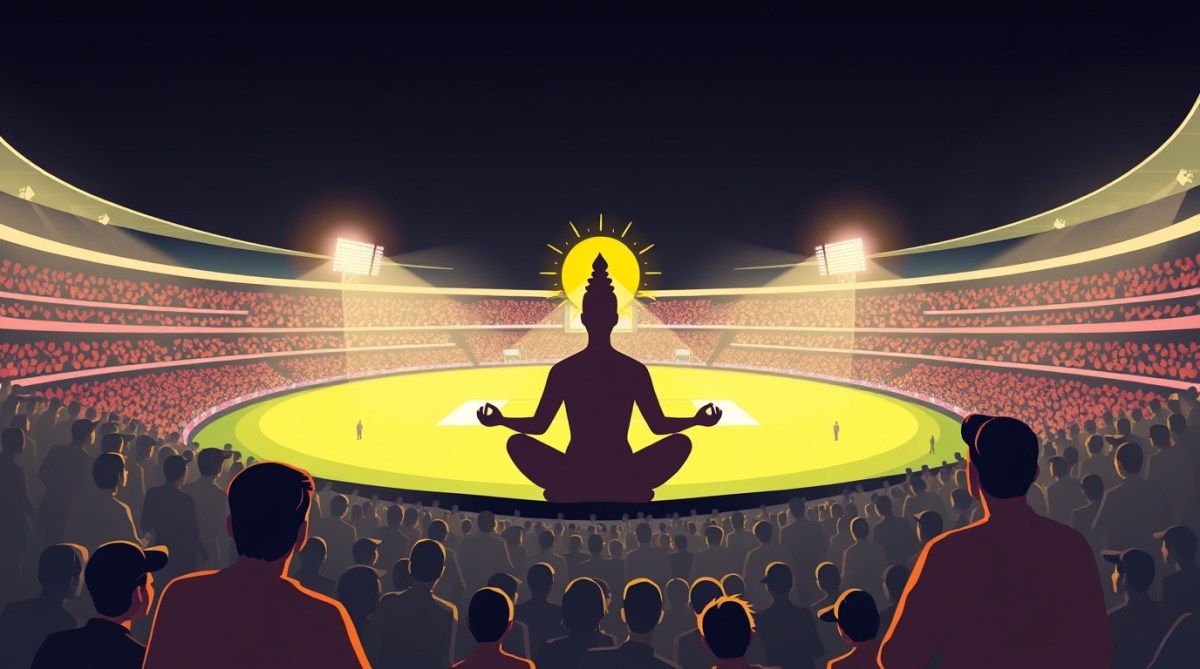
IPL Cricket Through the Lens of Advaita: A Modern Perspective

Advaita Vedanta has often been perceived as a philosophy of renunciation—a worldview that urges seekers to retreat from the world to realize the ultimate truth. Yet, when we look at the teachings we see that profound truths were rarely delivered in isolation from life. Instead, they were woven into myths, stories, and dialogues that unfolded in the heart of society.

This same tradition of embedding philosophical wisdom within the pulse of everyday life continues today. One of the members of the NEEV Community for Self-Inquiry & Sustainability, Vivek, has brought this ancient wisdom into a contemporary context by exploring Advaita through the lens of the Indian Premier League (IPL)

Categories
Meditative Inquiries

Meditative Inquiry: Is Thinking Same as Being Aware of Thought?

The path to Self Realization or Liberation which starts from self-inquiry is a long one. I break the path into three different stages in ascending order – psycho philosophical inquiry, meditative inquiry and Advaitic inquiry. I teach the first two stages in my FB group called NEEV Psycho-Philosophy Inquiry Study Group, and the last stage in NEEV Advaita Study Group (FB). The first group comprises of young people who are beginning their journey of self-inquiry. In this article, I give a brief outline of the activities of this group and post three journal entries of a 19 yr old girl in the group who has undertaken the study of self-inquiry with me. These journal entries provide a snapshot of the moving river of self-inquiry for those who wonder what it is all about, and how and where to begin.

Categories
Advaitic Inquiries History of Advaita

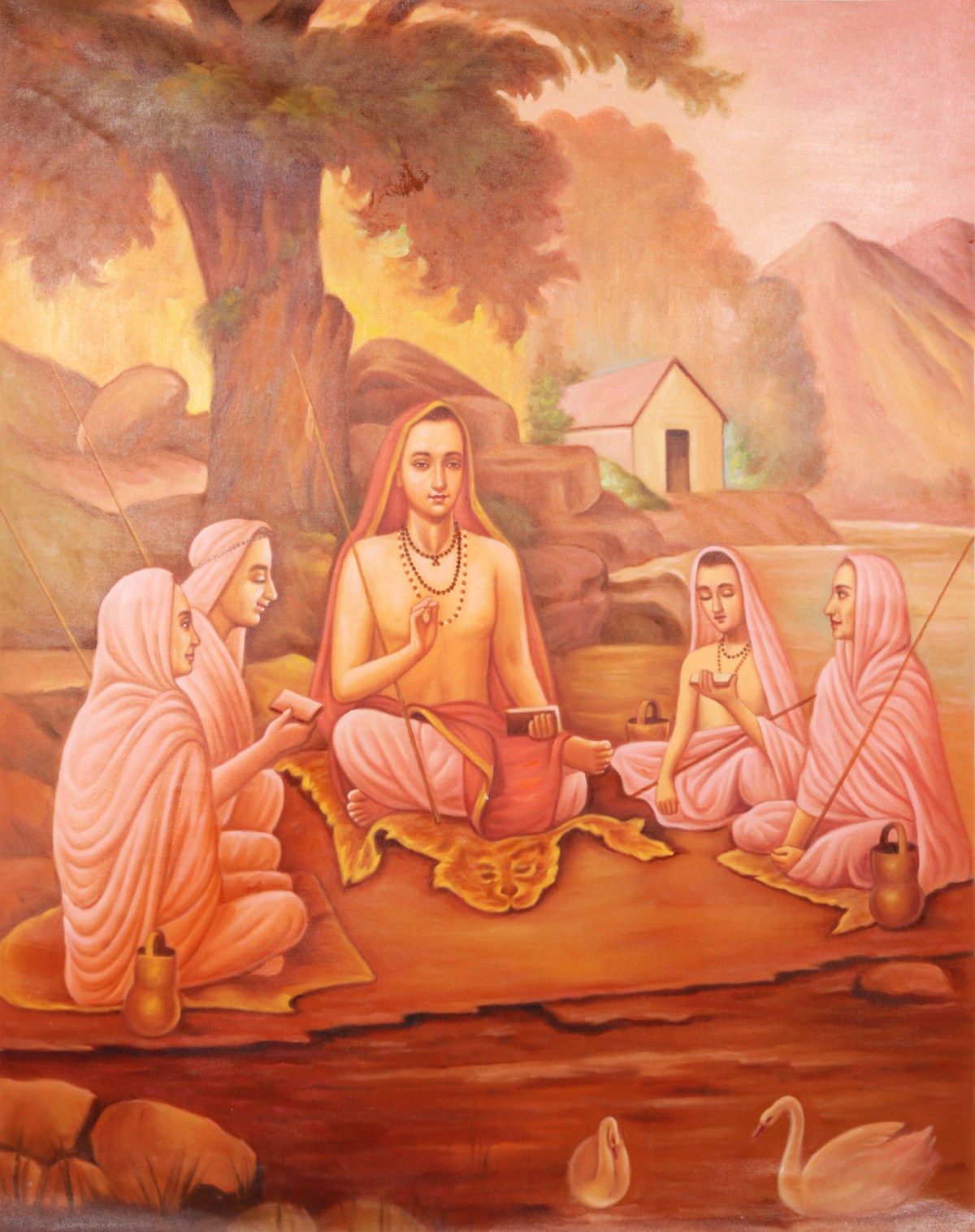
No Vedantic Schools of Duality Present Till the Time of Shankara

About half a century after Shankara, two schools developed: Dvaita (Dualism) and Vishishtadvaita (Qualified Non-Dualism). The founders of these schools seek support for their doctrines in the tradition of Vedanta. In this article, I show that if we study the Brahmasutra of Badarayana and the Brahmasutra Bhashya of Shankaracharya, we don’t find any non-Advaitic schools being mentioned. Though there were several schools not following the approach of Shankara’s Advaita tradition, they were all ultimately non-dual in their final purport. These schools were discussed and refuted by Shankara. These are schools which enjoin subtle actions along with knowledge as means of liberation, while Shankara’s Advaita talks only about knowledge as the final means. Schools which enjoin subtle actions like meditation, worship and even affirmations of knowledge are refuted by Shankara. Ultimately the article shows that the latter-day Dvaita and Vishishtadadvaita schools find no support even from these schools which Shakara refuted, for their doctrines.

Categories
Meditative Inquiries

Turning Within : Taking the Plunge to Find One’s True Self

Most people are lost in the outer events and turmoil of their life. For the rare few, however, at some point of their life, they cannot help noticing the fact that all their outer pursuits, no matter how deep they are, have failed to provide them lasting happiness. This is the point they turn within; in search of something that can give them something lasting and permanent, that no outer objects can provide. In this article, I share the journey of a meditator who is poised on the point of turning within; addressing his doubts, fear and hopes, as he plunges into this unknown journey.

Categories
Psycho-Philosophical Inquiries

What is psychological becoming and how it causes suffering?

Psychological becoming is an umbrella term for all our desires: material, emotional, intellectual and spiritual. In this article, I trace out the roots of this movement, which governs our personal and social lives powerfully and unconsciously. Thereafter I show how it constitutes suffering at all realms – material, emotional, intellectual and spiritual, even though our current society actively encourages and rewards it.

Categories
Psycho-Philosophical Inquiries

A life of meditation

This is not about a meditation technique, nor is this about a few minutes or few hours of meditation practiced in the midst of one’s daily life. This is not about destressing oneself. This is about a life of meditation, a profound shift in which one’s whole life becomes a field of meditation. This begins only when one has understood and finished with all psychological becoming.