Categories
History of Advaita

The Upanishads and the Axial Age: Rigvedic People – Invaders, Immigrants or Indigenous? – Part 3

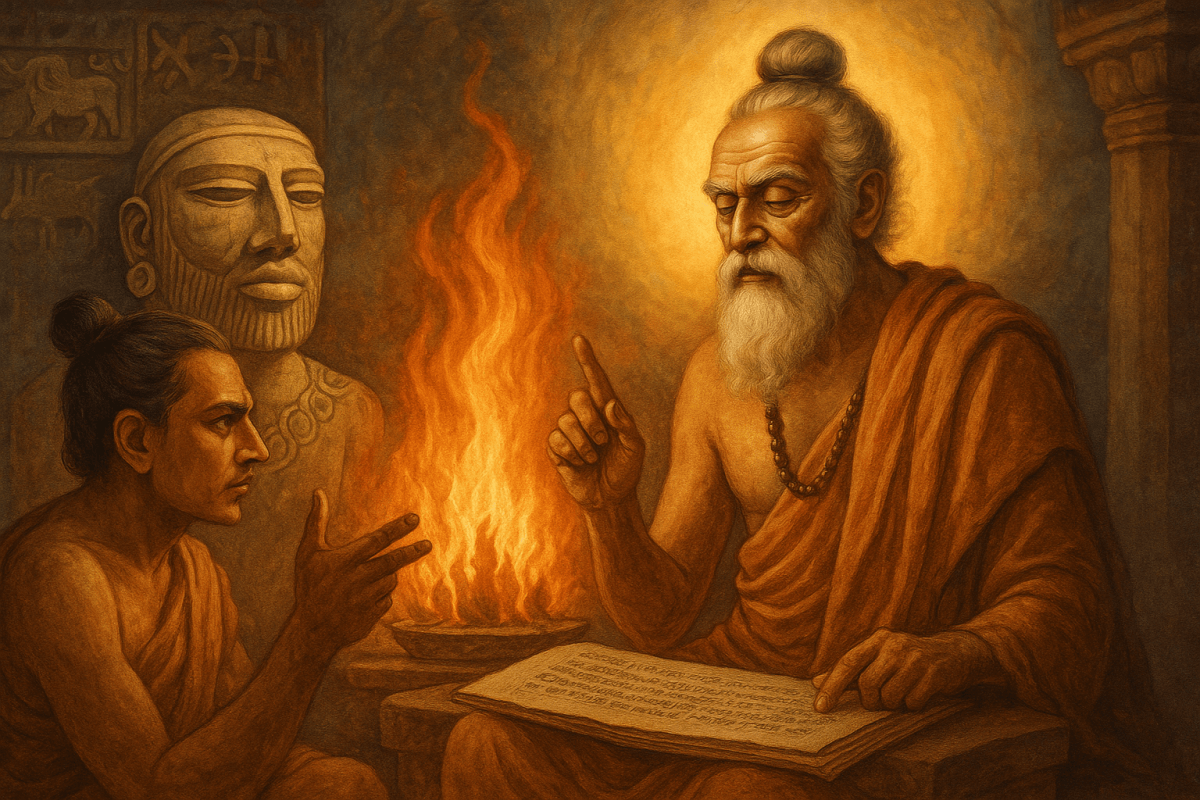
For generations, ancient India’s narrative was dominated by the Aryan Invasion Theory (AIT), later refined as Aryan Migration Theory (AMT). These 19th-century theories depicted external “Aryans” arriving around 1500 BCE, bringing Vedic traditions and Sanskrit, supposedly subjugating the indigenous Harappans. This framework, the article argues, became a potent political tool, fostering a divisive “Aryan-Dravidian” split and undermining Indian heritage.

However, the Out of India Theory (OIT) offers a compelling counter-narrative: the Indo-Aryan people and their Vedic culture originated within India, with the Indus Valley Civilization (IVC) being the Vedic Civilization. OIT proponents cite the absence of invasion evidence at Harappan sites, highlighting profound cultural continuity. New archaeological and genetic findings increasingly support indigenous origins, even suggesting westward migrations from India.

This isn’t just an academic debate; it’s a vital quest to “reclaim India’s national identity.” By challenging ingrained historical distortions, OIT aims to re-establish India’s place as a “Cradle of Civilization,” predating Mesopotamia and Egypt, affirming a deep, unbroken cultural lineage.
Categories
History of Advaita

The Upanishads and the Axial Age: Religion in Pre-Historic India – Part 2

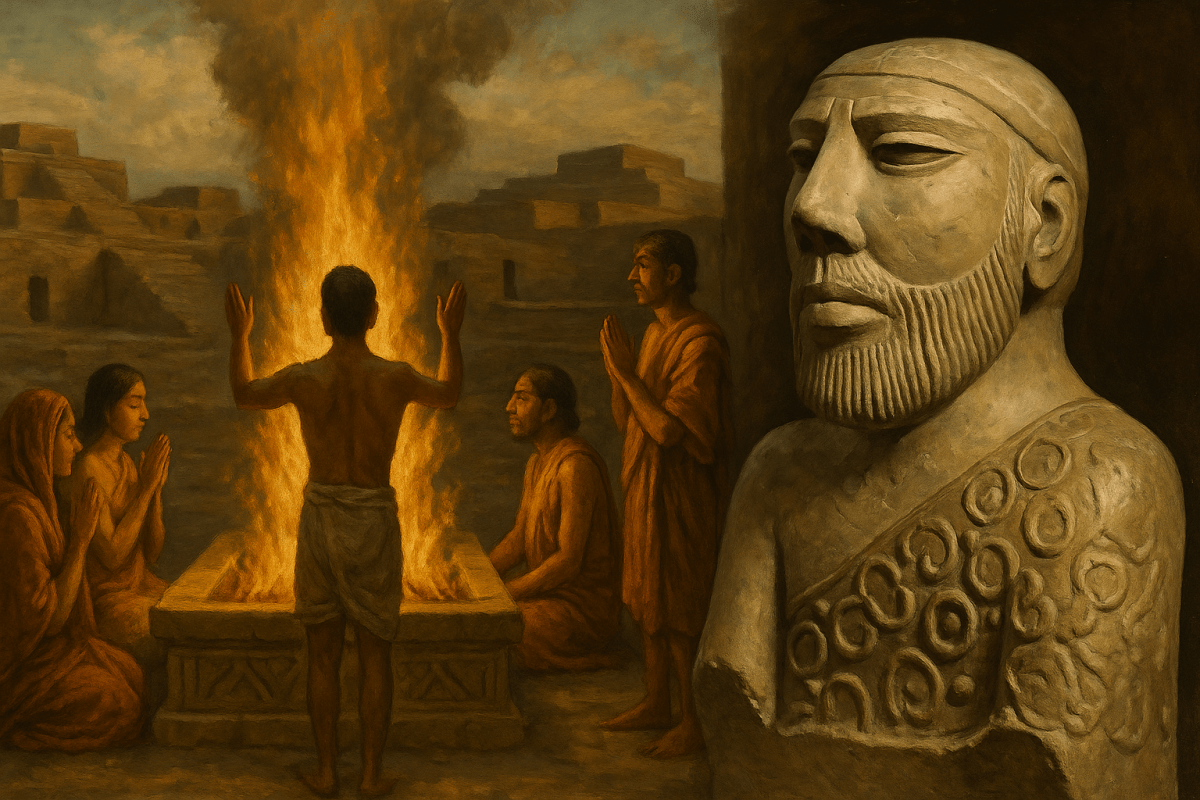
In Part 1 of this series, I traced the quiet birth of the Upanishadic vision against the backdrop of one of humanity’s great turning points—the Axial Age. In Part 2, the focus turns to the Indian subcontinent itself—not yet Vedic, but already in motion. I will trace the social, political, and religious changes unfolding in pre-historic and proto-historic India, which together form the cultural soil from which later Vedic and eventually Upanishadic thought would emerge. I also show that evidence increasingly points to a profound continuity between the Harappan (Indus-Sarasvati) civilisation and later Indian culture, suggesting the Harappans themselves may have been the authors of the Rigvedic tradition that gave rise to the Upanishads.

Categories
Advaitic Inquiries Pre-Witness Stage

You Are Awareness/Brahman: Dialogue with a Teenage Girl & Women in Vedanta

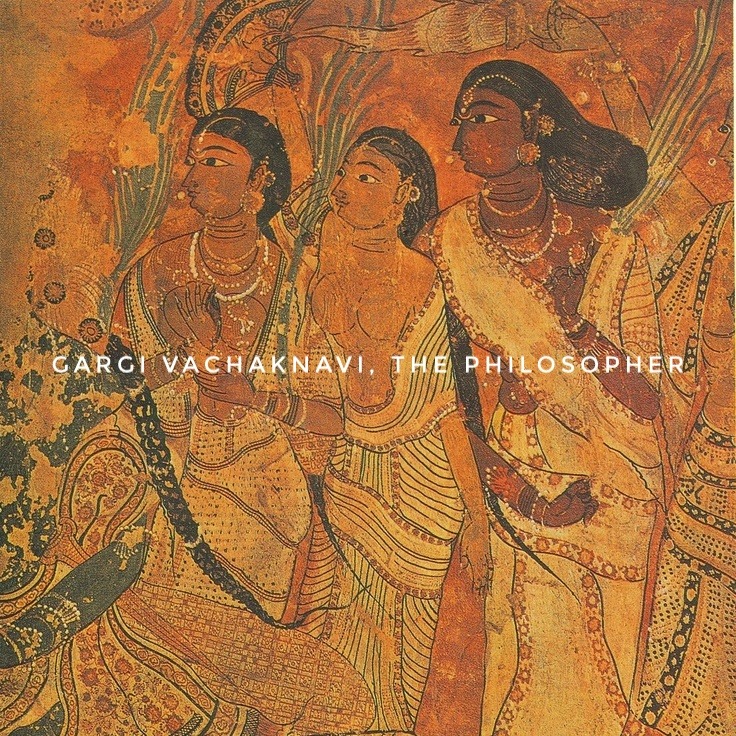
In this article, I am presenting a dialogue on what is the ultimate reality according to Advaita, with a teenage girl who is a student of the Facebook Psycho-Philosophy Group. As I started posting this dialogue, I thought it would be interesting to examine the role of women in the history of Vedanta because it is based on the study of scriptures, dialogue and wherever necessary debates: traditionally the bastion of males. I particularly examine the roles played by two women Gargi Vchaknavi of the Upanishadic era and Ubhaya Bharati of Shankara’s era. Going through the dialogues and roles played by these women, and subsequently going through my dialogue with the teenage girl, one can appreciate the fact that though times have changed- dialogues are held online instead of the forests – the method of transmission of truth, and the way of dialogue between teacher and student in the tradition of Advaita Vedanta remains unchanged, ever since Lord Brahma revealed the Vedas to Rishis and who transmitted this truth to a spiritual family-sampradaya: the lineage of teachers and students who pass the eternal truth down to the present day in an unbroken succession. Women are part of this eternal stream.