Categories
Advaitic Inquiries

The Wild and the Wise: Finding a Path for Our Anxious World

Despite inhabiting the most technologically advanced age in human history, we are more restless, lonely, and anxious than ever before.

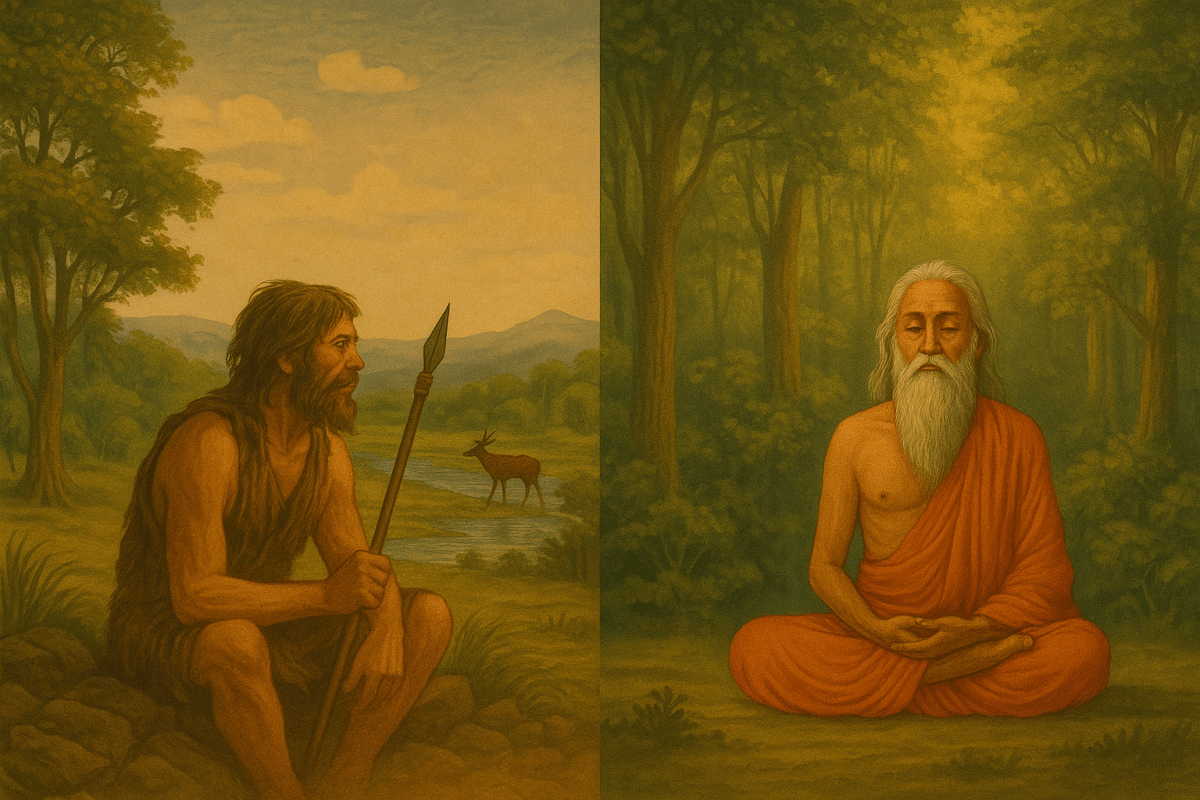
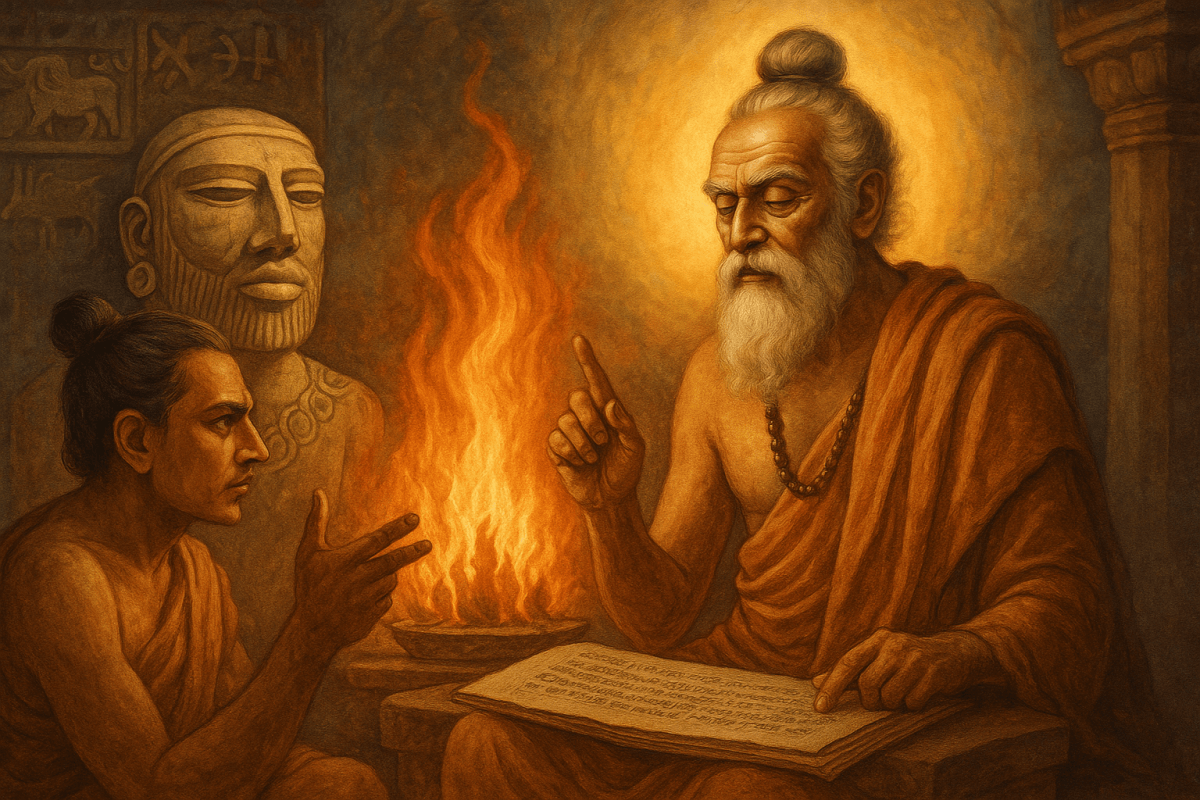
This article traces the deep resonance between the hunter-gatherer’s way of living lightly upon the earth and the Upanishadic seer’s awakening to the boundless Self. Early humans moved with reverence through forests, rivers, and skies, while the Vedic sages themselves withdrew into the forests to seek the eternal truth beyond birth and death. But with the rise of industrial civilization, humanity drifted from both — trading simplicity for consumption, and inner freedom for restless striving.

The way forward is to weave these two great streams together: the outer simplicity of the forager and the inner realization of the sage. In their fusion lies a path toward wholeness, sustainability, and true freedom.

Categories
History of Advaita

The Value of Shankara in the Tradition of Advaita – As a Philosopher or Commentator?

The tradition of Advaita Vedanta as a means of liberation is synonymous with the name of Shankara, not because, as many people erroneously believe, he was it’s founder, instead, Shankara’s fame and his legendary status in the annals of Advaita Vedanta are for reasons more complex, which I shall be exploring in this article. I am going to examine whether the main contribution of Shankara was really as an original philosopher who propounded new ideas, or, was his essential contribution more as an Upanishadic theologian, scholar, commentator and interpreter? I shall also examine other historical factors that led to the legendary status reserved for Shankara today, which may not have all to do with his scholarly skills.

Categories
History of Advaita

The Upanishads and the Axial Age: Rigvedic People – Invaders, Immigrants or Indigenous? – Part 3

For generations, ancient India’s narrative was dominated by the Aryan Invasion Theory (AIT), later refined as Aryan Migration Theory (AMT). These 19th-century theories depicted external “Aryans” arriving around 1500 BCE, bringing Vedic traditions and Sanskrit, supposedly subjugating the indigenous Harappans. This framework, the article argues, became a potent political tool, fostering a divisive “Aryan-Dravidian” split and undermining Indian heritage.

However, the Out of India Theory (OIT) offers a compelling counter-narrative: the Indo-Aryan people and their Vedic culture originated within India, with the Indus Valley Civilization (IVC) being the Vedic Civilization. OIT proponents cite the absence of invasion evidence at Harappan sites, highlighting profound cultural continuity. New archaeological and genetic findings increasingly support indigenous origins, even suggesting westward migrations from India.

This isn’t just an academic debate; it’s a vital quest to “reclaim India’s national identity.” By challenging ingrained historical distortions, OIT aims to re-establish India’s place as a “Cradle of Civilization,” predating Mesopotamia and Egypt, affirming a deep, unbroken cultural lineage.

Categories
History of Advaita

The Upanishads and the Axial Age: Religion in Pre-Historic India – Part 2

In Part 1 of this series, I traced the quiet birth of the Upanishadic vision against the backdrop of one of humanity’s great turning points—the Axial Age. In Part 2, the focus turns to the Indian subcontinent itself—not yet Vedic, but already in motion. I will trace the social, political, and religious changes unfolding in pre-historic and proto-historic India, which together form the cultural soil from which later Vedic and eventually Upanishadic thought would emerge. I also show that evidence increasingly points to a profound continuity between the Harappan (Indus-Sarasvati) civilisation and later Indian culture, suggesting the Harappans themselves may have been the authors of the Rigvedic tradition that gave rise to the Upanishads.

Categories
History of Advaita

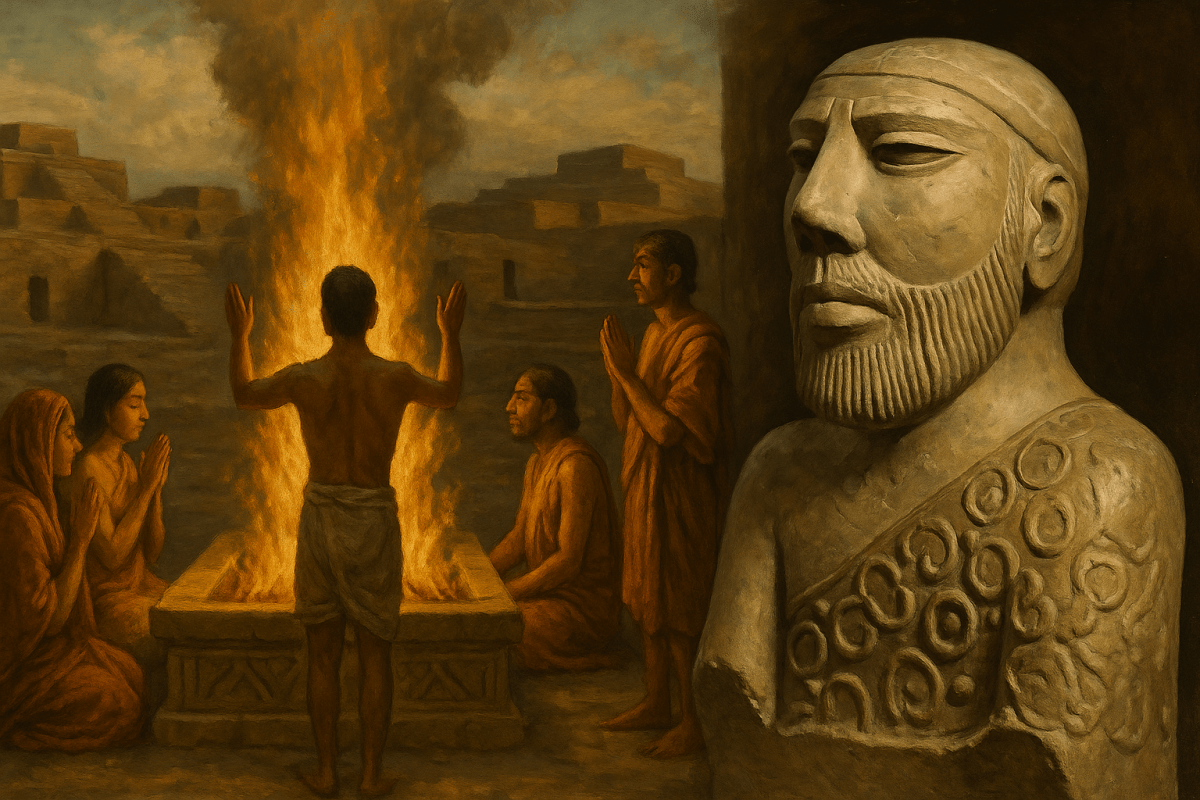
The Upanishads and the Axial Age: From Sacred Fire to Inner Light – Part 1

In an age when old rituals faltered under the weight of expanding empires, urban complexity, and moral uncertainty, a quiet revolution unfolded in the forests of ancient India. The Upanishads, composed between 800 and 200 BCE, did not merely extend the Vedic tradition—they dismantled its core assumptions. Sacrifice gave way to self-inquiry. The gods of the altar were replaced by the questioner within.

This shift wasn’t isolated. Across Eurasia, from Greece to China, prophets and philosophers began asking not what to worship, but how to live. The German philosopher Karl Jaspers called it the Axial Age—a spiritual pivot in world history. The Upanishads are India’s profound answer to that moment. Where others turned outward to law, ethics, or reason, India turned inward—seeking the divine not in temples or sacrifices, but in consciousness itself.

This article argues that the Upanishads are more than scripture; they are a civilizational rebirth. In Part 1, we map the Axial Age across cultures. In Part 2, we enter the Indian mind, where the fire of ritual became the light of introspection—and where the self (Ātman) was revealed to be not separate from, but identical with, ultimate reality (Brahman).

Categories
Advaitic Inquiries

The Upanishads: The Oldest Voice of Nondual Philosophy – Compared to Other Nondual Traditions

Before Plato, before Laozi, before the Buddha, there were the Upanishads. In forest clearings across ancient India, long before the rise of formal philosophy or organised religion, sages sat in silence and asked the only question that ever really mattered: What am I? From that silence emerged a thunderbolt of insight—that the self and the cosmos are not two. The oldest surviving texts to declare this are not speculative essays or scriptures of belief. They are the Upanishads: bold, spare, poetic, and uncompromising in their message. Ātman is Brahman. The soul is the world. The knower is the known. And this insight, written more than two thousand years ago, remains the earliest—and perhaps the purest—expression of nonduality ever recorded.

This article sets out to show that the Upanishads are not just ancient—they are the clearest, most uncompromising voice of nonduality in human thought. By placing them in conversation with the many traditions that followed, we begin to see their singular force. In the light of comparison, their purity sharpens, like a mountain revealed when the mist lifts.

Categories
Advaitic Inquiries Pre-Witness Stage

You Are Awareness/Brahman: Dialogue with a Teenage Girl & Women in Vedanta

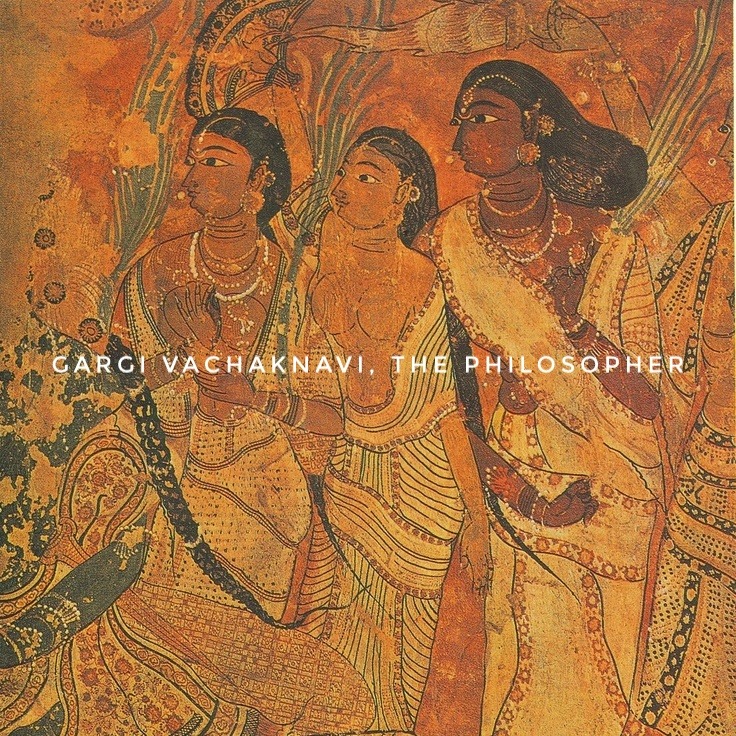
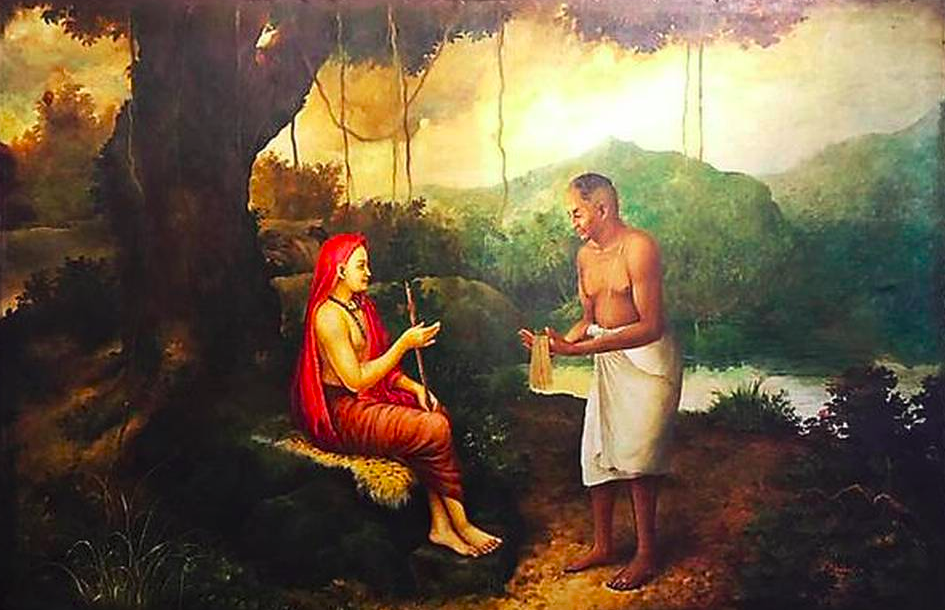
In this article, I am presenting a dialogue on what is the ultimate reality according to Advaita, with a teenage girl who is a student of the Facebook Psycho-Philosophy Group. As I started posting this dialogue, I thought it would be interesting to examine the role of women in the history of Vedanta because it is based on the study of scriptures, dialogue and wherever necessary debates: traditionally the bastion of males. I particularly examine the roles played by two women Gargi Vchaknavi of the Upanishadic era and Ubhaya Bharati of Shankara’s era. Going through the dialogues and roles played by these women, and subsequently going through my dialogue with the teenage girl, one can appreciate the fact that though times have changed- dialogues are held online instead of the forests – the method of transmission of truth, and the way of dialogue between teacher and student in the tradition of Advaita Vedanta remains unchanged, ever since Lord Brahma revealed the Vedas to Rishis and who transmitted this truth to a spiritual family-sampradaya: the lineage of teachers and students who pass the eternal truth down to the present day in an unbroken succession. Women are part of this eternal stream.

Categories
Advaitic Inquiries History of Advaita

Prasthana Traya: The Triple Canonical Base of Vedanta Scriptures Followed by Shankara – Part 3/4: Bhagavad Gita

The Gita is a revolutionary and syncretic scripture in the canon of Vedanta. It brings down the Vedic truths from sequestered Himalayan caves into the active field of political life and crisis evoking tensions of fratricidal war. Religion is philosophy in action. Through the words of Krishna, who acts as his friend, guide, seer and prophet, Arjuna receives the practical application of teachings founds in the Upanishads. Throughout my active public life, I found myself in the position of Arjuna, facing a war, and asking the same questions he did, to Krishna. Thus it was that it was my favourite book till the time I did not renounce all organizational life. In this article, I discuss the Gita as a scripture of Advaita Vedanta along with its unique reformulation of action and renunciation, through what it calls action in inaction and inaction in action. I also discuss Shankara’s queasiness with this reformulation and his grudging acceptance even though it does not sit very well with his ideal of Upanishadic monasticism for a liberated being.

Categories
Advaitic Inquiries History of Advaita

Prasthana Traya: The Triple Canonical Base of Vedanta Scriptures Followed by Shankara – Part 2/4: Vedas/Upanishads

Forming the end portion of the Vedas, the Upanisads have had a vast and pervasive influence in Hindu Tradition. Upanishadic teachings and Upanishadic type realization run through a wide range of Hindu religious literature as dye through a cloth. It is well known to those who follow the Veda that the phrase ‘the method of the Vedanta’ refers to the method for teaching knowledge of the Absolute observed in the Upanishads which crystallizes around a number of key terms, the most important of which are Atman and Brahman. Atman, “the Self”, is at the root of the experience of self, or “I”, which is found in every human being. It is the Formless Reality which one is, above Life and Death, and above space and time. Everyone is that Reality, although without being aware of it, and It shines in the heart and mind of all living beings. In this article, I discuss the origin, the message and the unique traditional method of teaching the message found in the Upanishads, by Shankara, through superimposition and negation.

Categories
Advaitic Inquiries History of Advaita

Prasthana Traya: The Triple Canonical Base of Vedanta Scriptures Followed by Shankara – Part 1/4: Introduction

I spent the first seventeen years of my inquiry with the teachings of J Krishnamurti (JK) after which I reached a stalemate. JK was primarily a master in investigating the psychological causes of suffering and despite having learned immensely from him in this regard, something within me kept clamouring to get metaphysical answers for questions like what is life, birth, death, self and creation. Moreover, like most Yoga-based teachings, Krishnamurti used to hammer at thought which according to him, in line with the teachings of Yoga based dualist schools, veils reality. However, unlike the depictions of Yoga based teachers like Buddha, Mahavira and other Hindu Yogis, Shankara is never depicted in a posture of meditation with eyes closed: always with a bundle of scriptures in his hand. This is a great testament to the fact that Advaita Vedanta, the path followed by Shankara does not believe in ending or shutting thought, but its science of Jnana Yoga is about using the subtle organ of thought, called intellect, and sharpen it to such an extent that it takes one to the reality that lies beyond thought, called Self/Brahman/Witness/Awareness, as revealed by the scriptures. In this series of articles, I shall be discussing the canonical base of scriptures and their paramount importance for the teachings of Advaita Vedanta of Shankara, where I found myself at home ultimately and received all my answers.

Categories
Advaitic Inquiries History of Advaita

The Puzzle of the Upanishads

The Upanishads are hailed as one of the most profound scriptures of mankind. Departing from the ritualistic traditions of the earlier Vedic age, the Upaniṣadic sages were engaged in a radical rethinking of the nature of self and reality that was destined to deeply influence the course of religion, philosophy, and life in India and beyond. Their main purport is to attain immortality. However, an examination of the contents of the Upanisads themselves will show that they were never confined to profound philosophical doctrines. All sorts of miscellaneous ideas, injunctions, incantations, theological interpretations, conversations, traditions, and so forth, regarded at the time are secret principles, or secret teachings were assembled and set down without any sequence. This article shows how the paradoxical contents of Upanishads have baffled ancient and modern scholars alike. Ultimately the article shows that the secret of the Upanishads cannot be unlocked by human reason.

Categories
Advaitic Inquiries History of Advaita

Shankara: Not The Founder of Advaita Vedanta But A Link in the Timeless Tradition

There is a widespread notion that Shankara is the founder of Advaita Vedanta. Still, others think that he may have introduced some personal innovations in Vedanta by borrowing teachings from other schools. This article seeks to conclusively put an end to such speculations, by showing that Shankara gave ultimate authority to the Upanishads/shrutis. He followed a traditional teaching method of Upanishads called Agama: stretching back right up to Brahma, the Lord of every cycle of creation, who reveals the Vedas to the Rishis, and who further transmitted this knowledge to a chain of teachers constituting the Advaita tradition/sampradaya. Shankara was just a link – a powerful one – in this sampradya, which continues till today amongst those who know the Agama – traditional method of teaching found in the Upanishads/shrutis. Finally when Brahman is intuited even the shrutis are transcended.

Categories
Advaitic Inquiries History of Advaita

Difficulties in Finding the True Method of Advaita Vedanta of Shankaracharya – Part 2 : Pre-Shankara Schools

In Part 2 of this series, I examine the multifarious teachers and schools of Vedanta that existed before the advent of Shankara. I also show how Shankara refers to some of them as knowers of his tradition(sampradaya) in his various commentaries. This goes on to show that Shankara was not the founder of Advaita Vedanta as commonly believed. About a dozen pre-Shankara Vedanta schools and their teachers have been discussed, whose works are lost in history. Knowing all the views of these schools which do not belong to Shankara’s Advaita helps a seeker because at some points he/she holds similar erroneous views in one’s journey of self-inquiry.

Categories
Advaitic Inquiries Pre-Witness Stage

Self inquiry: Have you questioned Death?

Self inquiry has its root in solving the riddle of death. Though most of us live in denial of this fact, it has the secret to the truth. No wonder this was a question which not only set me on my path of self-inquiry but also Buddha and Nachiketa in the Katha Upanishad, and every other inquirer across space and time. In this article, I describe my journey of self-inquiry with this question, interwoven with the other historical characters I have mentioned.