In this post I talk about why the understanding of Capitalism and uprooting it from one’s life psychologically and physically is essential for the study of Advaita and attaining it’s goal of liberation, especially for householder Advaitins.
Writer and Teacher of Non-Dual Self Inquiry/Advaita Vedanta
For more details please see the 'About Me' page of the website or follow this link https://neevselfinquiry.in/about-me/
To learn Advaita from me, please visit the 'Learn Advaita' page of this website or follow the link https://neevselfinquiry.in/contact/
In this post I talk about why the understanding of Capitalism and uprooting it from one’s life psychologically and physically is essential for the study of Advaita and attaining it’s goal of liberation, especially for householder Advaitins.
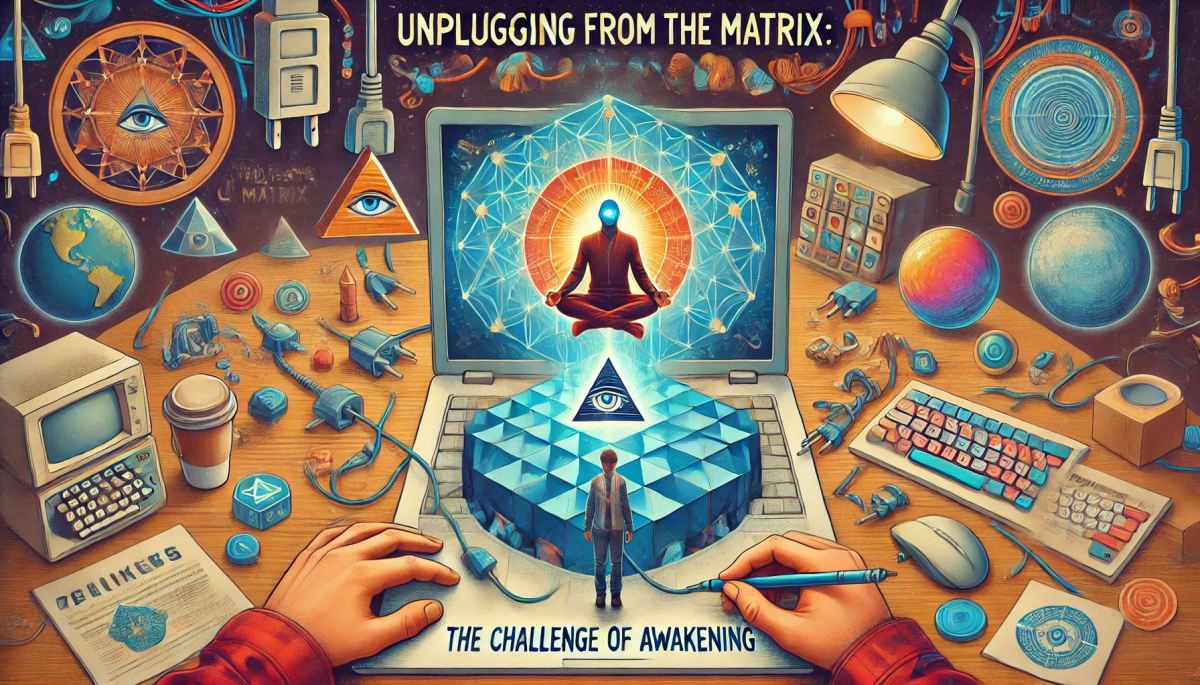
In The Matrix, when Morpheus tells Neo that “many are not ready to unplug from the system,” he is speaking to a profound truth about human nature, which reflects both the story’s fictional world and the real-life metaphysical condition of society. The “system” in The Matrix is a metaphor for the Illusion—an artificial construct designed to control and subdue humanity by giving them a false sense of reality. In this article, I set out to briefly explain the nature of the system/matrix and the challenges involved in breaking free from it.
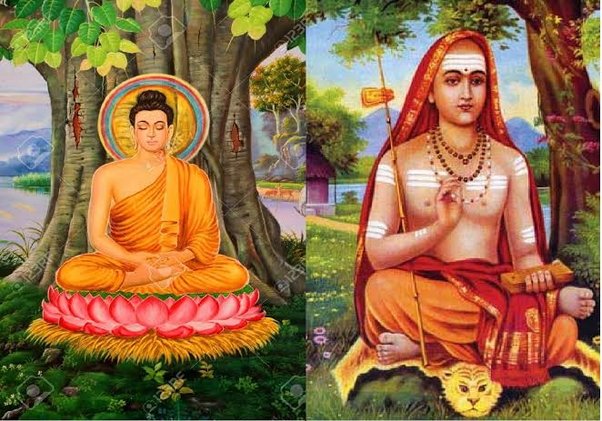
Introduction Advaita and Buddhism are two non-dual paths that talk about liberation from suffering. Theravada Buddhism is a school of Buddhism that claims to be based on the original Pali transmission of the Buddha. In this article, I am examining both these paths through quotes and explanations to illustrate what they mean by liberation, what […]
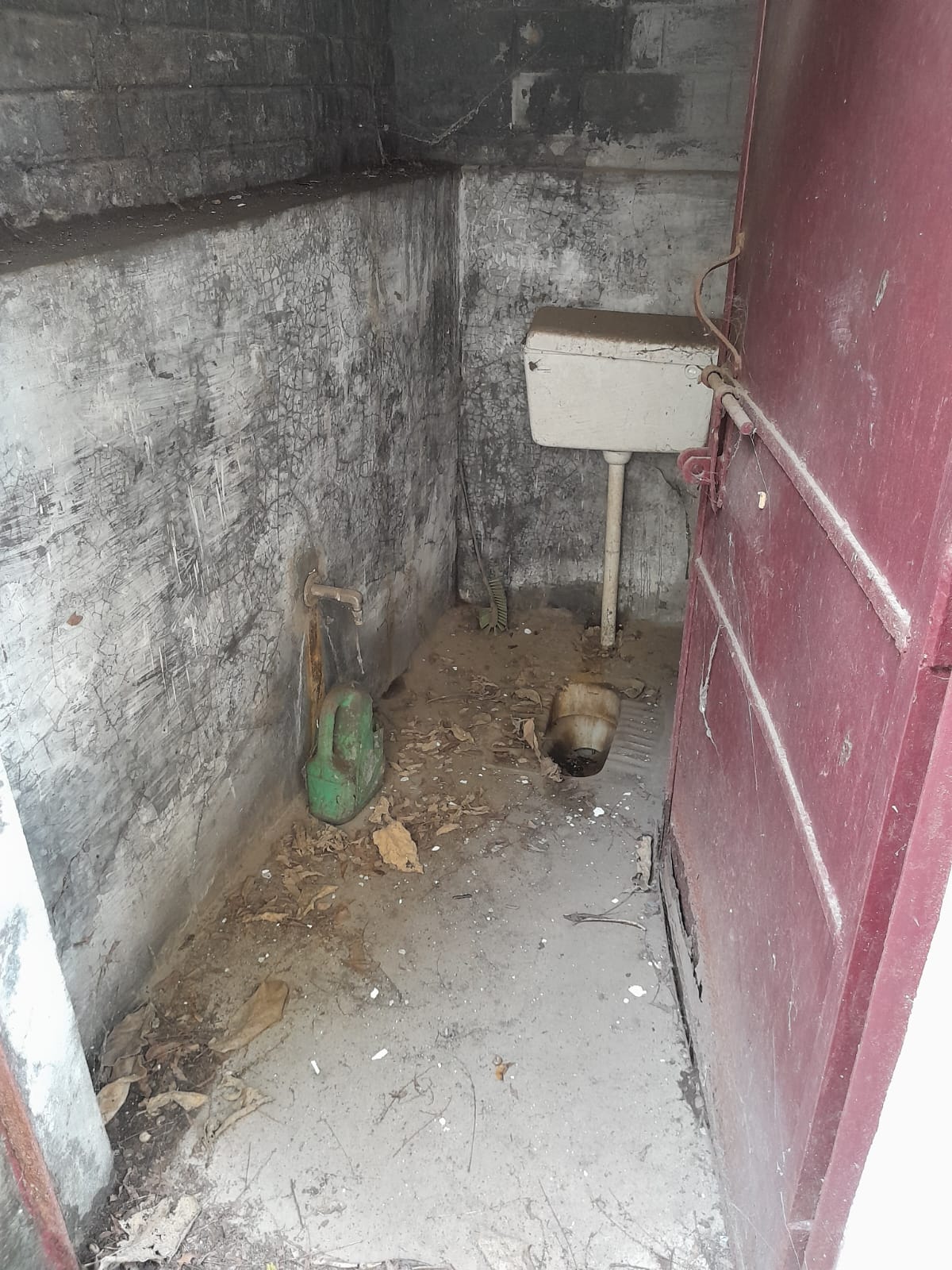
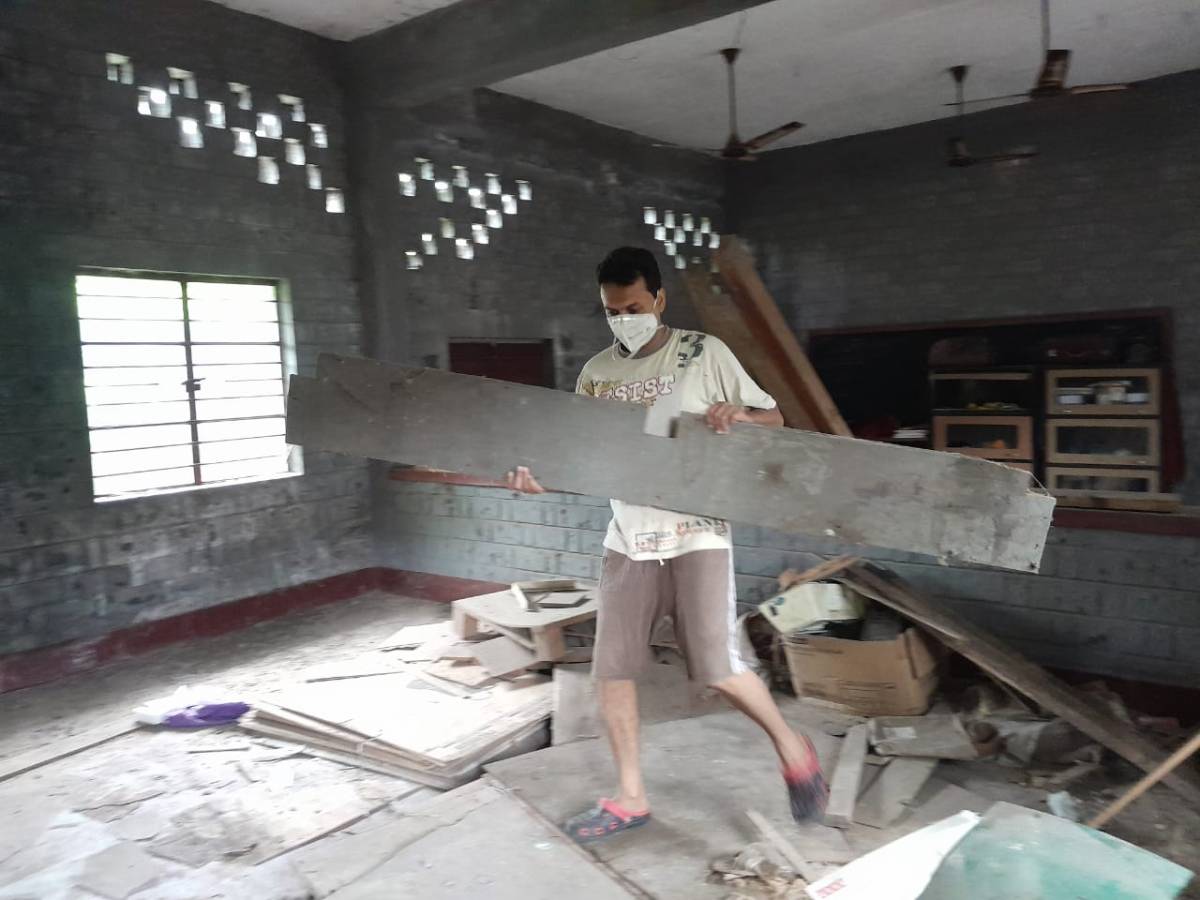
Has cleaning of washrooms got anything to do with non-dual teachings. Read on to know further
We are slowly gearing up, the NEEV Centre for Self Inquiry, to become a vibrant centre for disseminating the teachings of Advaita Vedanta to seekers across the world. The first step we are taking in this direction is to host a retreat for the students of Self-Inquiry in India who are actively engaged in studying Advaita with me.
In my teachings, the journey of self-inquiry goes through four stages of deconstruction. At the end of stage one, the thinker is deconstructed, at the end of stage two, the doer/experiencer is deconstructed, at the end of stage three, the witness is deconstructed, and at stage four complete subject-object duality is deconstructed.
This particular dialogue is happening with a student who is at stage two in his journey of self-inquiry. Therefore, my attempt with him is to help him deconstruct the last stages of the thinker and the doer.
One of the most pervasive conditioning of human beings is that there is an objective, really existent world out there that is perceived by a really existent subject. It is this duality that is the cause of all suffering. The journey of non-dual inquiry consists in closely examining this duality and seeing its falsity. Since the hold of such a conditioning is powerful beyond measure, a student of non-dual inquiry is moved through various stages of deconstruction in Advaita; each stage taking years of painstaking inquiry and sustained effort. In this article which is primarily a dialogue with a student, I am helping the student stabilize in Stage 2/Observer stage of my self-inquiry stages. Along with the dialogue, I have written an extended preface that helps a student understand the various stages of self-inquiry a student has to journey through in Advaita to reach final non-dual realization and end of suffering.
In the stages of self-inquiry I teach, choiceless awareness of ‘what is’ is a form of meditative inquiry that I teach to prepare a student for the more advanced Advaitic inquiries. At this stage, the duality between the thinker and thought has been negated and through choiceless awareness, the student is ready to understand the true nature of all experiences, rather than how experience presents itself to a deluded mind. In this article, I discuss the three marks of all experiences that are experientially revealed in meditative inquiry: the impermanence of all objects, the illusoriness of the thinker-doer-experiencer that controls experiences, and how the thinker-doer-experiencer is the very cause of human suffering. Only when a student has totally and experientially understood these three marks of experience does he become qualified for further Advaitic inquiry that leads to liberation
In this article, I take up one of the most complex and vexing issues that face any seeker in the journey of self-inquiry. The article begins with the journal of a student of self-inquiry who talks about his need for social approval and how it contradicts his ethics imbibed in childhood. In response to his journal, I wrote this article to show how a student of self-inquiry in the modern capitalistic society has to navigate through different ethical frameworks in his journey to freedom, right from childhood, till he is ultimately freed from all ethical frameworks, reaching the state of spontaneous compassion as the consummation of self-inquiry.
Many people take to non-dual self inquiry thinking it’s just a matter of mind and philosophy. In this article I try to show how self inquiry cannot proceed without a very deep understanding of emotions, their inspirational power, as well as their myriad deceptions. To all my students who come new to self inquiry I always start them off with the teachings of J Krishnamurti for thier tremendous insight into human emotions. Without such background work, Advaita can easily be co-opted by the mind as one of it’s strategies to cope with suffering, instead of an ending of it, eventually leading to arrogance. Apart from showing how and why emotions form an indispensable background for self inquiry, I talk how the heights of awakening in Advaita is not knowledge but bliss or love. But this height is reserved only for the rarest few.
In the final part of this article series, I take up the neurological studies done on the root of human emotions by American neuroscientist Le Doux in 1990s, popularized by science journalist Daniel Goleman in his book ‘Emotional Intelligence’, and further developed into a model for self-inquiry by an Australian called Peter of Actual Freedom Trust. While Peter is openly critical of eastern spiritual paths, in this article, I show conclusively, how not only the neurological model maps to Advaita, but also to Peter’s path of Actual Freedom, which he claims to be his novel discovery; something Advaita has been teaching for more than last three thousand years.
In my previous posts, I presented two dialogues on the difference between thinker and observer and the difficulties a seeker of self-inquiry has in coming to identify oneself as the mental observer. By now means this is an easy task. It requires great persistence, the subtlety of observation and the ability to take the risk of losing control. It’s almost an energetic transformation. As can be seen in this dialogue, it goes so deep to even raise questions of life and death. As I have written in my previous articles, coming to the observer stage is the most vital step before coming to any form of non-dual inquiry. Many people rush into non-dual inquiries before coming to this stage. In such cases, even non-dual inquiries become articles of faith, a ground for the mind to cling, rather than a real deconstructive inquiry. For anyone who wants to enter into a serious non-dual inquiry through any school, the deconstructive dialogue in this article shall certainly be of great help to move from thinker to controller to commentator to observer.
Self Realization in Advaita brings one to the Witness stage. But this is not the end of the journey. In Vivartavada of Shankara one has to abide as Witness till all vasanas/karmic imprints/defilements end and the Witness dissolves, resulting in the total ending of subject-object duality. This is a very long period involving basically two stages. I talked about the first stage of Witnessing in Part 1 which was related to Titiksha/endurance of all consequences. That was an amoral stage of Witnessing to root out powerful worldly vasanas. In this article, I discuss the second stage of Witnessing called Udasinata/High Indifference. This comes about after Titiksha has ended all extroverting and reactive vasanas. After this one develops the capacity to consciously adopt the passive virtue of calm impartiality to all negative events and thoughts so that one can uproot the deepest and most primal vasanas resulting in the complete destruction of all karmic defilements/vasanas that cause suffering.
I had the desire to write an article about the differences between the teachings of the seer J Krishnamurti and Advaita for a long time. The two have quite a few things in common but as I shall show the reader, eventually, they are two very different teachings methodologies, though both go on to complete deconstruction of subject-object duality eventually
In this article I am presenting a dialogue with a student of the NEEV Psycho-Philosophy Group, where he starts out examining the notion of success, failure and comparison in society, in his journal. The dialogue starts going deeper as it moves from the leaves, to the branches to the trunk of the mind. It reveals the overwhelming tendency of the mind to land on an answer, to arrive at a certainty, to land on a conclusion on which it can build its comfortable nest. It is the task of the teacher to keep demolishing the nest the student is trying to build by advancing answers, so that he/she find quick relief from suffering. In my last article, “The Difference Between Thinker and Observer in Advaita: A Dialogue” I had talked about how one needs to shift from being a thinker to an observer if one has to undergo the subtle level of inquiries in Advaita. The dialogue in this article shows how one can make this shift and the massive difficulties encountered by a student’s mind in making this shift. Without this step, none can hope to make any progress in any path of self inquiry or Jnana Yoga. It is the base on which all future self inquiry at the most advanced levels rests upon.