Categories
Advaitic Inquiries History of Advaita

Prasthana Traya: The Triple Canonical Base of Vedanta Scriptures Followed by Shankara – Part 2/4: Vedas/Upanishads

Forming the end portion of the Vedas, the Upanisads have had a vast and pervasive influence in Hindu Tradition. Upanishadic teachings and Upanishadic type realization run through a wide range of Hindu religious literature as dye through a cloth. It is well known to those who follow the Veda that the phrase ‘the method of the Vedanta’ refers to the method for teaching knowledge of the Absolute observed in the Upanishads which crystallizes around a number of key terms, the most important of which are Atman and Brahman. Atman, “the Self”, is at the root of the experience of self, or “I”, which is found in every human being. It is the Formless Reality which one is, above Life and Death, and above space and time. Everyone is that Reality, although without being aware of it, and It shines in the heart and mind of all living beings. In this article, I discuss the origin, the message and the unique traditional method of teaching the message found in the Upanishads, by Shankara, through superimposition and negation.

Categories
Advaitic Inquiries History of Advaita

Prasthana Traya: The Triple Canonical Base of Vedanta Scriptures Followed by Shankara – Part 1/4: Introduction

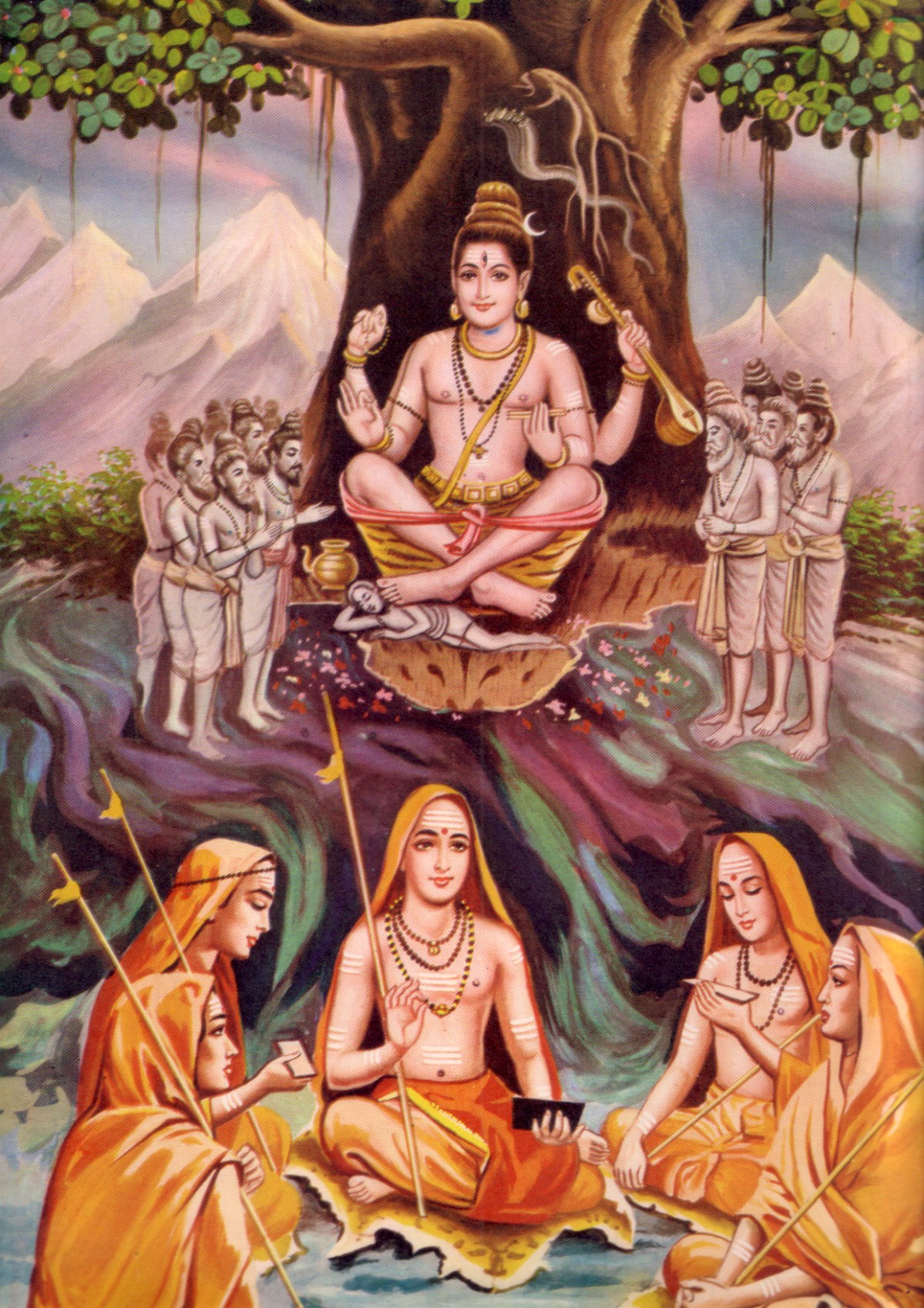
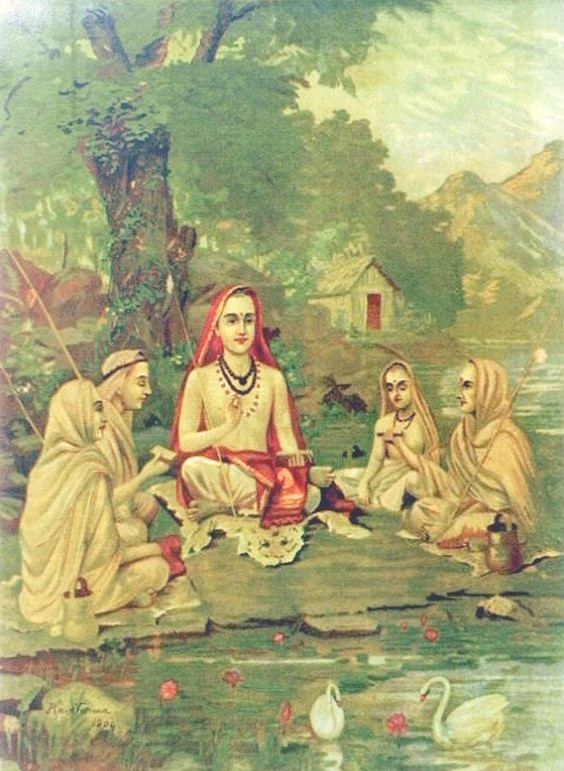
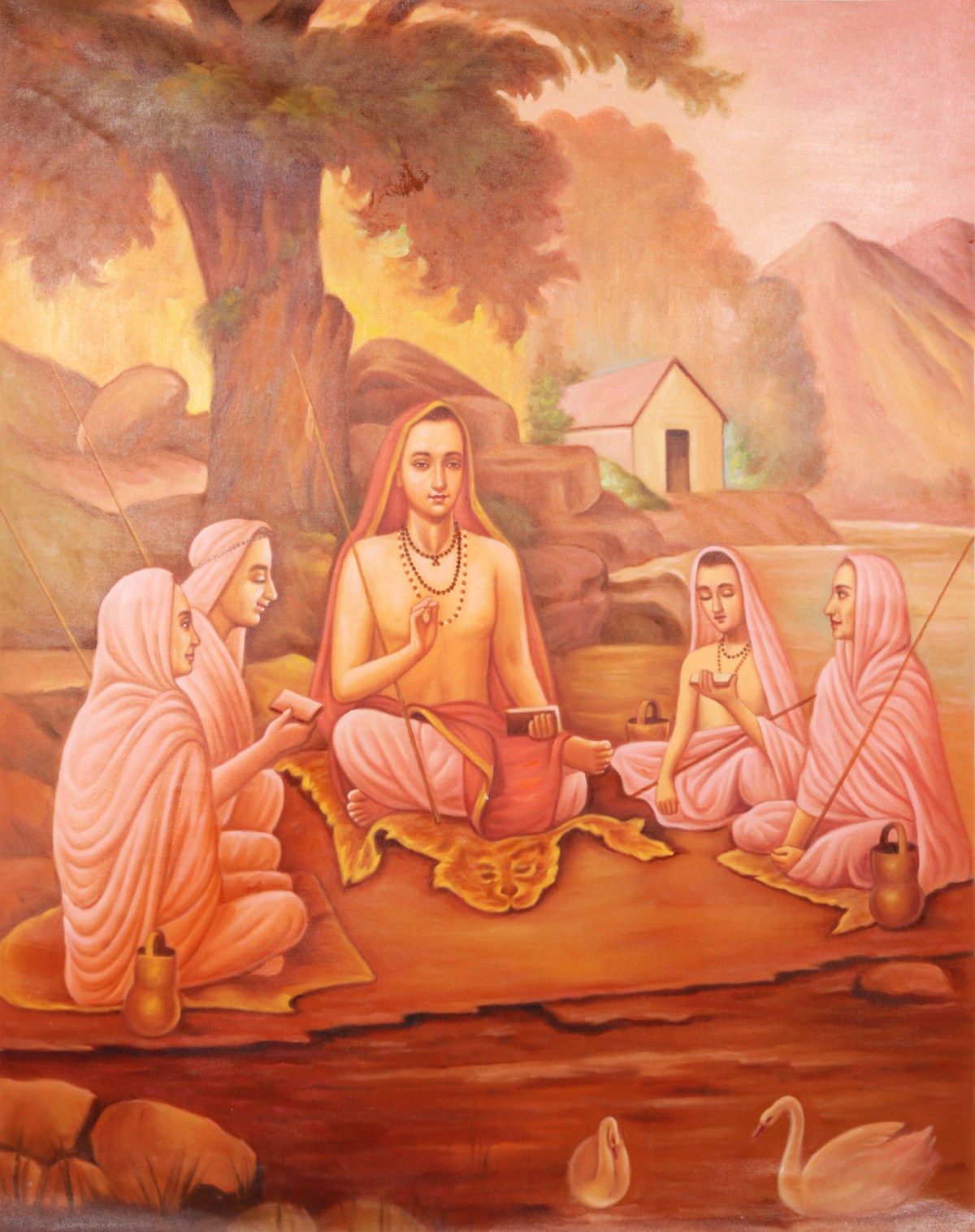
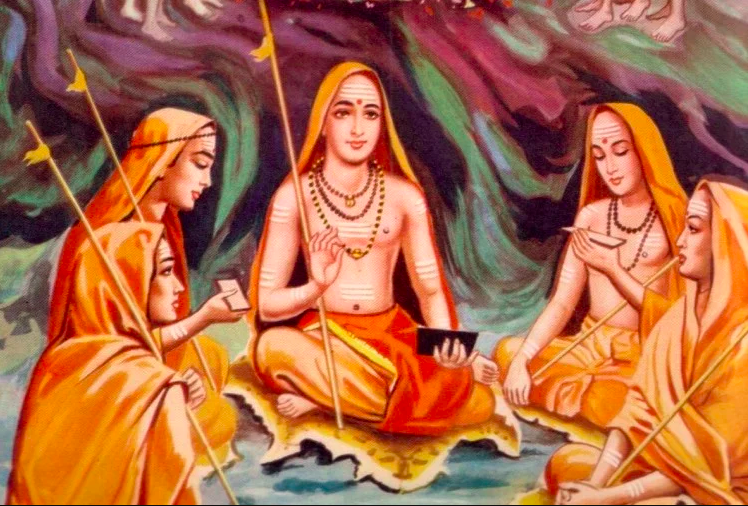
I spent the first seventeen years of my inquiry with the teachings of J Krishnamurti (JK) after which I reached a stalemate. JK was primarily a master in investigating the psychological causes of suffering and despite having learned immensely from him in this regard, something within me kept clamouring to get metaphysical answers for questions like what is life, birth, death, self and creation. Moreover, like most Yoga-based teachings, Krishnamurti used to hammer at thought which according to him, in line with the teachings of Yoga based dualist schools, veils reality. However, unlike the depictions of Yoga based teachers like Buddha, Mahavira and other Hindu Yogis, Shankara is never depicted in a posture of meditation with eyes closed: always with a bundle of scriptures in his hand. This is a great testament to the fact that Advaita Vedanta, the path followed by Shankara does not believe in ending or shutting thought, but its science of Jnana Yoga is about using the subtle organ of thought, called intellect, and sharpen it to such an extent that it takes one to the reality that lies beyond thought, called Self/Brahman/Witness/Awareness, as revealed by the scriptures. In this series of articles, I shall be discussing the canonical base of scriptures and their paramount importance for the teachings of Advaita Vedanta of Shankara, where I found myself at home ultimately and received all my answers.

Categories
Advaitic Inquiries Pre-Witness Stage

The Place of Devotion/Bhakti in Shankara Advaita

Advaita, especially Shankara’s Advaita negates all attributes for the Absolute truth it calls Brahman. According to Advaita, Brahman is the only formless reality. The phenomenal world we see is just an apparent reality like a dream. Brahman never creates the world and the souls we perceive. The only way to get enlightened is to get intuitive knowledge of this Absolute Reality of Brahman. This can only happen through knowledge and not through any acts like work, meditation or worship. However, we find several works attributed to Shankara which speak about creator Gods like Vishnu and Shiva. Did Shankara worship these Gods? This article sets out to show that most of these works are not considered by all scholars as undisputed works of Shankara. After giving a short history of the beginning of the worship of Shiva and Vishnu, who are not Vedic Gods like Brahma, the article shows that even if we see some inclination of Shankara towards Vishnu, there is no evidence to show that he worshipped them but used these concepts provisionally only for their helping in purifying the minds of seekers to finally make them fit for attaining enlightenment through Jnana/Knowledge.

Categories
Advaitic Inquiries Pre-Witness Stage

Shabda Pramana: Enlightenment through Words in Advaita Vedanta: Presenting a Dialogue

Advaita Vedanta is unique amongst all paths for liberation. It is the only path that does not consider any form of action (meditation, yoga, chanting, worship) as the final means to liberation. These actions are a means to purify the mind so that it is qualified to receive and assimilate enlightenment through Knowledge. The only knowledge that can grant enlightenment to a student is the shabda/word of the Sruti/Upanishads transmitted by a teacher established in Brahman himself/herself. In this article, I describe the theory and practice of enlightenment in this unique path. Finally, I furnish the article with an actual dialogue that takes place between a teacher and a student in which the student gets enlightened.

Categories
Advaitic Inquiries History of Advaita

Shankara: Not The Founder of Advaita Vedanta But A Link in the Timeless Tradition

There is a widespread notion that Shankara is the founder of Advaita Vedanta. Still, others think that he may have introduced some personal innovations in Vedanta by borrowing teachings from other schools. This article seeks to conclusively put an end to such speculations, by showing that Shankara gave ultimate authority to the Upanishads/shrutis. He followed a traditional teaching method of Upanishads called Agama: stretching back right up to Brahma, the Lord of every cycle of creation, who reveals the Vedas to the Rishis, and who further transmitted this knowledge to a chain of teachers constituting the Advaita tradition/sampradaya. Shankara was just a link – a powerful one – in this sampradya, which continues till today amongst those who know the Agama – traditional method of teaching found in the Upanishads/shrutis. Finally when Brahman is intuited even the shrutis are transcended.

Categories
Advaitic Inquiries History of Advaita

No Vedantic Schools of Duality Present Till the Time of Shankara

About half a century after Shankara, two schools developed: Dvaita (Dualism) and Vishishtadvaita (Qualified Non-Dualism). The founders of these schools seek support for their doctrines in the tradition of Vedanta. In this article, I show that if we study the Brahmasutra of Badarayana and the Brahmasutra Bhashya of Shankaracharya, we don’t find any non-Advaitic schools being mentioned. Though there were several schools not following the approach of Shankara’s Advaita tradition, they were all ultimately non-dual in their final purport. These schools were discussed and refuted by Shankara. These are schools which enjoin subtle actions along with knowledge as means of liberation, while Shankara’s Advaita talks only about knowledge as the final means. Schools which enjoin subtle actions like meditation, worship and even affirmations of knowledge are refuted by Shankara. Ultimately the article shows that the latter-day Dvaita and Vishishtadadvaita schools find no support even from these schools which Shakara refuted, for their doctrines.

Categories
Advaitic Inquiries History of Advaita

Difficulties in Finding the True Method of Advaita Vedanta of Shankaracharya – Part 2 : Pre-Shankara Schools

In Part 2 of this series, I examine the multifarious teachers and schools of Vedanta that existed before the advent of Shankara. I also show how Shankara refers to some of them as knowers of his tradition(sampradaya) in his various commentaries. This goes on to show that Shankara was not the founder of Advaita Vedanta as commonly believed. About a dozen pre-Shankara Vedanta schools and their teachers have been discussed, whose works are lost in history. Knowing all the views of these schools which do not belong to Shankara’s Advaita helps a seeker because at some points he/she holds similar erroneous views in one’s journey of self-inquiry.

Categories
Advaitic Inquiries History of Advaita

Difficulties in Finding the True Method of Advaita Vedanta of Shankaracharya – Part 1

Many seekers who are studying Advaita Vedanta personally or through a teacher may be totally unaware of the many schools of Vedanta as well as Advaita Vedanta. The teachings of Advaita Vedanta were systemized by Shankaracharya in about 700 AD. Very few people have actually read Shankara’s original works. Most of modern Advaita taught by teachers is a mix of teachings of various schools of Vedanta and Advaita Vedanta sub-schools which came after Shankara. They even mix Yoga and Samkhya. This series of articles has been started by me to show the huge variety of schools and sub-schools which are not Shankara’s teachings. Ultimately this shall help seekers discriminate and appreciate the most unique path of Shankara Advaita which was on the verge of getting lost.

Categories
Advaitic Inquiries Witness Stage

The Liberated Being : Beyond all Acts – Good & Bad

History, culture, mythology all go into creating a prototype of an enlightened being or a Liberated Person. These prototypes inform the common man about the kind of greatness of person, or personality, that a liberated person has. The personalites of enlightened beings are worshipped as Gods or saviours, or beings with superhuman powers. However, the highest truth, which only Advaita Vedanta elucidates through the Vedas, is much more simple, but most difficult to penetrate. The liberated being, who in Advaita is called a Jnani, has gone beyond all names and forms, and acquired a non-dual vision. What is that vision and who is a Jnani? How does he act? I explore these questions in this article.

Categories
Advaitic Inquiries Pre-Witness Stage

Self Inquiry and Issues Related to Teachers

Self inquiry is a long and complex journey to liberation. Spiritual teachers and paths are proliferating the world and internet. To a beginner of self inquiry, the variety seems daunting. In this article I try to summarize all issues which arise when one is deciding, or decides on a particular teacher. While very few are truly interested in going the whole distance, in the end, I give my advice on how to choose a teacher, if one’s aim is nothing short of ending of ego-sense/individuality.