Categories
Advaitic Inquiries Pre-Witness Stage

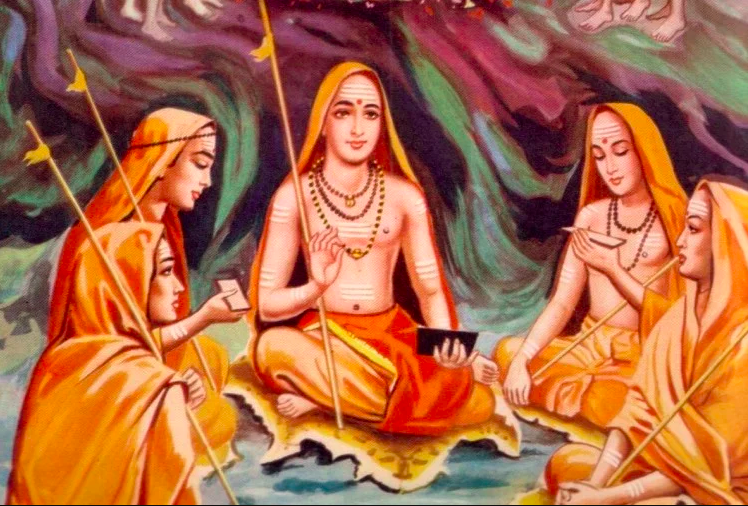
The Place of Devotion/Bhakti in Shankara Advaita

Advaita, especially Shankara’s Advaita negates all attributes for the Absolute truth it calls Brahman. According to Advaita, Brahman is the only formless reality. The phenomenal world we see is just an apparent reality like a dream. Brahman never creates the world and the souls we perceive. The only way to get enlightened is to get intuitive knowledge of this Absolute Reality of Brahman. This can only happen through knowledge and not through any acts like work, meditation or worship. However, we find several works attributed to Shankara which speak about creator Gods like Vishnu and Shiva. Did Shankara worship these Gods? This article sets out to show that most of these works are not considered by all scholars as undisputed works of Shankara. After giving a short history of the beginning of the worship of Shiva and Vishnu, who are not Vedic Gods like Brahma, the article shows that even if we see some inclination of Shankara towards Vishnu, there is no evidence to show that he worshipped them but used these concepts provisionally only for their helping in purifying the minds of seekers to finally make them fit for attaining enlightenment through Jnana/Knowledge.
Categories
Advaitic Inquiries History of Advaita

The Puzzle of the Upanishads

The Upanishads are hailed as one of the most profound scriptures of mankind. Departing from the ritualistic traditions of the earlier Vedic age, the Upaniṣadic sages were engaged in a radical rethinking of the nature of self and reality that was destined to deeply influence the course of religion, philosophy, and life in India and beyond. Their main purport is to attain immortality. However, an examination of the contents of the Upanisads themselves will show that they were never confined to profound philosophical doctrines. All sorts of miscellaneous ideas, injunctions, incantations, theological interpretations, conversations, traditions, and so forth, regarded at the time are secret principles, or secret teachings were assembled and set down without any sequence. This article shows how the paradoxical contents of Upanishads have baffled ancient and modern scholars alike. Ultimately the article shows that the secret of the Upanishads cannot be unlocked by human reason.

Categories
Psycho-Philosophical Inquiries

Choiceless Awareness of the Tree of Fear

Fear is the most basic emotion of man. For those who are inquiring into the question of whether man can live in total freedom, the feeling of fear has to be understood. Fear exists at various levels. It’s like a tree with various branches, trunk and root. How does one come to the root of fear? In this article, I address this question through a dialogue which I shared with a student in my FB Psycho-Philosophy Inquiry Study group.
Normally, as thinking people, we analyze fear. But this analysis does not go to the root of fear. In fact, as the dialogue shows, analysis is a device of mind to escape fear.

Categories
Advaitic Inquiries Pre-Witness Stage

Shabda Pramana: Enlightenment through Words in Advaita Vedanta: Presenting a Dialogue

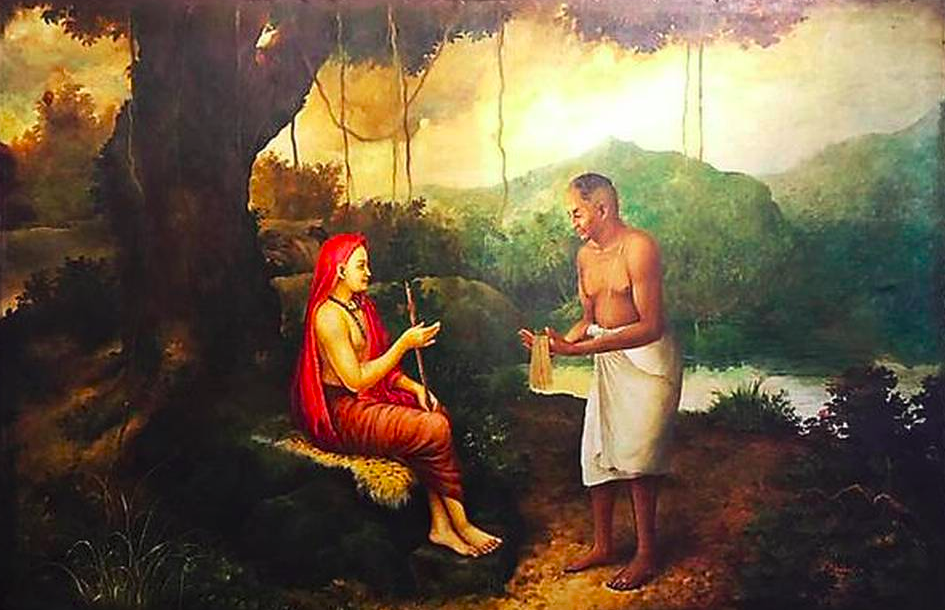
Advaita Vedanta is unique amongst all paths for liberation. It is the only path that does not consider any form of action (meditation, yoga, chanting, worship) as the final means to liberation. These actions are a means to purify the mind so that it is qualified to receive and assimilate enlightenment through Knowledge. The only knowledge that can grant enlightenment to a student is the shabda/word of the Sruti/Upanishads transmitted by a teacher established in Brahman himself/herself. In this article, I describe the theory and practice of enlightenment in this unique path. Finally, I furnish the article with an actual dialogue that takes place between a teacher and a student in which the student gets enlightened.

Categories
Psycho-Philosophical Inquiries

Attachment and Facing the Fear of Death

On reading one of my previous blog articles about the quest to understand death, an eighteen-year-old girl who is a member of NEEV Psycho-Philosophy group wrote about her own fear of death and her desire to go beyond it. Death is usually taken as a morbid topic to be spoken about in hushed tones. But for a self inquirer, who wants to know truth, death is an enigma he/she must solve. In my response to the girl’s journal I revisit the two characters – Buddha and Nachiketa – on their quest for going beyond death, whom I had mentioned in my previous article on death. This time I talk about how both of them ultimately conquer death – Buddha with his Nirvana and Nachiketa with his Moksha. I show that the common aspect to both these paths is how the cycle of birth and death actually begins with attachment to objects. Either one remains attached to impermanent objects and keep wandering in the cycle of samsara or one takes the path out of this suffering by taking the path of self inquiry.

Categories
Meditative Inquiries

Meditative Inquiry: Is Thinking Same as Being Aware of Thought?

The path to Self Realization or Liberation which starts from self-inquiry is a long one. I break the path into three different stages in ascending order – psycho philosophical inquiry, meditative inquiry and Advaitic inquiry. I teach the first two stages in my FB group called NEEV Psycho-Philosophy Inquiry Study Group, and the last stage in NEEV Advaita Study Group (FB). The first group comprises of young people who are beginning their journey of self-inquiry. In this article, I give a brief outline of the activities of this group and post three journal entries of a 19 yr old girl in the group who has undertaken the study of self-inquiry with me. These journal entries provide a snapshot of the moving river of self-inquiry for those who wonder what it is all about, and how and where to begin.

Categories
Advaitic Inquiries History of Advaita

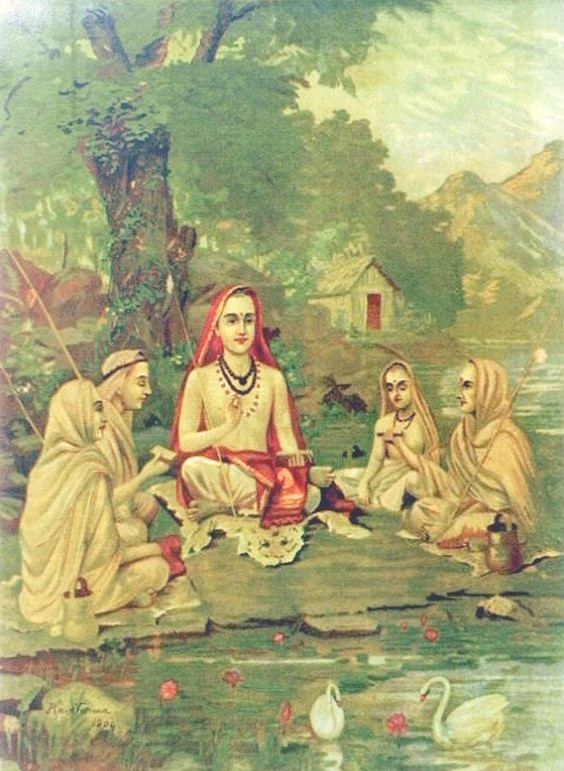
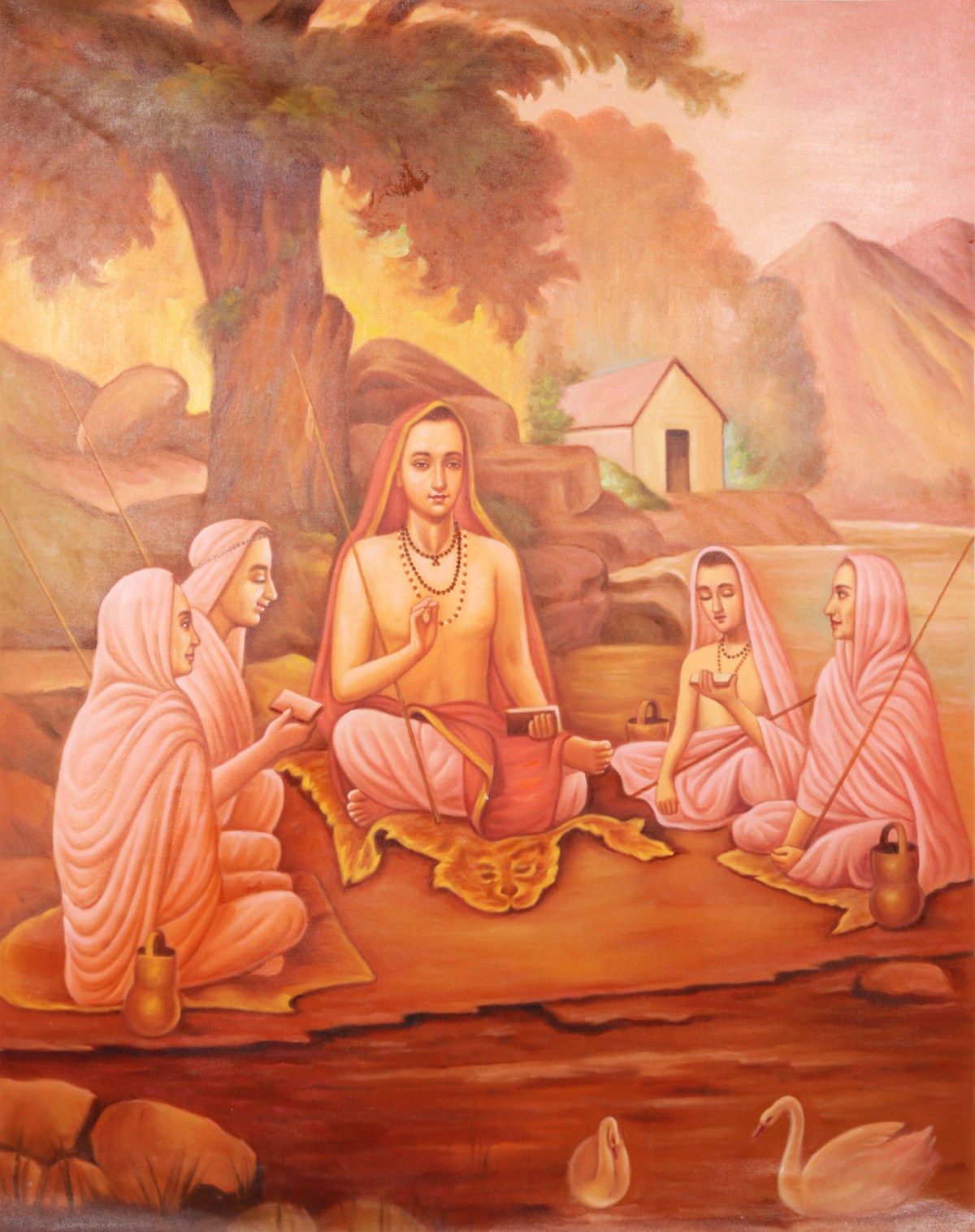
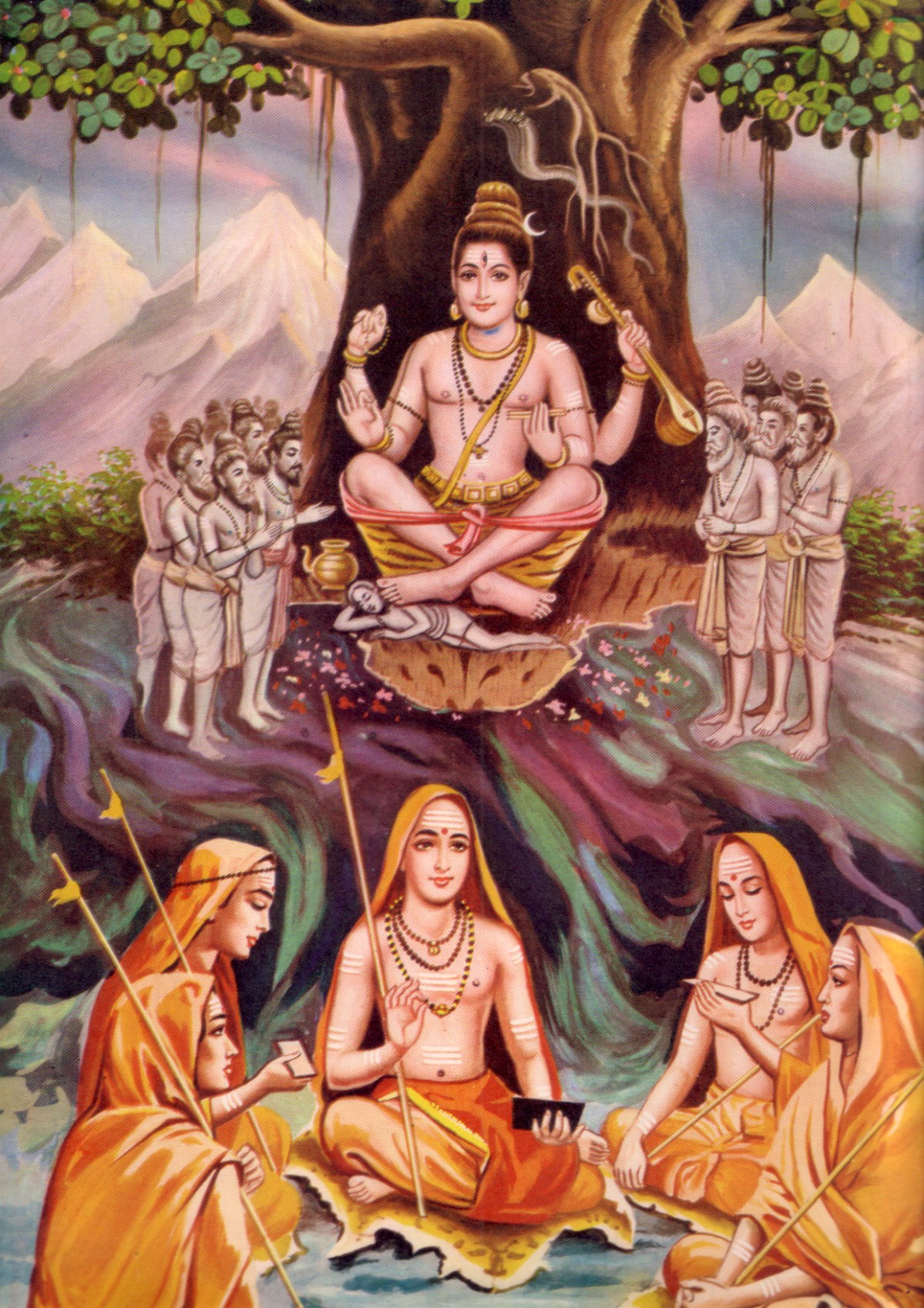
Shankara: Not The Founder of Advaita Vedanta But A Link in the Timeless Tradition

There is a widespread notion that Shankara is the founder of Advaita Vedanta. Still, others think that he may have introduced some personal innovations in Vedanta by borrowing teachings from other schools. This article seeks to conclusively put an end to such speculations, by showing that Shankara gave ultimate authority to the Upanishads/shrutis. He followed a traditional teaching method of Upanishads called Agama: stretching back right up to Brahma, the Lord of every cycle of creation, who reveals the Vedas to the Rishis, and who further transmitted this knowledge to a chain of teachers constituting the Advaita tradition/sampradaya. Shankara was just a link – a powerful one – in this sampradya, which continues till today amongst those who know the Agama – traditional method of teaching found in the Upanishads/shrutis. Finally when Brahman is intuited even the shrutis are transcended.

Categories
Advaitic Inquiries History of Advaita

No Vedantic Schools of Duality Present Till the Time of Shankara

About half a century after Shankara, two schools developed: Dvaita (Dualism) and Vishishtadvaita (Qualified Non-Dualism). The founders of these schools seek support for their doctrines in the tradition of Vedanta. In this article, I show that if we study the Brahmasutra of Badarayana and the Brahmasutra Bhashya of Shankaracharya, we don’t find any non-Advaitic schools being mentioned. Though there were several schools not following the approach of Shankara’s Advaita tradition, they were all ultimately non-dual in their final purport. These schools were discussed and refuted by Shankara. These are schools which enjoin subtle actions along with knowledge as means of liberation, while Shankara’s Advaita talks only about knowledge as the final means. Schools which enjoin subtle actions like meditation, worship and even affirmations of knowledge are refuted by Shankara. Ultimately the article shows that the latter-day Dvaita and Vishishtadadvaita schools find no support even from these schools which Shakara refuted, for their doctrines.

Categories
Advaitic Inquiries History of Advaita

Difficulties in Finding the True Method of Advaita Vedanta of Shankaracharya – Part 2 : Pre-Shankara Schools

In Part 2 of this series, I examine the multifarious teachers and schools of Vedanta that existed before the advent of Shankara. I also show how Shankara refers to some of them as knowers of his tradition(sampradaya) in his various commentaries. This goes on to show that Shankara was not the founder of Advaita Vedanta as commonly believed. About a dozen pre-Shankara Vedanta schools and their teachers have been discussed, whose works are lost in history. Knowing all the views of these schools which do not belong to Shankara’s Advaita helps a seeker because at some points he/she holds similar erroneous views in one’s journey of self-inquiry.

Categories
Advaitic Inquiries History of Advaita

Difficulties in Finding the True Method of Advaita Vedanta of Shankaracharya – Part 1

Many seekers who are studying Advaita Vedanta personally or through a teacher may be totally unaware of the many schools of Vedanta as well as Advaita Vedanta. The teachings of Advaita Vedanta were systemized by Shankaracharya in about 700 AD. Very few people have actually read Shankara’s original works. Most of modern Advaita taught by teachers is a mix of teachings of various schools of Vedanta and Advaita Vedanta sub-schools which came after Shankara. They even mix Yoga and Samkhya. This series of articles has been started by me to show the huge variety of schools and sub-schools which are not Shankara’s teachings. Ultimately this shall help seekers discriminate and appreciate the most unique path of Shankara Advaita which was on the verge of getting lost.

Categories
Psycho-Philosophical Inquiries

Unmasking Ourselves

All of us are aware that we put various masks with different people in different situations. Prompted by a Facebook post of one of my friends, this article asks whether one can live without any masks. It also examines our unconscious motivations to put on different kinds of masks, the conflicts they create, and the enormous risks involved in removing them. Finally, it probes into the reason why anyone would like to unmask oneself.

Categories
Advaitic Inquiries Pre-Witness Stage

Faith vs Reason in the Spiritual Science of Advaita

Most people believe that spirituality is a question of personal faith and belief; that it does not have some universally accepted truth, which is only in the possession of empirical science. In this article, through a dialogue with my friend, I reveal how Advaita Vedanta is a spiritual science which follows the same procedure as empirical science in investigating reality: except that it goes one step higher. While empirical science demonstrates that reality is known more accurately through our mind/thought/reason rather than our senses, Advaita Vedanta shows that ultimate reality is known by an intuitive knowledge that even transcends thought. The procedure to get this intuitive knowledge is as scientific as the discoveries made in science through the exercise of thought/reason.

Categories
Psycho-Philosophical Inquiries

The Flatland Map of Scientific Materialism: The Dubious Legacy of Rene Descartes (Part 1)

Whether we consciously know it or not, the concept or rationalism and thus modernism is the foundation stone of today’s world affairs. The way our world is structured politico-strategically, economically and socially is based on rationalism and thus modernism, and even if reason as an end in itself is no longer an absolute paradigm today, it has shaped our world in a way no other philosophy recently has. The modernist project, the prioritizing of reason as a project for a whole culture, is the result of the prioritizing of reason by René Descartes (1596-1650), who prioritized reason for himself to a formerly unknown degree. Descartes never aimed at reforming the thought process of society, but merely planned to reform his thoughts without imposing on others to imitate the process. In this series of articles on Descartes, I examine his legacy: what we gained and what we lost.

Categories
Psycho-Philosophical Inquiries

How Maps Of Mind Condition Us to Live and Act

We are born into a given world, a world mapped out for us in the form of ideas. We imbibe this map unconditionally in childhood. Very few know about the existence of this map in our minds, let alone question it. All that we think, and do in our life is because of this map. Even acts of doing good for society are born from this map. In this article I examine what these maps are, how they are formed, the difficulty of knowing them and the urgent need to examining their limitations rather than acting mindlessly from them.

Categories
Psycho-Philosophical Inquiries

Have we got a complete map of life?

Do we ever think that we have been conditioned to view life in a particular way: most of us don’t. However, we all agree with the fact that we face conflicts. Why do these conflicts arise? Some of us would like to go deeply into this question, while the majority responds by getting more entrenched in their conditioning. This article is meant for those who would like to go into the root of all conflict, which is, we all have maps of reality embedded in us. In this article, I explore how these maps are formed, how they govern our lives, and how we may not be having complete maps of reality with us.