Categories
Advaitic Inquiry Witness Stage

How Does A Jnani Person Deal With the Negative Impacts of the World: Part 1/3 – Titiksha/Endurance

A Jiva/ embodied being is subject to the attack of the dualities of life: to the turbulence of grief and joy, to the violent touches of pleasure and pain and to the tumult of his emotions and passions. It is not that the Jnani or a Self Realized being does not have to deal with all this. Just that the Jnani knows that these are events in the phenomenal reality affecting the phenomenal Subtle Body (Mind/Intellect) and the Gross Body (Sensations) but not his core Self. As Self/Witness he is unaffected by these phenomenal changes because Self/Witness is Unattached, and Contactless. However, till the Prarabdha Karma exist for the Jnani, ‘his’ BMI has to experience the dual phenomena. I have covered all this in great detail in my articles “Tat Tvam Asi” (You are-Brahman) and the three parts article series – “Prarabdha Karma After Self Realization”- through the lens of traditional Advaita scriptures. There has been very little literature, to my knowledge, talking about the subjective ways in which a Jnani deals with the negative impacts of the world. In this two parts article series, I am taking a psychological approach of describing two stages of psychological attitudes, the Self Knowledge of a Jnani fashions, to front the negative impacts of the world. I describe how this approach subverts conventional morality and ethics so that the ways a Jnani deals with the world can neither be termed as moral or immoral but amoral, especially so in the first stage which I describe in Part I: Titiksha.
Categories
Advaitic Inquiry Witness Stage

Difference Between The Teachings of Traditional Paths like Advaita, Yoga & Krishnamurti: A Dialogue

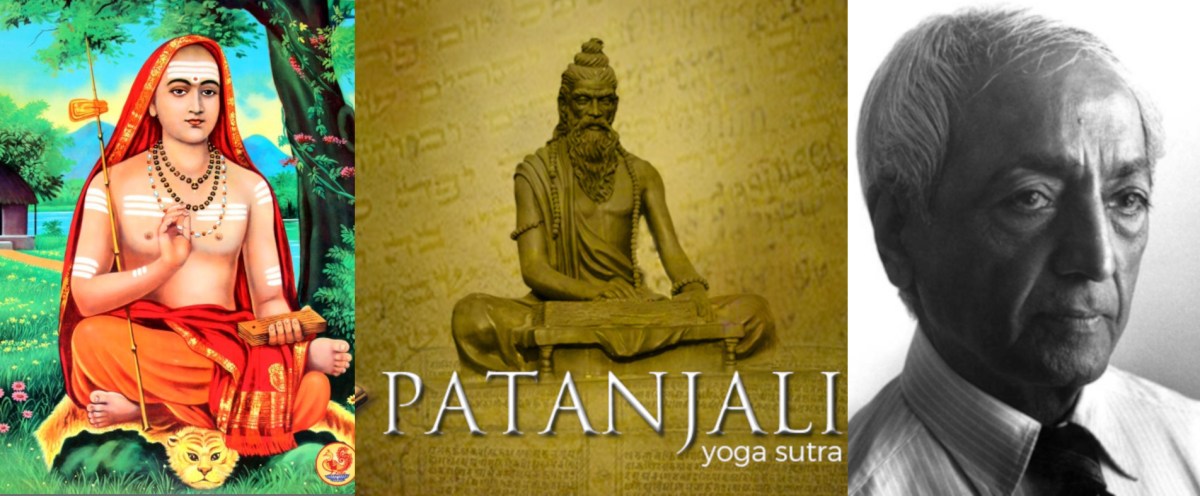
This is a fairly deep dialogue, almost a snapshot of Advaita, I had with my friend who is not a student of Advaita but has been greatly inspired by the teachings of J Krishnamurti. It goes into great detail about the differences between teachings of traditional paths like Advaita, Yoga and Krishnamurti. Through this dialogue, I show how ancient, time-honoured and tested paths have developed a very rigorous methodology for liberation. Krishnamurti undercut these very strengths of these paths, calling them authoritative, mechanical, traditional and imitative techniques which dull the mind. However, one must differentiate between tradition and traditional. We may not like the traditional but the tradition leading to Moksha/Eternal Freedom is not talking about matters caught in the matrix of space-time. All these traditional paths are talking about eternal principles. Their terms may be archaic but their import is valid across all space-time. Krishnamurti missed this point. And what’s more, it so happens, his teachings fall squarely in its principles of a particular Indian school called Yoga of Patanjali (though his method is slightly different) and leads to the same reality. It’s just that his language effectively couched the metaphysical principles he was basing his path on. Though he says that there is no path, there was certainly a path in is his teachings, which I reveal in this dialogue. Having said that, he has his place. His psychological style of exploring the mind through real-life relationships is something unparalleled. And most certainly what he said about truth was the same as all the paths say – it is never known as an object or concept of mind: though we can give it different names.

Categories
Advaitic Inquiry Pre-Witness Stage

You (Self) Are Not (Your) Thoughts: A Dialogue

That we all suffer conflicts of various kinds in our life is an undeniable fact. Self Inquiry is about unearthing and ending the root of all conflicts. In this dialogue with a seeker, I examine the conflict of the division between the thinker and thought. What sustains this division is the process of psychological becoming. One of the processes of psychological becoming is seeking to be virtuous. In this article, I differentiate between dharma/virtue as a process of psychological becoming and adhyatma/the spiritual science of eternal being, to help the seeker appreciate the difference, and overcome the conflict caused by this form of becoming. Finally, I introduce the various stages of self-inquiry, by which I help a seeker completely transcend the duality between the thinker and thought, as a means to ending of all conflict.