Categories
Advaitic Inquiries Comparative Advaita

Do Advaita and Buddhism Point to the Same Truth?

This blog explores whether Advaita Vedānta and Buddhism ultimately point to the same truth. Through a thoughtful dialogue, it traces the meeting ground between Nāgārjuna’s emptiness (śūnyatā) and Gaudapāda’s non-origination (ajāti). Both dissolve all dualities—self and other, subject and object—revealing an unborn reality beyond thought. Yet a tension remains: Buddhism denies any enduring consciousness, while Advaita proclaims consciousness alone as the timeless reality.

As the conversation deepens, these apparent opposites begin to merge. When both experiencer and experienced vanish, is “emptiness” truly different from “consciousness”? The article suggests that Gaudapāda, writing before sectarian walls were built, may have seen the essential convergence between these paths.

Ultimately, this piece—arising from a dialogue with Claude AI—reflects the timeless exchange between Buddhist and Advaitin inquiry, showing how both, when followed to their limit, dissolve into the same wordless recognition of non-dual truth beyond affirmation or negation.


Categories
History of Advaita

The Value of Shankara in the Tradition of Advaita – As a Philosopher or Commentator?

The tradition of Advaita Vedanta as a means of liberation is synonymous with the name of Shankara, not because, as many people erroneously believe, he was it’s founder, instead, Shankara’s fame and his legendary status in the annals of Advaita Vedanta are for reasons more complex, which I shall be exploring in this article. I am going to examine whether the main contribution of Shankara was really as an original philosopher who propounded new ideas, or, was his essential contribution more as an Upanishadic theologian, scholar, commentator and interpreter? I shall also examine other historical factors that led to the legendary status reserved for Shankara today, which may not have all to do with his scholarly skills.

Categories
Advaitic Inquiries

When The Elephant Vanishes: Seeing Through Maya

In the timeless tradition of Advaita Vedanta, the pursuit of truth begins with a radical inquiry: Is what I perceive truly what is? This blog, based on an insightful article by Vivek, a member of the NEEV Community for Self-Inquiry and Sustainability, explores this very question through a powerful allegory—the story of a wooden elephant mistaken for the real.

At the heart of this reflection lies the fundamental Advaitic principle of adhyāsa, or superimposition. The root problem of human suffering is the superimposition (adhyāsa) of the non-Self (body, mind, world) upon the Self (pure consciousness), and vice versa. Just as one mistakes a rope for a snake or a wooden elephant for a real one, so too does the ignorant mind mistake the transient world/non-Self for ultimate reality/Self.

Categories
Advaitic Inquiries Pre-Witness Stage

Advaita, Capitalism And The Red Pill Of Truth

In this post I talk about why the understanding of Capitalism and uprooting it from one’s life psychologically and physically is essential for the study of Advaita and attaining it’s goal of liberation, especially for householder Advaitins.

Categories
Advaitic Inquiries Witness Stage

How Does A Jnani Person Deal With the Negative Impacts of the World: Part 2/3 – Udasinata/High Indifference

Self Realization in Advaita brings one to the Witness stage. But this is not the end of the journey. In Vivartavada of Shankara one has to abide as Witness till all vasanas/karmic imprints/defilements end and the Witness dissolves, resulting in the total ending of subject-object duality. This is a very long period involving basically two stages. I talked about the first stage of Witnessing in Part 1 which was related to Titiksha/endurance of all consequences. That was an amoral stage of Witnessing to root out powerful worldly vasanas. In this article, I discuss the second stage of Witnessing called Udasinata/High Indifference. This comes about after Titiksha has ended all extroverting and reactive vasanas. After this one develops the capacity to consciously adopt the passive virtue of calm impartiality to all negative events and thoughts so that one can uproot the deepest and most primal vasanas resulting in the complete destruction of all karmic defilements/vasanas that cause suffering.

Categories
Advaitic Inquiries Collapse of Witness Stage

Differences Between Advaita and J Krishnamurti : A Dialogue

I had the desire to write an article about the differences between the teachings of the seer J Krishnamurti and Advaita for a long time. The two have quite a few things in common but as I shall show the reader, eventually, they are two very different teachings methodologies, though both go on to complete deconstruction of subject-object duality eventually

Categories
Advaitic Inquiries Witness Stage

Understanding “Consciousness is Everything”: Journal of a 15 yr Old – Part2/2: The World Was Never Created (Ajativada)

In Part I of this article series I discussed the journal of a young, 15 yr old student who studies in my Advaita Study Group. In his journal, he describes how he has conceptually understood that Consciousness is the Ultimate Reality and how all the phenomena we see in the world is just a projection of Consciousness which does not actually affect Consciousness. Further, in his journal he has also described, even though he is Consciousness, it is actually the Lord who is willing the actions of all Jivas and creatures of the world. The Lord is a sort of supercomputer, while the individual minds/Jivas are just receptors of the thoughts and actions willed by the Lord. In Part 1 I gave the whole of my attention to show how his journal had flashes of genius in it, uncannily describing the journey of a seeker in Advaita towards Self Realization as described by the four Mahavakyas. In this article, I would like to delve into the highest peak of Advaita: Ajativada. This is the doctrine propounded by Gaudapada in Mandukya Karika. It reveals something absolutely unbelievable: in the Absolute sense, the world, including oneself is devoid of changes or mutations like birth, growth, death etc. as also it is devoid of all duality. All this is verily Consciousness/Awareness alone. CREATION NEVER HAPPENED. Consciousness never gave birth to any world of Jiva(individuals)-Jagat(world of objects)-Isvara(creator). They are all nothing but imaginations of a mind operating in Maya/illusion. I show how even this was anticipated by my student in his journal.

Categories
Advaitic Inquiries Witness Stage

Understanding “Consciousness is Everything”: Journal of a 15 yr Old – Part1/2: Mahavakyas (Great Statements)

In this article, I am presenting a journal of a student of the NEEV Advaita Study Facebook Group. He happens to be a 15 yr old boy, studying in the 11th grade, who discusses Advaita with me in the midst of doing his homework. Recently he sent me a journal describing the conceptual understanding he gained about how everything, including himself, is in reality Consciousness, and he is actually not a person. In Part 1 of my response to his journal I show how uncannily he has managed to pack all the four Mahavakyas of Advaita. Mahavakyas are “great statements” that serve as signposts for the journey of a seeker in the path of Advaita from ignorance to enlightenment. Thus, I use my student’s journal as a base to explicate on the journey of a seeker in the path of Advaita as he/she progresses through the four Mahavakyas.

Categories
Advaitic Inquiries Witness Stage

How Does A Jnani Person Deal With the Negative Impacts of the World: Part 1/3 – Titiksha/Endurance

A Jiva/ embodied being is subject to the attack of the dualities of life: to the turbulence of grief and joy, to the violent touches of pleasure and pain and to the tumult of his emotions and passions. It is not that the Jnani or a Self Realized being does not have to deal with all this. Just that the Jnani knows that these are events in the phenomenal reality affecting the phenomenal Subtle Body (Mind/Intellect) and the Gross Body (Sensations) but not his core Self. As Self/Witness he is unaffected by these phenomenal changes because Self/Witness is Unattached, and Contactless. However, till the Prarabdha Karma exist for the Jnani, ‘his’ BMI has to experience the dual phenomena. I have covered all this in great detail in my articles “Tat Tvam Asi” (You are-Brahman) and the three parts article series – “Prarabdha Karma After Self Realization”- through the lens of traditional Advaita scriptures. There has been very little literature, to my knowledge, talking about the subjective ways in which a Jnani deals with the negative impacts of the world. In this two parts article series, I am taking a psychological approach of describing two stages of psychological attitudes, the Self Knowledge of a Jnani fashions, to front the negative impacts of the world. I describe how this approach subverts conventional morality and ethics so that the ways a Jnani deals with the world can neither be termed as moral or immoral but amoral, especially so in the first stage which I describe in Part I: Titiksha.

Categories
Advaitic Inquiries Pre-Witness Stage Psycho-Philosophical Inquiries

Advaita & Paradox of Practice vs No Practice: A Dialogue

A modern seeker of truth is faced with a plethora of paths and schools in this digital age. While this is a boon, it also presents a challenge for the seeker to decide which path to take, because more often than not, paths conflict and critique each other. In this dialogue, a seeker raises some of these dilemmas. One dilemma he raises is that of the issue of practice vs no-practice. Many new age teachers, like Neo-Advaitins scorn effort, path and methods of traditional paths as useless baggage. In this article I show how this can be very self-defeating and disorienting for the vast majority of seekers who need a structure, path and practices for preparing the mind. I show how Advaita Vedanta teachings have a sophisticated methodology to lead a seeker through alternate superimposition and cancellation of concepts, and from practice to the final state of no-practice. One can enter the spiritual path at any point on the scale of practice to no-practice. I show how my teachings start just a shade beneath the point of no-practice but I do not totally discount practices.

Categories
Advaitic Inquiries Witness Stage

Prarabdha Karma After Self Realization: It’s Experience of Suffering and Pleasure: Part3/3

With this article, I finish the three-part series on Prarabdha Karma. In this final article which has extensive quotes from the text Panchadasi, a reader gets the most exhaustive treatment of this subject found anywhere in Advaita literature, corroborated by my own experience. The purpose of these articles was to draw out the complexity of experience and actions of a Jnani/Jivanmukta, evident only to him/her rather than to an outsider, who sees nothing saintly or special in a Jnani, when contrasted to full-blown Jnanis who have got freed from Prarabdha Karma like in Ajativada. Such Jivanmuktas whom I talked about in part 2, has ended with Prarabdha Karma while others have not. The keynote for a Jivanmukta undergoing Prarabdha Karma, however, is that the world of phenomena is mithya or only apparently real, therefore he does not evince any serious commitments to this world of mithya even if he appears to. His attitude is therefore of ‘high indifference’. Though the Jivanmukta may seem to undergo suffering and do acts which can be labelled under the categories of virtue and vice, a Jivanmukta knows himself to be Self/Awareness which is not a thinker/doer/experiencer. For a Jivanmukta, his BMI (Body/Mind/Intellect) appears as an object to Awareness/Self, so even though his/her BMI is affected by Prarabdha, the Jivanmukta as Self remains unaffected. I wanted to explore the enigmatic inner world of the Jivanmukta; his/her experiential dimension that escapes onlookers: a person who is in the world yet not of it.

Categories
Advaitic Inquiries Witness Stage

Prarabdha Karma After Self Realization: Seeming Refutations: Part 2/3

In Part 1 of this series I introduced Shankara’s concept of Prarabdha Karma to show that a Self Realized being/Jnani is not necessarily an epitome of virtuous conduct as he is still affected by the momentum of past actions (both virtue and vice) called Prarabdha Karma which is sustaining the body of the Jnani. Though these actions do not taint the Jnani as Self. In Part 2 of this series I am exploring some post Shankara works that seem to refute the theory of Prarabdha Karma. I analyse these works and show what is the basis of their seeming refutation. I end with my understanding that they are speaking from the standpoint of Ajativada which is different from the standpoint of Vivartavada that Shankara adopts in some of his teachings – thus pointing to the difference between a Jnani and a Jivanmukta

Categories
Advaitic Inquiries Witness Stage

Prarabdha Karma After Self Realization: It’s Philosophy – Part 1/3

In this series of articles, I am going to take a deep look at a very elusive topic of Prarabdha Karma. After Self Realization in Advaita, a Jnani is supposed to have got knowledge of himself as formless Awareness over which the body/mind/intellect is superimposed. So does a Jnani/Jivanmukta suffer like others or does he not? Does a Jnani have a body/mind/intellect or does he not? Why does the body of a Jnani not drop after attaining Self Knowledge? Why does it continue? This series of articles unearth the answers to these questions philosophically and experientially. To my knowledge, one rarely comes across a deep exploration of these topics in a manner that lays to rest all doubts and confusions. Through this series, I show that questions on philosophy and experience of Prarabdha Karma are not answered simply. The answer is complex and it depends upon the standpoint from which the question is being asked which leaves room for a lot of confusions about its nature.

Categories
Advaitic Inquiries Pre-Witness Stage

You Are Awareness/Brahman: Dialogue with a Teenage Girl & Women in Vedanta

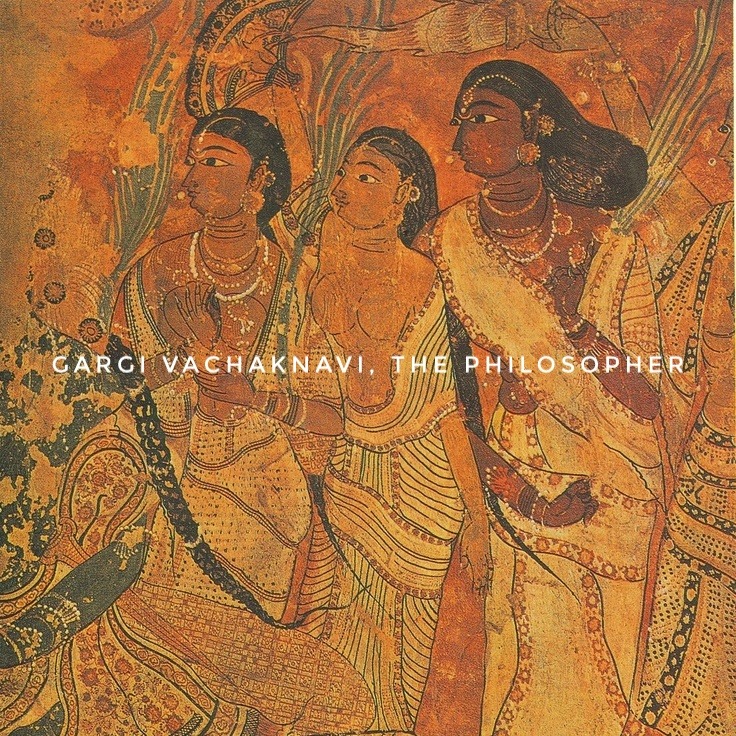
In this article, I am presenting a dialogue on what is the ultimate reality according to Advaita, with a teenage girl who is a student of the Facebook Psycho-Philosophy Group. As I started posting this dialogue, I thought it would be interesting to examine the role of women in the history of Vedanta because it is based on the study of scriptures, dialogue and wherever necessary debates: traditionally the bastion of males. I particularly examine the roles played by two women Gargi Vchaknavi of the Upanishadic era and Ubhaya Bharati of Shankara’s era. Going through the dialogues and roles played by these women, and subsequently going through my dialogue with the teenage girl, one can appreciate the fact that though times have changed- dialogues are held online instead of the forests – the method of transmission of truth, and the way of dialogue between teacher and student in the tradition of Advaita Vedanta remains unchanged, ever since Lord Brahma revealed the Vedas to Rishis and who transmitted this truth to a spiritual family-sampradaya: the lineage of teachers and students who pass the eternal truth down to the present day in an unbroken succession. Women are part of this eternal stream.

Categories
Advaitic Inquiries History of Advaita

Prasthana Traya: The Triple Canonical Base of Vedanta Scriptures Followed by Shankara – Part 3/4: Bhagavad Gita

The Gita is a revolutionary and syncretic scripture in the canon of Vedanta. It brings down the Vedic truths from sequestered Himalayan caves into the active field of political life and crisis evoking tensions of fratricidal war. Religion is philosophy in action. Through the words of Krishna, who acts as his friend, guide, seer and prophet, Arjuna receives the practical application of teachings founds in the Upanishads. Throughout my active public life, I found myself in the position of Arjuna, facing a war, and asking the same questions he did, to Krishna. Thus it was that it was my favourite book till the time I did not renounce all organizational life. In this article, I discuss the Gita as a scripture of Advaita Vedanta along with its unique reformulation of action and renunciation, through what it calls action in inaction and inaction in action. I also discuss Shankara’s queasiness with this reformulation and his grudging acceptance even though it does not sit very well with his ideal of Upanishadic monasticism for a liberated being.