Categories
Advaitic Inquiries Comparative Advaita

Do Advaita and Buddhism Point to the Same Truth?

This blog explores whether Advaita Vedānta and Buddhism ultimately point to the same truth. Through a thoughtful dialogue, it traces the meeting ground between Nāgārjuna’s emptiness (śūnyatā) and Gaudapāda’s non-origination (ajāti). Both dissolve all dualities—self and other, subject and object—revealing an unborn reality beyond thought. Yet a tension remains: Buddhism denies any enduring consciousness, while Advaita proclaims consciousness alone as the timeless reality.

As the conversation deepens, these apparent opposites begin to merge. When both experiencer and experienced vanish, is “emptiness” truly different from “consciousness”? The article suggests that Gaudapāda, writing before sectarian walls were built, may have seen the essential convergence between these paths.

Ultimately, this piece—arising from a dialogue with Claude AI—reflects the timeless exchange between Buddhist and Advaitin inquiry, showing how both, when followed to their limit, dissolve into the same wordless recognition of non-dual truth beyond affirmation or negation.


Categories
Advaitic Inquiries

Samsara is Nirvana – The Perfection of the Imperfection

Social media feeds feel like storm warnings—flashing red, relentless. In every scroll, 2025 is cast as a cursed year. It’s easy to feel buried under the nonstop flood of headlines and social media updates. The news can stir up strong emotions—worry, anger, frustration, dread—and it’s easy to get caught in thoughts about how wrong things are or how they should be different. The world can seem more terrifying than ever. However, the view of the world is different for those who have non-dual vision.

Using very simple analysis, in this article, I want to explore this paradoxical clarity of enlightenment—a state of mind that perceives perfection and wholeness even in the apparent imperfection and chaos of the world with the hope that such an exploration can inspire people to seek the same vision and ultimately free themselves from suffering.

Categories
Advaitic Inquiries

What Does It Mean To Be Enlightened?

This post is a response to a question from a friend who’s seriously exploring what enlightenment actually is. It’s a good question — and a rare one — because most people, like I did for fifteen years, chase enlightenment as if it’s some mystical high, a state of bliss, or a mind-blowing shift in consciousness.

But here, I’m cutting through all that.

No poetry. No metaphors. No smoke and mirrors.

I’m answering the question head-on — in plain, precise language that doesn’t flinch and doesn’t hide behind spiritual jargon. And what I offer here stands up to every form of rational scrutiny.

If you’re looking for clarity, not fantasy, this is for you.

Categories
History of Advaita

The Upanishads and the Axial Age: From Sacred Fire to Inner Light – Part 1

In an age when old rituals faltered under the weight of expanding empires, urban complexity, and moral uncertainty, a quiet revolution unfolded in the forests of ancient India. The Upanishads, composed between 800 and 200 BCE, did not merely extend the Vedic tradition—they dismantled its core assumptions. Sacrifice gave way to self-inquiry. The gods of the altar were replaced by the questioner within.

This shift wasn’t isolated. Across Eurasia, from Greece to China, prophets and philosophers began asking not what to worship, but how to live. The German philosopher Karl Jaspers called it the Axial Age—a spiritual pivot in world history. The Upanishads are India’s profound answer to that moment. Where others turned outward to law, ethics, or reason, India turned inward—seeking the divine not in temples or sacrifices, but in consciousness itself.

This article argues that the Upanishads are more than scripture; they are a civilizational rebirth. In Part 1, we map the Axial Age across cultures. In Part 2, we enter the Indian mind, where the fire of ritual became the light of introspection—and where the self (Ātman) was revealed to be not separate from, but identical with, ultimate reality (Brahman).

Categories
Advaitic Inquiries

The Upanishads: The Oldest Voice of Nondual Philosophy – Compared to Other Nondual Traditions

Before Plato, before Laozi, before the Buddha, there were the Upanishads. In forest clearings across ancient India, long before the rise of formal philosophy or organised religion, sages sat in silence and asked the only question that ever really mattered: What am I? From that silence emerged a thunderbolt of insight—that the self and the cosmos are not two. The oldest surviving texts to declare this are not speculative essays or scriptures of belief. They are the Upanishads: bold, spare, poetic, and uncompromising in their message. Ātman is Brahman. The soul is the world. The knower is the known. And this insight, written more than two thousand years ago, remains the earliest—and perhaps the purest—expression of nonduality ever recorded.

This article sets out to show that the Upanishads are not just ancient—they are the clearest, most uncompromising voice of nonduality in human thought. By placing them in conversation with the many traditions that followed, we begin to see their singular force. In the light of comparison, their purity sharpens, like a mountain revealed when the mist lifts.

Categories
Advaitic Inquiries

When The Elephant Vanishes: Seeing Through Maya

In the timeless tradition of Advaita Vedanta, the pursuit of truth begins with a radical inquiry: Is what I perceive truly what is? This blog, based on an insightful article by Vivek, a member of the NEEV Community for Self-Inquiry and Sustainability, explores this very question through a powerful allegory—the story of a wooden elephant mistaken for the real.

At the heart of this reflection lies the fundamental Advaitic principle of adhyāsa, or superimposition. The root problem of human suffering is the superimposition (adhyāsa) of the non-Self (body, mind, world) upon the Self (pure consciousness), and vice versa. Just as one mistakes a rope for a snake or a wooden elephant for a real one, so too does the ignorant mind mistake the transient world/non-Self for ultimate reality/Self.

Categories
Advaitic Inquiries Pre-Witness Stage

Advaita, Capitalism And The Red Pill Of Truth

In this post I talk about why the understanding of Capitalism and uprooting it from one’s life psychologically and physically is essential for the study of Advaita and attaining it’s goal of liberation, especially for householder Advaitins.

Categories
Meditative Inquiries

Observing the Rainbow of Sensations/Samsara: A Dialogue

One of the most pervasive conditioning of human beings is that there is an objective, really existent world out there that is perceived by a really existent subject. It is this duality that is the cause of all suffering. The journey of non-dual inquiry consists in closely examining this duality and seeing its falsity. Since the hold of such a conditioning is powerful beyond measure, a student of non-dual inquiry is moved through various stages of deconstruction in Advaita; each stage taking years of painstaking inquiry and sustained effort. In this article which is primarily a dialogue with a student, I am helping the student stabilize in Stage 2/Observer stage of my self-inquiry stages. Along with the dialogue, I have written an extended preface that helps a student understand the various stages of self-inquiry a student has to journey through in Advaita to reach final non-dual realization and end of suffering.

Categories
Advaitic Inquiries Pre-Witness Stage Psycho-Philosophical Inquiries

The Difference Between Thinker and Observer in Advaita: A Dialogue

The method of self-inquiry in Advaita is to examine gross objects to subtle objects and keep negating them as candidates for ultimate reality. One such inquiry is to distinguish between the mental observer and the thinker. In our technologically dominated society, the thinker is seen as the paramount tool of life, both in the technical and psychological realms. However, the seeker of the ultimate truth has to understand the limitations of the thinker and go past it to the observer. In Advaita, the observer is the more refined function of the intellect which has viveka/discriminatory power. It performs the act of discriminating between the ultimate reality of Awareness and the objects that appear to it. This dialogue discusses the confusions and difficulties that arise when a seeker is trying to make this shift. It also discusses how Advaita is different from all other yoga like paths in its handling of the thinking function.

Categories
Advaitic Inquiries Witness Stage

Understanding “Consciousness is Everything”: Journal of a 15 yr Old – Part2/2: The World Was Never Created (Ajativada)

In Part I of this article series I discussed the journal of a young, 15 yr old student who studies in my Advaita Study Group. In his journal, he describes how he has conceptually understood that Consciousness is the Ultimate Reality and how all the phenomena we see in the world is just a projection of Consciousness which does not actually affect Consciousness. Further, in his journal he has also described, even though he is Consciousness, it is actually the Lord who is willing the actions of all Jivas and creatures of the world. The Lord is a sort of supercomputer, while the individual minds/Jivas are just receptors of the thoughts and actions willed by the Lord. In Part 1 I gave the whole of my attention to show how his journal had flashes of genius in it, uncannily describing the journey of a seeker in Advaita towards Self Realization as described by the four Mahavakyas. In this article, I would like to delve into the highest peak of Advaita: Ajativada. This is the doctrine propounded by Gaudapada in Mandukya Karika. It reveals something absolutely unbelievable: in the Absolute sense, the world, including oneself is devoid of changes or mutations like birth, growth, death etc. as also it is devoid of all duality. All this is verily Consciousness/Awareness alone. CREATION NEVER HAPPENED. Consciousness never gave birth to any world of Jiva(individuals)-Jagat(world of objects)-Isvara(creator). They are all nothing but imaginations of a mind operating in Maya/illusion. I show how even this was anticipated by my student in his journal.

Categories
Advaitic Inquiries Pre-Witness Stage

Fear, Action, Suffering and Liberation: A Dialogue

This is a dialogue based on the question of a student in my NEEV Advaita Study Group. The quandary he is raising is somewhat similar to the dilemma faced by Arjuna in Bhagavad Gita and almost all of us: What is right action given that each action leads to consequences? Albeit, the quandary being posed by the student in this dialogue is not based on any moral crisis. Rather it is a more general and psycho-philosophical question born out of fear of consequences of actions in the future while also seeing the fact that all actions are based on thought and thought is nothing but a conditioned response of memory. While the Bhagavad Gita starts off answering Arjuna’s questions by making assertive statements on the nature of reality, my response in this dialogue starts by looking at the question itself and deconstructing it to show that the real problem is not in the domain where the question is being asked. Which reminds me of the oft-quoted but never redundant words of Albert Einstein, “We cannot solve our problems with the same thinking we used when we created them.”

Categories
Advaitic Inquiries Witness Stage

Difference Between The Teachings of Traditional Paths like Advaita, Yoga & Krishnamurti: A Dialogue

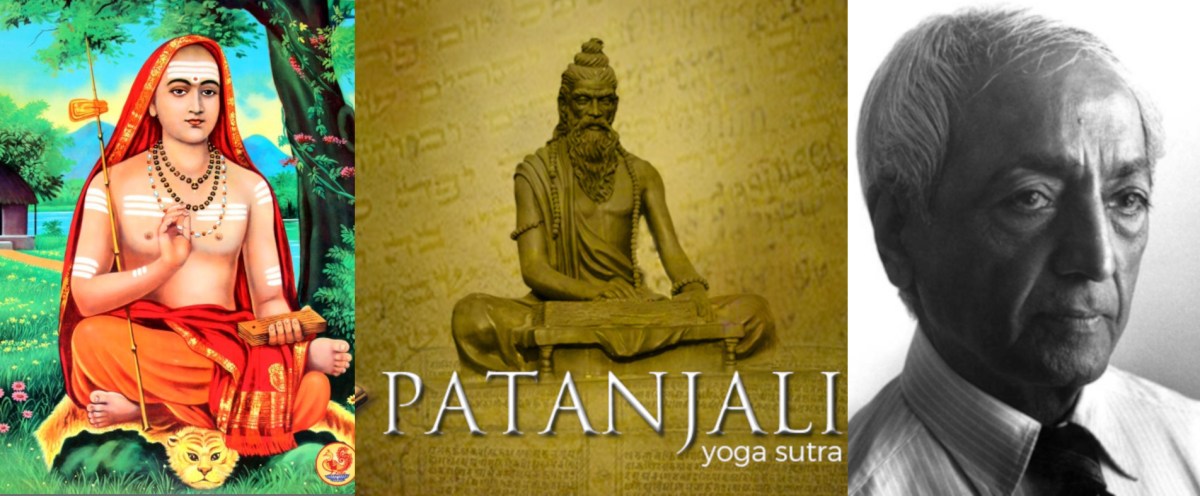
This is a fairly deep dialogue, almost a snapshot of Advaita, I had with my friend who is not a student of Advaita but has been greatly inspired by the teachings of J Krishnamurti. It goes into great detail about the differences between teachings of traditional paths like Advaita, Yoga and Krishnamurti. Through this dialogue, I show how ancient, time-honoured and tested paths have developed a very rigorous methodology for liberation. Krishnamurti undercut these very strengths of these paths, calling them authoritative, mechanical, traditional and imitative techniques which dull the mind. However, one must differentiate between tradition and traditional. We may not like the traditional but the tradition leading to Moksha/Eternal Freedom is not talking about matters caught in the matrix of space-time. All these traditional paths are talking about eternal principles. Their terms may be archaic but their import is valid across all space-time. Krishnamurti missed this point. And what’s more, it so happens, his teachings fall squarely in its principles of a particular Indian school called Yoga of Patanjali (though his method is slightly different) and leads to the same reality. It’s just that his language effectively couched the metaphysical principles he was basing his path on. Though he says that there is no path, there was certainly a path in is his teachings, which I reveal in this dialogue. Having said that, he has his place. His psychological style of exploring the mind through real-life relationships is something unparalleled. And most certainly what he said about truth was the same as all the paths say – it is never known as an object or concept of mind: though we can give it different names.

Categories
Advaitic Inquiries Pre-Witness Stage Psycho-Philosophical Inquiries

Advaita & Paradox of Practice vs No Practice: A Dialogue

A modern seeker of truth is faced with a plethora of paths and schools in this digital age. While this is a boon, it also presents a challenge for the seeker to decide which path to take, because more often than not, paths conflict and critique each other. In this dialogue, a seeker raises some of these dilemmas. One dilemma he raises is that of the issue of practice vs no-practice. Many new age teachers, like Neo-Advaitins scorn effort, path and methods of traditional paths as useless baggage. In this article I show how this can be very self-defeating and disorienting for the vast majority of seekers who need a structure, path and practices for preparing the mind. I show how Advaita Vedanta teachings have a sophisticated methodology to lead a seeker through alternate superimposition and cancellation of concepts, and from practice to the final state of no-practice. One can enter the spiritual path at any point on the scale of practice to no-practice. I show how my teachings start just a shade beneath the point of no-practice but I do not totally discount practices.

Categories
Advaitic Inquiries Witness Stage

Prarabdha Karma After Self Realization: It’s Experience of Suffering and Pleasure: Part3/3

With this article, I finish the three-part series on Prarabdha Karma. In this final article which has extensive quotes from the text Panchadasi, a reader gets the most exhaustive treatment of this subject found anywhere in Advaita literature, corroborated by my own experience. The purpose of these articles was to draw out the complexity of experience and actions of a Jnani/Jivanmukta, evident only to him/her rather than to an outsider, who sees nothing saintly or special in a Jnani, when contrasted to full-blown Jnanis who have got freed from Prarabdha Karma like in Ajativada. Such Jivanmuktas whom I talked about in part 2, has ended with Prarabdha Karma while others have not. The keynote for a Jivanmukta undergoing Prarabdha Karma, however, is that the world of phenomena is mithya or only apparently real, therefore he does not evince any serious commitments to this world of mithya even if he appears to. His attitude is therefore of ‘high indifference’. Though the Jivanmukta may seem to undergo suffering and do acts which can be labelled under the categories of virtue and vice, a Jivanmukta knows himself to be Self/Awareness which is not a thinker/doer/experiencer. For a Jivanmukta, his BMI (Body/Mind/Intellect) appears as an object to Awareness/Self, so even though his/her BMI is affected by Prarabdha, the Jivanmukta as Self remains unaffected. I wanted to explore the enigmatic inner world of the Jivanmukta; his/her experiential dimension that escapes onlookers: a person who is in the world yet not of it.

Categories
Advaitic Inquiries Pre-Witness Stage

Audio Interview: My Personal Journey to Advaita, Advaita Teachings & Difference Between Advaita & Other Paths

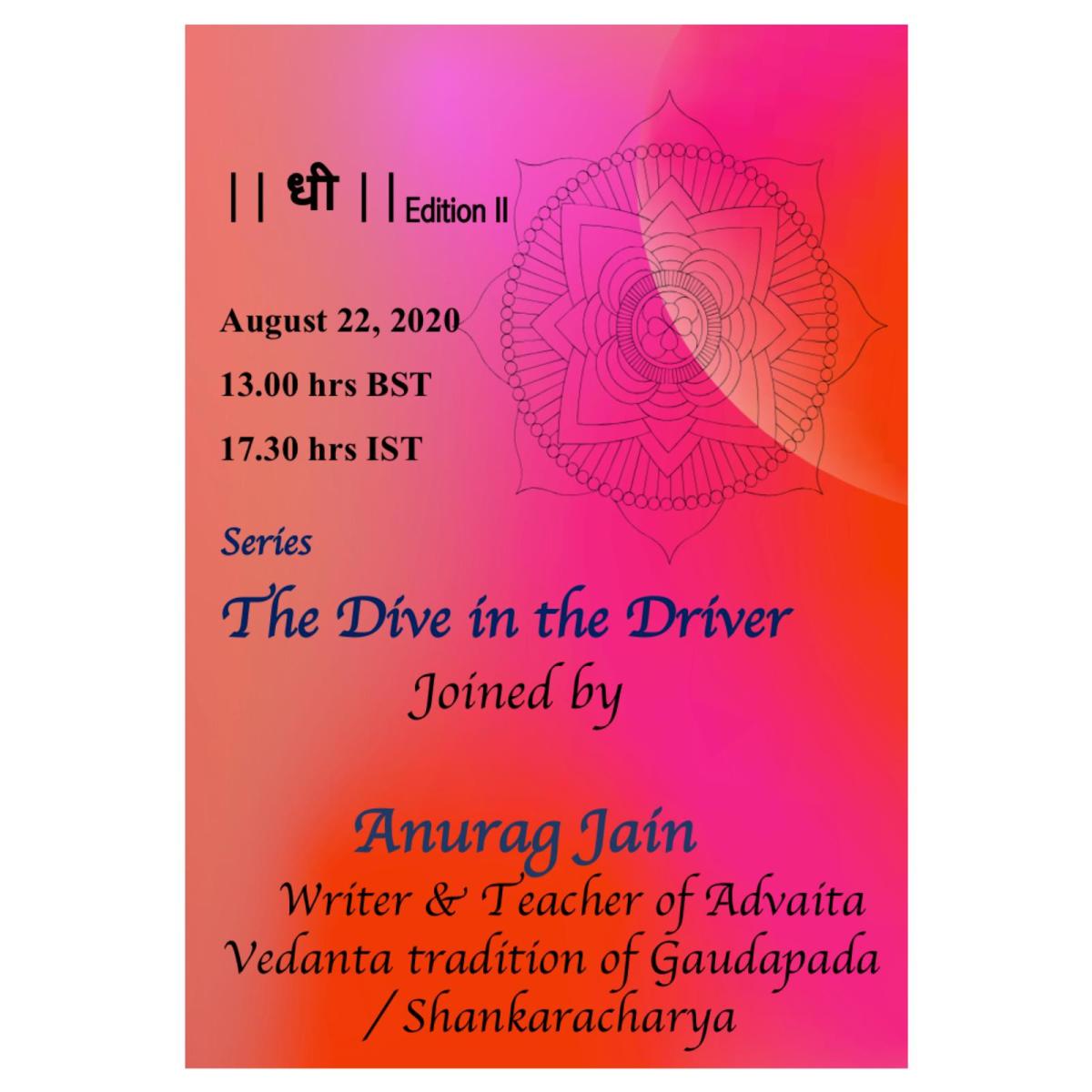
This is an audio interview between Taposhri and Priya of Dhi and me held on 22nd Aug 2020. Dhi hosts live talks and discussions with people in the spiritual field. In my blog writings, I have never mentioned my personal journey and the challenges I faced in my journey to Advaita. This interview fills in this vacuum. In this free-wheeling interview I discuss what is Self Inquiry, reasons for me to start my Self Inquiry, challenges I faced in my personal life while doing Self Inquiry, what is Advaita and Jnana Yoga or Yoga of Knowledge, why knowledge and not experience is the final truth and what is the use (if any) of spiritual experiences in the path. Finally, it talks about the subtle difference between Advaita and Yoga, Tantra, Buddhism, Direct Path and Aurobindo’s Integral Yoga.