Categories
History of Advaita

The Upanishads and the Axial Age: From Sacred Fire to Inner Light – Part 1

In an age when old rituals faltered under the weight of expanding empires, urban complexity, and moral uncertainty, a quiet revolution unfolded in the forests of ancient India. The Upanishads, composed between 800 and 200 BCE, did not merely extend the Vedic tradition—they dismantled its core assumptions. Sacrifice gave way to self-inquiry. The gods of the altar were replaced by the questioner within.

This shift wasn’t isolated. Across Eurasia, from Greece to China, prophets and philosophers began asking not what to worship, but how to live. The German philosopher Karl Jaspers called it the Axial Age—a spiritual pivot in world history. The Upanishads are India’s profound answer to that moment. Where others turned outward to law, ethics, or reason, India turned inward—seeking the divine not in temples or sacrifices, but in consciousness itself.

This article argues that the Upanishads are more than scripture; they are a civilizational rebirth. In Part 1, we map the Axial Age across cultures. In Part 2, we enter the Indian mind, where the fire of ritual became the light of introspection—and where the self (Ātman) was revealed to be not separate from, but identical with, ultimate reality (Brahman).

Categories
Advaitic Inquiries Pre-Witness Stage

Advaita, Capitalism And The Red Pill Of Truth

In this post I talk about why the understanding of Capitalism and uprooting it from one’s life psychologically and physically is essential for the study of Advaita and attaining it’s goal of liberation, especially for householder Advaitins.

Categories
Advaitic Inquiries Pre-Witness Stage

You (Self) Are Not (Your) Thoughts: A Dialogue

That we all suffer conflicts of various kinds in our life is an undeniable fact. Self Inquiry is about unearthing and ending the root of all conflicts. In this dialogue with a seeker, I examine the conflict of the division between the thinker and thought. What sustains this division is the process of psychological becoming. One of the processes of psychological becoming is seeking to be virtuous. In this article, I differentiate between dharma/virtue as a process of psychological becoming and adhyatma/the spiritual science of eternal being, to help the seeker appreciate the difference, and overcome the conflict caused by this form of becoming. Finally, I introduce the various stages of self-inquiry, by which I help a seeker completely transcend the duality between the thinker and thought, as a means to ending of all conflict.

Categories
Advaitic Inquiries Witness Stage

Prarabdha Karma After Self Realization: It’s Experience of Suffering and Pleasure: Part3/3

With this article, I finish the three-part series on Prarabdha Karma. In this final article which has extensive quotes from the text Panchadasi, a reader gets the most exhaustive treatment of this subject found anywhere in Advaita literature, corroborated by my own experience. The purpose of these articles was to draw out the complexity of experience and actions of a Jnani/Jivanmukta, evident only to him/her rather than to an outsider, who sees nothing saintly or special in a Jnani, when contrasted to full-blown Jnanis who have got freed from Prarabdha Karma like in Ajativada. Such Jivanmuktas whom I talked about in part 2, has ended with Prarabdha Karma while others have not. The keynote for a Jivanmukta undergoing Prarabdha Karma, however, is that the world of phenomena is mithya or only apparently real, therefore he does not evince any serious commitments to this world of mithya even if he appears to. His attitude is therefore of ‘high indifference’. Though the Jivanmukta may seem to undergo suffering and do acts which can be labelled under the categories of virtue and vice, a Jivanmukta knows himself to be Self/Awareness which is not a thinker/doer/experiencer. For a Jivanmukta, his BMI (Body/Mind/Intellect) appears as an object to Awareness/Self, so even though his/her BMI is affected by Prarabdha, the Jivanmukta as Self remains unaffected. I wanted to explore the enigmatic inner world of the Jivanmukta; his/her experiential dimension that escapes onlookers: a person who is in the world yet not of it.

Categories
Advaitic Inquiries Witness Stage

Prarabdha Karma After Self Realization: Seeming Refutations: Part 2/3

In Part 1 of this series I introduced Shankara’s concept of Prarabdha Karma to show that a Self Realized being/Jnani is not necessarily an epitome of virtuous conduct as he is still affected by the momentum of past actions (both virtue and vice) called Prarabdha Karma which is sustaining the body of the Jnani. Though these actions do not taint the Jnani as Self. In Part 2 of this series I am exploring some post Shankara works that seem to refute the theory of Prarabdha Karma. I analyse these works and show what is the basis of their seeming refutation. I end with my understanding that they are speaking from the standpoint of Ajativada which is different from the standpoint of Vivartavada that Shankara adopts in some of his teachings – thus pointing to the difference between a Jnani and a Jivanmukta

Categories
Advaitic Inquiries Pre-Witness Stage

You Are Awareness/Brahman: Dialogue with a Teenage Girl & Women in Vedanta

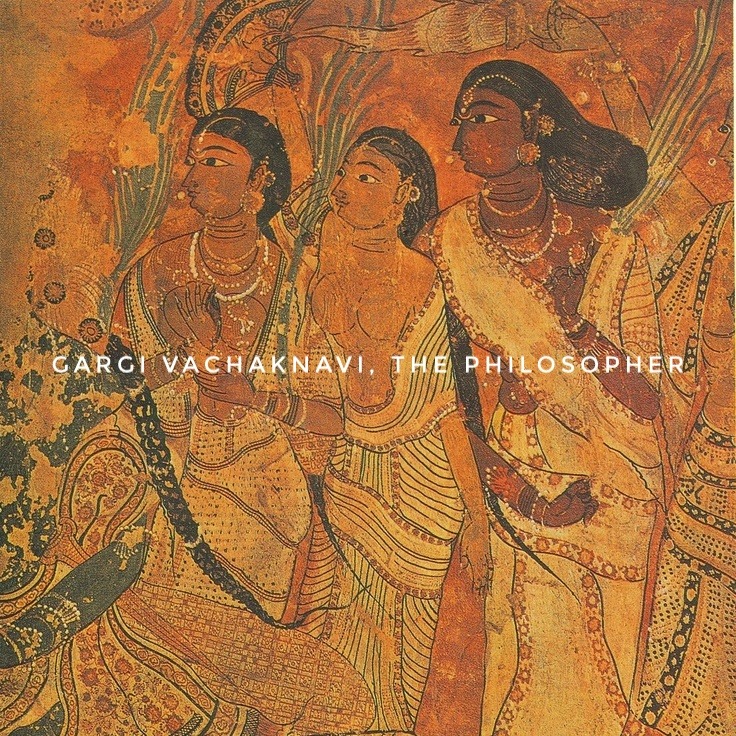
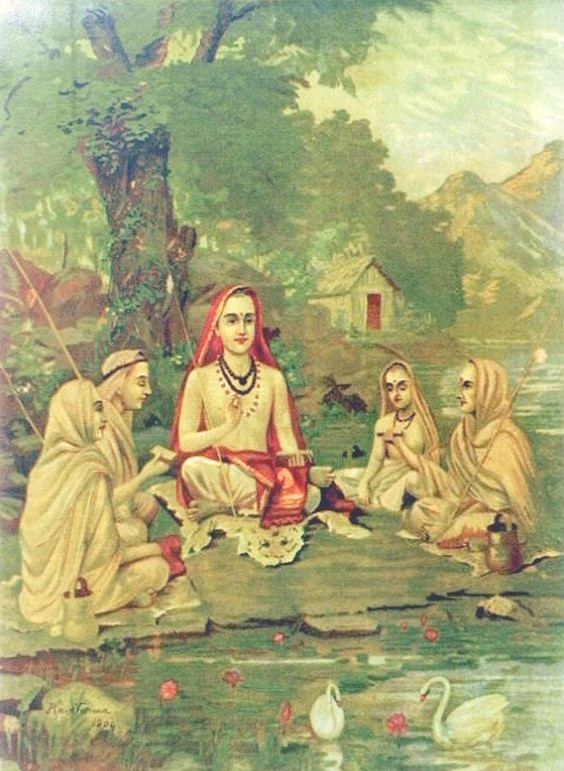
In this article, I am presenting a dialogue on what is the ultimate reality according to Advaita, with a teenage girl who is a student of the Facebook Psycho-Philosophy Group. As I started posting this dialogue, I thought it would be interesting to examine the role of women in the history of Vedanta because it is based on the study of scriptures, dialogue and wherever necessary debates: traditionally the bastion of males. I particularly examine the roles played by two women Gargi Vchaknavi of the Upanishadic era and Ubhaya Bharati of Shankara’s era. Going through the dialogues and roles played by these women, and subsequently going through my dialogue with the teenage girl, one can appreciate the fact that though times have changed- dialogues are held online instead of the forests – the method of transmission of truth, and the way of dialogue between teacher and student in the tradition of Advaita Vedanta remains unchanged, ever since Lord Brahma revealed the Vedas to Rishis and who transmitted this truth to a spiritual family-sampradaya: the lineage of teachers and students who pass the eternal truth down to the present day in an unbroken succession. Women are part of this eternal stream.

Categories
Advaitic Inquiries History of Advaita

Prasthana Traya: The Triple Canonical Base of Vedanta Scriptures Followed by Shankara – Part 2/4: Vedas/Upanishads

Forming the end portion of the Vedas, the Upanisads have had a vast and pervasive influence in Hindu Tradition. Upanishadic teachings and Upanishadic type realization run through a wide range of Hindu religious literature as dye through a cloth. It is well known to those who follow the Veda that the phrase ‘the method of the Vedanta’ refers to the method for teaching knowledge of the Absolute observed in the Upanishads which crystallizes around a number of key terms, the most important of which are Atman and Brahman. Atman, “the Self”, is at the root of the experience of self, or “I”, which is found in every human being. It is the Formless Reality which one is, above Life and Death, and above space and time. Everyone is that Reality, although without being aware of it, and It shines in the heart and mind of all living beings. In this article, I discuss the origin, the message and the unique traditional method of teaching the message found in the Upanishads, by Shankara, through superimposition and negation.

Categories
Advaitic Inquiries Pre-Witness Stage

Shabda Pramana: Enlightenment through Words in Advaita Vedanta: Presenting a Dialogue

Advaita Vedanta is unique amongst all paths for liberation. It is the only path that does not consider any form of action (meditation, yoga, chanting, worship) as the final means to liberation. These actions are a means to purify the mind so that it is qualified to receive and assimilate enlightenment through Knowledge. The only knowledge that can grant enlightenment to a student is the shabda/word of the Sruti/Upanishads transmitted by a teacher established in Brahman himself/herself. In this article, I describe the theory and practice of enlightenment in this unique path. Finally, I furnish the article with an actual dialogue that takes place between a teacher and a student in which the student gets enlightened.

Categories
Psycho-Philosophical Inquiries

Attachment and Facing the Fear of Death

On reading one of my previous blog articles about the quest to understand death, an eighteen-year-old girl who is a member of NEEV Psycho-Philosophy group wrote about her own fear of death and her desire to go beyond it. Death is usually taken as a morbid topic to be spoken about in hushed tones. But for a self inquirer, who wants to know truth, death is an enigma he/she must solve. In my response to the girl’s journal I revisit the two characters – Buddha and Nachiketa – on their quest for going beyond death, whom I had mentioned in my previous article on death. This time I talk about how both of them ultimately conquer death – Buddha with his Nirvana and Nachiketa with his Moksha. I show that the common aspect to both these paths is how the cycle of birth and death actually begins with attachment to objects. Either one remains attached to impermanent objects and keep wandering in the cycle of samsara or one takes the path out of this suffering by taking the path of self inquiry.

Categories
Advaitic Inquiries

Stages : From Self Inquiry to Self Realization

Self Inquiry/Jnana Yoga is said to be the ultimate path to enlightenment. But before one enters Jnana Yoga, it is said that one has to purify one’s mind through years of Karma Yoga. However, if one has the prerequisites, one can enter Jnana Yoga directly: without doing Karma Yoga or renouncing the world, as is usually required for Jnana Yoga. This is a unique path I followed and teach. It combines the teachings of J Krishnamurti and Advaita Vedanta. In this article I give a brief description of the stages involved in this journey for interested seekers.

Categories
Meditative Inquiries

Turning Within : Taking the Plunge to Find One’s True Self

Most people are lost in the outer events and turmoil of their life. For the rare few, however, at some point of their life, they cannot help noticing the fact that all their outer pursuits, no matter how deep they are, have failed to provide them lasting happiness. This is the point they turn within; in search of something that can give them something lasting and permanent, that no outer objects can provide. In this article, I share the journey of a meditator who is poised on the point of turning within; addressing his doubts, fear and hopes, as he plunges into this unknown journey.

Categories
Advaitic Inquiries Witness Stage

The Liberated Being : Beyond all Acts – Good & Bad

History, culture, mythology all go into creating a prototype of an enlightened being or a Liberated Person. These prototypes inform the common man about the kind of greatness of person, or personality, that a liberated person has. The personalites of enlightened beings are worshipped as Gods or saviours, or beings with superhuman powers. However, the highest truth, which only Advaita Vedanta elucidates through the Vedas, is much more simple, but most difficult to penetrate. The liberated being, who in Advaita is called a Jnani, has gone beyond all names and forms, and acquired a non-dual vision. What is that vision and who is a Jnani? How does he act? I explore these questions in this article.

Categories
Advaitic Inquiries Witness Stage

Turiya : The Fourth State of Consciousness & End of Suffering

As normal human beings going about our daily lives, chasing dreams, getting happy, or grieving over life’s inscrutable experiences, we are all aware of three states of consciousness – waking, dream sleep and deep sleep. They are so much taken for granted, we can hardly imagine a treasure concealed by these three states. However, for a person who has devoted himself to solving life’s paradoxes, the study of these states holds the key to liberation from suffering.

Categories
Advaitic Inquiries Pre-Witness Stage

Self inquiry and insight into one’s true nature/Self in Advaita

In this article, I have given an account of how one reaches the Advaitic insight of “I am Self/Witness”, following the traditional self-inquiry or Jnana Yoga of Advaita. This was an insight that gave me a kind of permanent home of peace that no outer crisis can touch. I wrote this to help others on the path of traditional Advaita.

Categories
Psycho-Philosophical Inquiries

The evolution of self : really evolution, or perpetual conflict?

Advancement of man is seen as evolution of self. In this article I show that since self is actually a fragment – a bundle of knowledge which is limited, no amount of evolution – of accumulation of knowledge – can make the limited go beyond limitations. And being limted and fragmentary, the self shall always divide man against man and man against nature.